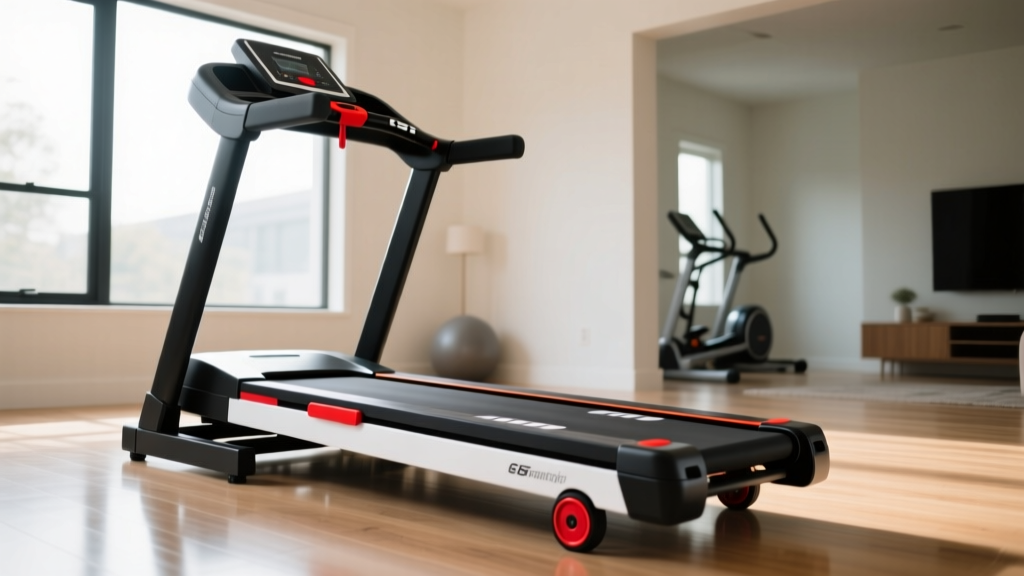
Folding Treadmill Review: Treadmill Picture Maintenance Guide
Read our 2026 folding treadmill for small spaces review, featuring the treadmill picture protocol for visual maintenance, hinge care, and longevity tips.

The Hidden Maintenance Tax of Small-Space Cardio
Living in a compact apartment or a multi-use room often dictates your fitness equipment choices. For millions of home gym enthusiasts, a folding treadmill is the only viable way to integrate serious cardiovascular training into a limited footprint. However, what many buyers fail to realize is that the folding mechanisms, compact motor housings, and reduced ground clearance of these machines introduce unique mechanical stress points. According to the U.S. Consumer Product Safety Commission (CPSC), improper maintenance and failure to inspect structural integrity are leading causes of home treadmill malfunctions and subsequent injuries.
When a treadmill is folded and unfolded daily, the pivot points endure repetitive kinetic loading. Furthermore, compact treadmills often utilize smaller continuous horsepower (CHP) motors that must work harder and run hotter to maintain speeds, making them highly susceptible to dust ingress and thermal throttling. In this comprehensive 2026 folding treadmill for small spaces review, we evaluate the top compact models not just on their spatial efficiency, but on their long-term maintainability. We will also introduce a proprietary visual tracking method to ensure your investment survives well beyond its warranty period.
2026 Folding Treadmill Review: Small Space Models and Maintenance Profiles
Not all folding treadmills are engineered equally when it comes to serviceability. Below is our technical review matrix of the most popular small-space treadmills available in 2026, analyzed through the lens of mechanical longevity and routine care requirements.
| Model | 2026 Street Price | Motor Output | Folding Mechanism | Primary Maintenance Vulnerability |
|---|---|---|---|---|
| Horizon T101 | $599 | 2.25 CHP | FeatherLight Manual | Low-clearance motor shroud dust accumulation |
| Sole F63 | $999 | 3.0 HP | Hydraulic Drop-Assist | Hydraulic cylinder seal degradation and hinge squeak |
| ProForm Carbon TL | $649 | 2.6 CHP | SpaceSaver Manual | Manual locking pin friction and belt drift |
| NordicTrack T Series 10 | $699 | 2.6 CHP | Manual Lift | Console wiring harness stress at the folding neck |
As highlighted by Consumer Reports, a higher price tag does not always equate to lower maintenance. The Sole F63, while boasting a robust 3.0 HP motor and excellent cushioning, requires strict adherence to hydraulic hinge care. Conversely, the budget-friendly Horizon T101 is highly reliable but demands aggressive dust management due to its low-profile deck design.
The 'Treadmill Picture' Protocol: Visual Tracking for Longevity
Because folding treadmills are frequently tucked into closets or folded flat against walls when not in use, slow mechanical degradation often goes unnoticed until a part fails. To combat this, we recommend implementing a monthly visual documentation routine.
How to Execute the Treadmill Picture Protocol
Snapping a clear treadmill picture of specific mechanical zones creates a vital visual timeline. Once a month, use your smartphone to capture the following three angles:
- The Rear Roller Seam: Take a close-up treadmill picture of the belt seam where it meets the rear roller. This allows you to track micro-shifts in belt alignment over time before the belt frays against the side rail.
- The Folding Hinge Pins: Capture a macro treadmill picture of the metal pivot points. Look for dark metallic dust, which indicates abnormal friction and the immediate need for white lithium grease.
- The Motor Shroud Vents: Photograph the intake vents. Comparing your current treadmill picture to last month's baseline will reveal the exact rate of dust accumulation, helping you calibrate your vacuuming schedule.
Maintaining a dedicated digital album of these images transforms abstract maintenance into concrete, actionable data. You will easily spot a belt drifting three millimeters to the left over a six-week period, allowing for a simple hex-key adjustment rather than a costly belt replacement.
Environmental Hazards: Dust, Heat, and Carpet Fibers
Small spaces often mean the treadmill is situated in a bedroom or living room, environments notorious for ambient dust, pet dander, and carpet fibers. Compact treadmill motors rely on internal cooling fans that pull air directly from the floor. If your treadmill sits on a high-pile carpet, the motor will inevitably ingest fibers, wrapping them around the drive roller and choking the cooling fan.
Expert Insight: Never place a folding treadmill directly on carpet without a high-density PVC equipment mat. The static electricity generated by the belt rubbing against the deck acts as a magnet for carpet fibers, pulling them directly into the motor housing and causing premature thermal shutdowns.
To maintain optimal airflow, you must remove the motor shroud (usually secured by four to six Phillips-head screws) every 90 days. Use a can of compressed air and a soft-bristled brush vacuum attachment to clear the motor fins and the drive belt. Always ensure the treadmill is unplugged and the safety key is removed before opening the shroud.
Precision Belt Tension and Deck Lubrication
The running belt is the most frequently replaced part on any cardio machine. In folding treadmills, the deck is often thinner to save weight, making proper lubrication non-negotiable to prevent heat warping. According to industry standards outlined by Fitness Repair Parts, using the wrong lubricant can destroy the belt's cotton underlayer.
The 100% Silicone Rule
Never use WD-40, petroleum-based oils, or household spray lubricants. You must use a 100% silicone treadmill lubricant. Apply exactly one ounce of liquid silicone in a zigzag pattern between the belt and the deck, then run the machine at 3 MPH for five minutes to distribute the fluid evenly.
Measuring Belt Tension
Over-tightening a belt to fix a slipping sensation is a common rookie mistake that will destroy the front and rear roller bearings. To test your belt tension, turn the machine off. Reach under the belt at the exact midpoint of the deck and lift upward. You should achieve exactly 2 to 3 inches of clearance. If it lifts higher, tighten the rear roller adjustment bolts by exactly one-quarter turn clockwise on both sides. If it lifts less, loosen them. Always adjust both sides equally to maintain tracking.
Step-by-Step Folding Hinge and Hydraulic Care
The folding mechanism is what separates a small-space treadmill from a commercial club model, and it requires specific mechanical sympathy. If your folding action becomes jerky or emits a metallic popping sound, follow this restoration protocol:
- Secure the Deck: Unfold the treadmill and engage the safety lock. Unplug the machine from the wall.
- Clean the Pivot Zone: Use a microfiber cloth dampened with isopropyl alcohol to wipe down the exposed hinge pins and the interior of the hydraulic cylinder shaft. Removing old, grit-filled grease is essential.
- Apply the Correct Lubricant: For manual folding hinges (like the Horizon T101), apply a light coat of white lithium grease to the metal-on-metal pivot pins. For hydraulic drop-assist models (like the Sole F63), apply a thin layer of silicone paste to the exterior cylinder shaft to protect the rubber seals from drying out and cracking.
- Inspect the Locking Pin: Check the primary safety locking pin that secures the deck in the upright position. Look for burrs or metal shavings. If the pin shows deep grooves, contact the manufacturer for a replacement part immediately, as this is a critical safety component.
- Test the Descent: Release the lock and guide the deck down. It should descend smoothly, taking approximately 3 to 5 seconds to reach the floor. If it drops rapidly, the gas shock or hydraulic cylinder has lost pressure and must be replaced.
Motor Shroud Clearance Requirements
When reviewing small-space treadmills, spatial clearance is just as important as the physical footprint of the machine. A compact treadmill requires adequate breathing room to prevent the motor control board from overheating. We mandate a minimum of 12 inches of clearance behind the rear roller, and at least 6 inches of clearance on either side of the motor shroud. If you are folding the treadmill against a wall daily, ensure that the power cord is not being pinched against the baseboard, as a frayed power cord is a leading cause of control board voltage spikes and catastrophic electronic failure.
Final Verdict: Which Compact Treadmill Wins on Longevity?
When evaluating the 2026 market for a folding treadmill for small spaces, the Sole F63 remains our top pick for sheer mechanical longevity, provided the user is diligent about hydraulic hinge care and belt lubrication. Its 3.0 HP motor runs significantly cooler than the 2.25 CHP motors found in budget models, drastically reducing the risk of thermal failure in poorly ventilated apartments. However, if your budget is strictly capped under $650, the Horizon T101 offers exceptional value, provided you commit to the monthly 'treadmill picture' protocol and rigorous dust management. By treating your folding treadmill not just as a piece of furniture, but as a precision kinetic machine requiring visual tracking and scheduled care, you will easily extend its operational lifespan from the industry average of four years to well over a decade.
More gear to consider
All reviews
Rowing Machine Setup & Technique: Upgrading Your Lose Weight on Treadmill Plan
Walking Pad vs Treadmill: Choosing the Right Treadmill Tread (2026)

Elliptical vs Treadmill 2026: The Skillmill Manual Treadmill Trend

Weslo Crosswalk 5.2 T Treadmill Troubleshooting vs Curved Manual
NordicTrack Treadmill Stuck on Incline: Motor HP Comparison
