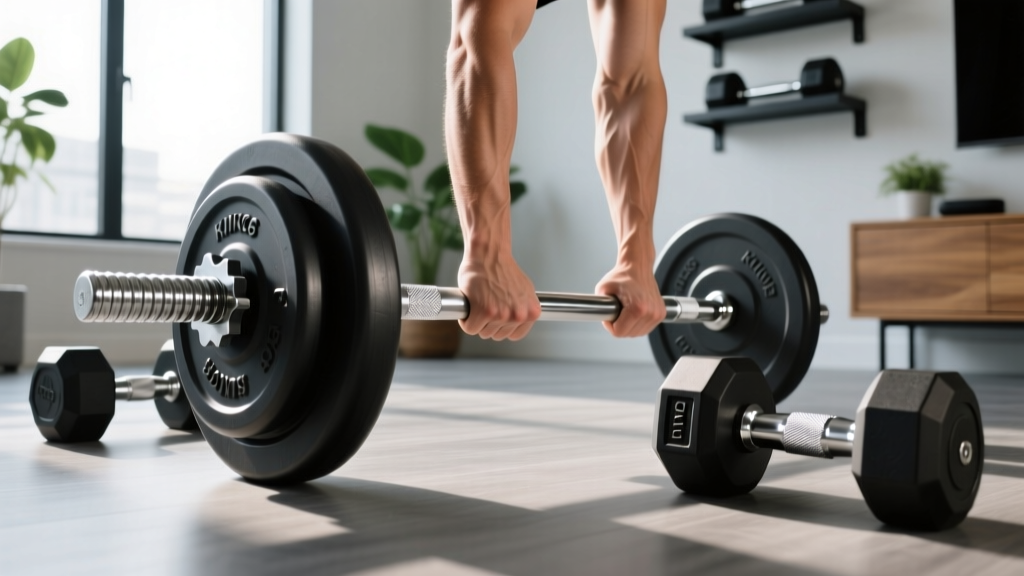
Fixing Dumbbell Exercises for Arms at Home: Barbell Knurl Guide
Hit a plateau with dumbbell exercises for arms at home? Troubleshoot stalled gains with our expert Olympic barbell weight and knurling buying guide.

The Plateau: Why Dumbbell Exercises for Arms at Home Stall
For many lifters, the fitness journey begins in the living room or garage, relying heavily on dumbbell exercises for arms at home. Adjustable dumbbells and fixed hex pairs are fantastic for building initial baseline strength, targeting the biceps brachii, brachialis, and triceps through movements like hammer curls, skull crushers, and concentration curls. However, a common troubleshooting scenario we see at FitGearPulse is the inevitable hypertrophy plateau.
When you max out your 50 lb or 90 lb adjustable dumbbells, or when the stabilizing fatigue of holding two independent weights causes your grip to fail before your arm muscles do, you have hit the biomechanical ceiling of dumbbell isolation. The troubleshooting fix? Transitioning to an Olympic barbell. But simply buying any barbell will not solve your problem. To truly overload the arms and optimize close-grip pressing or heavy barbell curling, you must understand the nuances of Olympic barbell weight, shaft diameter, and—most critically—knurling patterns.
⚠️ Troubleshooting Symptom: If your forearms are burning out during heavy dumbbell curls before your biceps reach mechanical failure, your grip is the bottleneck. A properly knurled 28mm Olympic barbell redistributes the load and allows for true muscular overload.Barbell Weight and Shaft Diameter: Matching the Lift
Before analyzing the knurl, you must select the correct barbell weight and shaft diameter. The standard men's Olympic barbell weighs 20kg (44 lbs) and features a 28mm shaft diameter. The women's Olympic barbell weighs 15kg (33 lbs) with a 25mm shaft.
A frequent mistake lifters make when upgrading from dumbbell exercises for arms at home is purchasing a 29mm powerlifting bar (like the Rogue Ohio Power Bar) thinking 'thicker is better.' While a 29mm shaft is excellent for low-rep bench pressing, it is a nightmare for high-rep arm isolation. The extra thickness prematurely taxes the flexor digitorum muscles in the forearm, ruining your curl mechanics. Conversely, using a 25mm technique bar for heavy male lifters over 180 lbs can result in excessive 'whip' (flexing of the bar), which destabilizes strict tricep extensions.
| Bar Type | Weight | Shaft Diameter | Best For Arm Training? |
|---|---|---|---|
| Men's Olympic (Multi-Purpose) | 20kg / 44lbs | 28mm | Ideal |
| Women's Olympic | 15kg / 33lbs | 25mm | Great for smaller hands |
| Powerlifting Bar | 20kg / 44lbs | 29mm | Poor (Too thick for curls) |
| Technique Bar | 15kg / 33lbs | 28mm | Good for youth/rehab |
Decoding Knurling: The Secret to Arm and Grip Gains
According to BarBend's comprehensive barbell guide, knurling is the machined pattern on the steel shaft designed to increase friction. For arm training, the knurl pattern dictates whether you can hold a 135 lb barbell for a set of 15 strict curls, or whether the bar rolls out of your sweat-slicked hands on rep 8.
1. The Volcano Pattern (The Arm Builder)
The 'volcano' knurl features a pointed rim with a small crater in the center. This design creates a sharp edge that grabs the skin aggressively without digging so deep that it tears calluses. When performing heavy barbell curls or close-grip bench presses for triceps, the volcano pattern locks the bar into the creases of your palms. The Rogue Ohio Bar is the industry gold standard for this pattern, featuring a 190,000 PSI tensile strength steel shaft that provides the perfect balance of rigidity for strict arm isolation and slight whip for joint comfort.
2. The Mountain Pattern (The Callus Maker)
Mountain knurling consists of sharp, uninterrupted peaks. It is highly aggressive and often found on older, traditional power bars or budget Amazon bars. While it provides immense grip for deadlifts, it is a troubleshooting nightmare for high-volume arm workouts. The sharp peaks will tear the skin on your palms during the eccentric (lowering) phase of a tricep skull crusher, forcing you to cut your workout short.
3. The Hill Pattern (The Comfort Choice)
Hill knurling features rounded, flattened peaks. It feels smooth and is comfortable for high-rep front squats, but it lacks the 'bite' needed for heavy arm isolation. If you are sweating heavily during a home workout, a hill-knurled bar will slip during hammer curls or reverse curls, shifting the tension away from the brachioradialis and onto the wrist flexors.
💡 Pro-Tip on Barbell Finishes: The finish coating alters the knurl feel. Bare steel and black oxide preserve the sharp 'volcano' peaks. However, Cerakote (a ceramic polymer coating often used for colored bars) slightly fills in the knurl valleys, effectively turning a sharp volcano into a smoother hill. If grip security during arm exercises is your priority, opt for black oxide or hard chrome.Bushings vs. Bearings: Why Spin Matters for Isolation
When transitioning from dumbbell exercises for arms at home to barbell work, lifters often overlook the internal sleeve construction. Barbell sleeves rotate via either bushings (bronze or composite rings) or needle bearings.
- Bronze Bushings: Provide a slow, controlled spin. This is critical for arm isolation. When doing barbell curls, you want the plates to remain relatively stable. A bushing bar ensures the weight doesn't violently rotate in your hands at the top of the movement.
- Needle Bearings: Designed for Olympic weightlifting (snatches, cleans). They allow the sleeve to spin rapidly. If you use a bearing bar for heavy tricep extensions, the inertia of the spinning plates can torque your wrists and elbows, leading to medial epicondylitis (golfer's elbow).
"For 95% of lifters focusing on hypertrophy and strict arm isolation, a high-quality bronze bushing bar is vastly superior to a needle bearing bar. Bearings are a specialized tool for Olympic lifters, not bodybuilders." — FitGearPulse Equipment Testing Team
Real-World Troubleshooting Matrix
Use the matrix below to diagnose your specific training issues and select the correct barbell specifications to fix them.
| Symptom / Mistake | Root Cause | Barbell Spec Fix |
|---|---|---|
| Bar slips during heavy reverse curls | Hill knurl or Cerakote finish filling the grooves | Switch to Black Oxide Volcano knurl (e.g., American Barbell California Bar) |
| Wrist pain during skull crushers | Using a 29mm Power Bar or Needle Bearing bar | Use a 28mm Bushing bar to reduce grip width and stabilize sleeve rotation |
| Torn calluses on palms during high-rep curls | Aggressive Mountain knurl pattern | Upgrade to a refined Volcano pattern (190k+ PSI steel) |
| Bar 'whips' excessively, ruining strict form | Using a low-tensile (130k PSI) budget bar | Invest in 190k - 215k PSI tensile strength (e.g., Eleiko Olympic WL) |
Final Verdict: Upgrading Your Home Armory
While dumbbell exercises for arms at home are an essential component of any balanced routine, they cannot replicate the raw, systemic overload of a properly spec'd Olympic barbell. To troubleshoot stalled arm growth, invest in a 20kg, 28mm multi-purpose barbell with a bronze bushing and a black oxide volcano knurl. Models like the Rogue Ohio Bar ($295) or the American Barbell California Bar ($285) offer the exact tensile strength and grip security required to push past plateaus. For deeper insights into building a complete home gym, consult Garage Gym Reviews' top barbell picks to ensure your investment lasts a lifetime of heavy lifting.
More gear to consider
All reviews
Olympic vs Standard Plates for Your Dumbbell Triceps Press

Barbell Collar & Clamp Types for Seated Dumbbell Power Cleans
Olympic vs Standard Plates: Setup for Forward Lunges with Dumbbells
How to Row Dumbbells: Neoprene Weight Mistakes and Fixes

The Broken Hex Dumbbell Crisis: 2026 Kettlebell Market Trends & Buying Guide
