
What Dumbbell Weight Should I Start With? Female Neoprene Mistakes
Discover what dumbbell weight to start with. We troubleshoot common female neoprene dumbbell mistakes, grip issues, and home gym buying traps.

When setting up a home gym, one of the most common questions we encounter is: what dumbbell weight should I start with female beginners are often targeted by misleading marketing that pushes ultra-light, brightly colored weights as the ultimate solution for 'toning.' However, building functional strength, improving bone density, and achieving your fitness goals requires a strategic approach to weight selection and equipment quality. Neoprene-coated dumbbells are a staple in home gyms due to their quiet impact and floor-friendly design, but they come with unique material quirks and sizing traps that can derail your progress.
In this troubleshooting guide, we will dismantle the common mistakes women make when selecting their first set of neoprene dumbbells, explore the material science behind the coating, and provide a concrete framework for building a scalable home rack in 2026.
The 'Lightweight' Trap: Mistake #1 in Female Strength Training
Walk into any big-box sporting goods store, and you will see a wall of 3 lb, 5 lb, and 8 lb neoprene dumbbells marketed specifically toward women. This is a fundamental misunderstanding of progressive overload. While a 5 lb dumbbell might be appropriate for isolated lateral raises, it is functionally useless for compound lower-body movements like goblet squats, Romanian deadlifts (RDLs), or reverse lunges.
According to Harvard Health Publishing, strength training is critical for women to combat age-related bone density loss and sarcopenia. However, these adaptations require mechanical tension that light, fixed-weight neoprene dumbbells simply cannot provide once you pass the initial neurological adaptation phase (usually weeks 3 through 6). Starting with a rack that maxes out at 15 lbs is a guaranteed path to plateauing.
Troubleshooting Your Starting Weight: The Rep-Range Test
Instead of guessing based on gendered marketing, use the 8-to-12 Repetition Maximum (RM) Test to determine your starting weight for major movement patterns. Here is the troubleshooting flow:
- Pick a moderate weight (e.g., 15 lbs for upper body pushes, 25 lbs for lower body).
- Perform the exercise with strict form until you reach momentary muscular failure or form breakdown.
- Evaluate the rep count:
- Less than 8 reps: The weight is too heavy. Drop down by 2.5 to 5 lbs.
- 8 to 12 reps: This is your correct starting weight for hypertrophy and base strength.
- More than 15 reps: The weight is too light. You are training muscular endurance, not building foundational strength. Increase the weight immediately.
Expert Insight: Female trainees often overestimate their lower body strength and underestimate their upper body pulling strength. Do not be surprised if your starting weight for dumbbell rows is significantly higher than your starting weight for overhead presses.
Material Realities: Why Neoprene for Home Use?
Neoprene (polychloroprene) is a synthetic rubber that offers a matte, soft-touch finish. It is highly favored for home use because it dampens sound and protects hardwood floors or laminate from minor scuffs better than bare cast iron or hex rubber. However, as a Mayo Clinic guide on home fitness safety notes, equipment maintenance is just as crucial as the workout itself. Neoprene requires specific care that most users ignore.
⚠️ Critical Troubleshooting: The Cleaning Mistake
Never clean your neoprene dumbbells with alcohol-based wipes, bleach, or Lysol sprays. Isopropyl alcohol breaks down the plasticizers in the polychloroprene matrix. Within a few months, your dumbbells will develop a permanent, sticky, melting residue that will ruin your flooring and attract dust and pet hair. Use only a damp microfiber cloth with mild dish soap and water.
Real-World Failure Modes of Budget Neoprene Dumbbells
Not all neoprene is created equal. When buying budget sets online, watch out for these specific manufacturing defects:
- The 'Stitch' Seam Split: Cheap neoprene is dip-molded in two halves and glued. Heavy dropping causes the seam to split, exposing the cast iron core to humidity, leading to rust that bleeds onto your carpets.
- Off-Center Cores: In budget manufacturing, the iron core shifts during the dipping process. This results in a dumbbell that feels unbalanced in the hand, severely impacting wrist stability during movements like the Arnold press.
- Handle Thickness Bloat: To accommodate smaller iron cores in lighter weights (3-10 lbs), manufacturers often use thick layers of neoprene over the handle, pushing the diameter up to 45mm.
2026 Neoprene Dumbbell Brand Comparison
To help you avoid the failure modes listed above, we have analyzed the current market leaders for home gym neoprene dumbbells. Prices reflect the average 2026 retail cost per pound.
| Brand / Model | Avg. Price / lb | Handle Diameter | Coating Durability |
|---|---|---|---|
| Yes4All Neoprene | $1.20 - $1.40 | 35mm - 42mm | Fair (Prone to seam splitting) |
| CAP Barbell Neoprene | $1.50 - $1.80 | 32mm - 38mm | Good (Solid dip-molding) |
| REP Fitness Neoprene | $2.00 - $2.30 | 30mm - 35mm | Excellent (Commercial grade) |
| J/TOUGH Premium | $2.40 - $2.60 | 28mm - 34mm | Exceptional (Tear-resistant) |
Grip Troubleshooting: When the Handle Doesn't Fit
One of the most frequently overlooked issues for female lifters using neoprene dumbbells is grip fatigue. Women, on average, have smaller hand circumferences than men. A standard 38mm handle diameter can cause the fingers to remain partially extended, reducing crush grip strength by up to 20%.
Solutions for Grip Fatigue
If you find your forearms burning out before your lats during dumbbell rows, or your grip slipping during RDLs, troubleshoot with these methods:
- Use Lifting Straps: Invest in a pair of loop straps or figure-8 straps (like those from Rogue Fitness or Versa Gripps). This removes the grip limitation and allows you to train the target muscle to true failure.
- Liquid Chalk: Neoprene can become slippery when mixed with sweat. A small dab of liquid chalk (magnesium carbonate in an alcohol base) applied to the palms will drastically improve friction without damaging the dumbbell handle.
- Seek Contoured Handles: Premium brands like REP Fitness mold their neoprene over a contoured steel handle that tapers slightly in the center, naturally locking the hand into place and reducing the effective grip diameter.
Building Your First Scalable Home Rack
Do not buy a pre-packaged 10-pair neoprene rack. You will end up with six pairs of weights you never use and a lack of heavy weights for leg day. Instead, use the 3-Pair Strategic Framework:
- The Isolation Pair (5 lbs - 10 lbs): For lateral raises, tricep kickbacks, and rotator cuff work.
- The Upper-Body Compound Pair (15 lbs - 25 lbs): For overhead presses, bent-over rows, and floor presses.
- The Lower-Body Heavy Pair (30 lbs - 50+ lbs): For goblet squats, Bulgarian split squats, and RDLs.
By understanding the material limitations of neoprene, avoiding the marketing traps of ultra-light weights, and troubleshooting your grip mechanics, you can build a highly effective, aesthetically pleasing, and floor-safe home gym that supports your strength journey for years to come.
More gear to consider
All reviews
Rubber Hex vs Urethane: Gear for a Full Body Dumbbell Circuit Workout
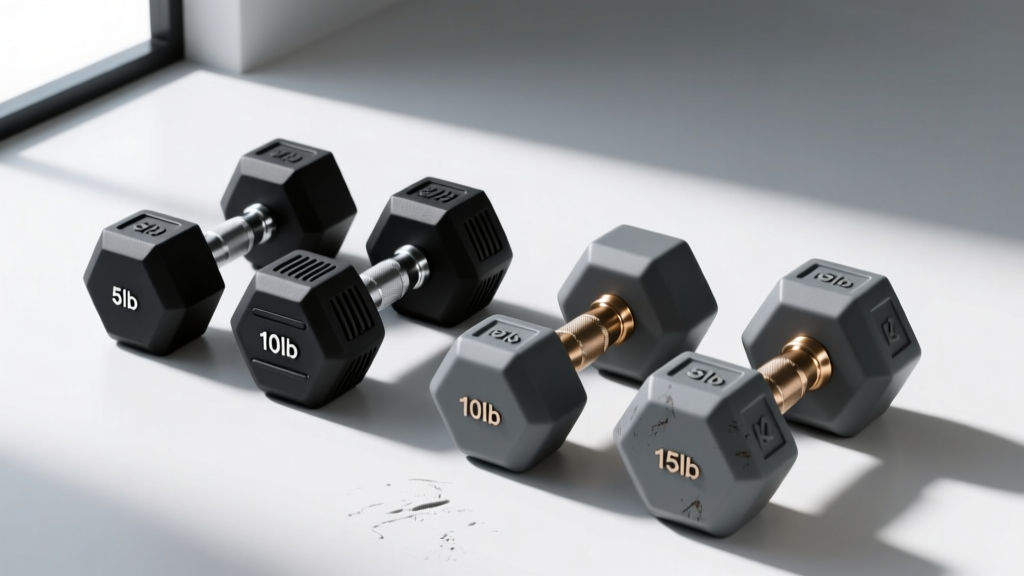
2026 Trends: Rubber Hex vs Urethane Dumbbell Chop Exercise

How Many Times Should I Lift Dumbbells a Day? Neoprene Beginner Guide

Is a Loadable Dumbbell Weight Set Walmart's Best Value?
Olympic Barbell Knurling: Rogue vs Eleiko & Dumbbell Fly Exercises
