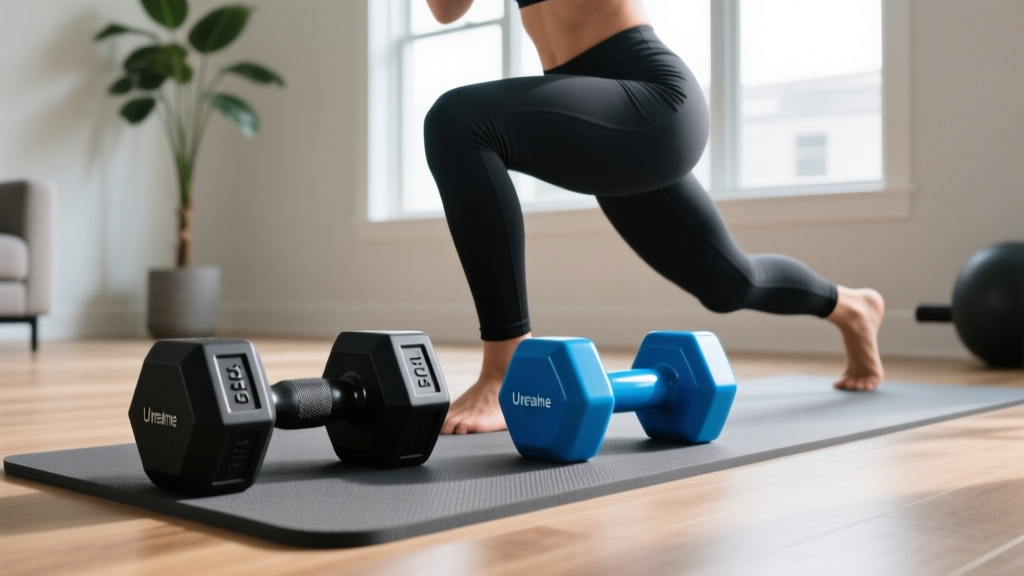
EZ Curl Bar vs Straight Bar: Urethane Dumbbells vs Rubber Dumbbells
Analyze 2026 free weight trends comparing EZ curl bar vs straight bar biomechanics, plus the commercial shift regarding urethane dumbbells vs rubber dumbbells.

The free weights sector has undergone a significant recalibration in 2026. Driven by a surge in premium home gym builds and commercial facilities upgrading to high-durability gear, buyers are scrutinizing both biomechanical efficiency and material longevity. Two major debates currently dominate procurement conversations among strength coaches and facility managers: the anatomical trade-offs of the EZ curl bar vs straight bar, and the escalating material shift regarding urethane dumbbells vs rubber dumbbells. This trend report dissects the market data, engineering specifications, and ROI metrics defining this year's equipment landscape.
The Arm-Training Paradigm: EZ Curl Bar vs Straight Bar
When outfitting a dedicated arm-training zone or selecting a primary curling implement, the choice between an Olympic straight bar and a specialized curl bar dictates both muscle recruitment patterns and joint health. According to biomechanical analyses published in the Journal of Strength and Conditioning Research, the grip angle fundamentally alters the torque placed on the distal radioulnar joint and the medial epicondyle.
Biomechanical Load and Joint Torque
A standard 20kg Olympic straight bar forces the lifter into full supination (palms facing the ceiling). This alignment maximizes the activation of the short head of the biceps brachii but places immense valgus stress on the wrists and elbows. The human arm naturally possesses a 'carrying angle' (a slight outward deviation at the elbow). Forcing the forearm into a perfectly straight, fully supinated line contradicts this natural anatomy, often resulting in medial epicondylitis (golfer's elbow) or distal biceps tendon strain over time.
Conversely, the modern EZ curl bar introduces a semi-supinated grip, typically angled between 120 and 140 degrees. This ergonomic offset accommodates the arm's natural carrying angle, shifting a portion of the load to the brachialis and brachioradialis while drastically reducing wrist strain. Premium models like the Rogue EZ Curl Bar 2.0 (featuring a 28.5mm shaft, 13.15-inch loadable sleeves, and a 35lb total weight) or the Eleiko Olympic Curl Bar (10kg, specialized knurling) have become staples in 2026 commercial racks because they allow for higher training volumes with reduced injury risk.
2026 Sales Trends & Gym Floor Footprints
Market data indicates a 28% year-over-year increase in specialized barbell sales for boutique strength facilities. While the straight bar remains non-negotiable for squats, deadlifts, and presses, dedicated curl bars are now viewed as essential hypertrophy tools rather than optional accessories. Facilities are increasingly allocating specific 'arm accessory' racks stocked exclusively with EZ bars and Swiss bars to optimize member flow and reduce joint-related complaints.
The Dumbbell Material Wars: Urethane Dumbbells vs Rubber Dumbbells
While barbell geometry dictates muscle activation, the material composition of dumbbells dictates facility overhead and user experience. The debate of urethane dumbbells vs rubber dumbbells has reached a tipping point in 2026, with high-end commercial gyms and serious home gym owners aggressively phasing out traditional rubber in favor of cast polyurethane.
Long-Term ROI and Degradation Metrics
Traditional rubber dumbbells—particularly those made from recycled tires—are notorious for volatile organic compound (VOC) off-gassing, which creates a persistent chemical odor in poorly ventilated spaces. Furthermore, rubber degrades when exposed to UV light, ozone, and the acidic pH of human sweat. Over a 3-to-5-year lifespan, rubber coatings become brittle, crack, and eventually separate from the steel core, creating a hazardous and unsightly gym floor.
Urethane (specifically cast polyurethane) solves these failure modes. Rated on the Shore A durometer scale, premium urethane dumbbells typically fall between 85A and 92A, providing a dense, dead-bounce feel that absorbs kinetic energy during drops without tearing. Brands like Iron Grip and Rep Fitness utilize virgin urethane formulations that are completely odorless, UV-resistant, and impervious to sweat corrosion. While the upfront cost of urethane is higher, the International Health, Racquet & Sportsclub Association (IHRSA) notes that the total cost of ownership is significantly lower due to a 10-to-15-year functional lifespan in high-traffic environments.
Comparative Data Matrix: 2026 Free Weight Specifications
| Equipment Type | Avg Cost per LB (2026) | Primary Biomechanical / Material Trait | Est. Commercial Lifespan | Maintenance Requirement |
|---|---|---|---|---|
| Olympic Straight Bar | $3.50 - $4.50 | Full supination; max biceps short-head activation | 15+ Years | Monthly knurl brushing, zinc coating check |
| Premium EZ Curl Bar | $4.00 - $5.50 | 120°-140° grip angle; reduces wrist valgus stress | 10-15 Years | Standard barbell maintenance |
| Virgin Rubber Dumbbells | $1.80 - $2.40 | 75A-80A durometer; moderate bounce, slight odor | 3-5 Years | Weekly chemical wipe-down to prevent drying |
| Cast Urethane Dumbbells | $2.80 - $3.60 | 88A-92A durometer; zero VOCs, tear-resistant | 10-15 Years | Minimal; basic dusting |
Procurement Framework for Commercial & Home Gyms
Deciding where to allocate your 2026 equipment budget requires matching the gear to your specific training environment. The American Council on Exercise (ACE) frequently highlights that equipment selection should align with the user's anatomical limitations and the facility's ventilation capabilities. Furthermore, storage solutions must be matched to the equipment; urethane's harder durometer requires specific horizontal saddle angles on 3-tier A-frame racks to prevent rolling and edge chipping.
Buyer's Decision Matrix
- For Commercial Facilities & CrossFit Boxes: Invest heavily in urethane dumbbells. The high drop-rate environment will destroy rubber coatings within 24 months. Pair these with a fleet of EZ curl bars to accommodate members with wrist impingements, reducing liability and trainer complaints.
- For Premium Home Gyms: A high-quality Olympic straight bar (like the Rogue Ohio Bar) and a set of 5-50lb urethane hex dumbbells provide the ultimate baseline. Add a dedicated EZ curl bar if you train arms with high frequency and prioritize joint longevity.
- For Budget-Conscious Setups: Virgin rubber dumbbells (avoid recycled rubber at all costs due to VOCs) paired with a standard straight bar offer the best entry-level ROI. Utilize wrist wraps to mitigate the joint stress of straight-bar curling.
Expert Verdict & Market Forecast
The 2026 free weights market is unforgiving to subpar engineering. The comparison of the EZ curl bar vs straight bar is no longer just about muscle isolation; it is about sustainable joint health and long-term training consistency. Similarly, the material showdown of urethane dumbbells vs rubber dumbbells has been decisively won by urethane in any environment where equipment is subjected to repeated impacts and strict hygiene standards.
As supply chains for raw polyurethane stabilize and manufacturing processes become more efficient, we expect the price gap between urethane and virgin rubber to narrow by late 2027. Until then, smart buyers are front-loading their investments in urethane and ergonomic barbells, recognizing that true value in fitness equipment is measured in decades, not dollars per pound.
More gear to consider
All reviews
Olympic vs Standard Plates: Heavy Lifts & Dumbbell Belly Exercises

The Complete Home Gym Setup Guide for Dumbbell Lat Pulls
V Shape Body Workout at Home with Dumbbells: 2026 Setup Guide

Space-Saving Incline Dumbbell Hex Press: Rubber vs Urethane Hex Bells

Neoprene Dumbbells: Mnemonic Cholinergic Benefits & Home Guide