EZ vs Straight Bar Care & Dumbbell Front Squat Muscles Worked Guide
Compare EZ curl bar vs straight bar maintenance, longevity, and failure modes. Plus: training pivots and dumbbell front squat muscles worked.

When building a commercial gym or a serious home setup in 2026, the debate between an EZ curl bar and a straight barbell usually centers on wrist ergonomics and bicep activation. However, as equipment reviewers and maintenance specialists, we look at a different set of metrics: rotational torque, sleeve bearing wear, coating degradation, and long-term structural integrity. Maintaining a cambered shaft requires a fundamentally different approach than caring for a standard Olympic straight bar. Furthermore, when your primary barbell is sidelined for a 48-hour restoration protocol, you need a biomechanical pivot strategy to maintain your training stimulus.
The Engineering Divide: Cambered vs. Straight Shafts
To understand maintenance, you must first understand the manufacturing. A standard straight bar, like the Rogue Ohio Bar ($295), features a continuous, solid steel shaft with machined ends where the sleeves are attached via high-tolerance bronze bushings or needle bearings. The load distribution is linear, and the rotational shear is evenly dispersed across the sleeve joint.
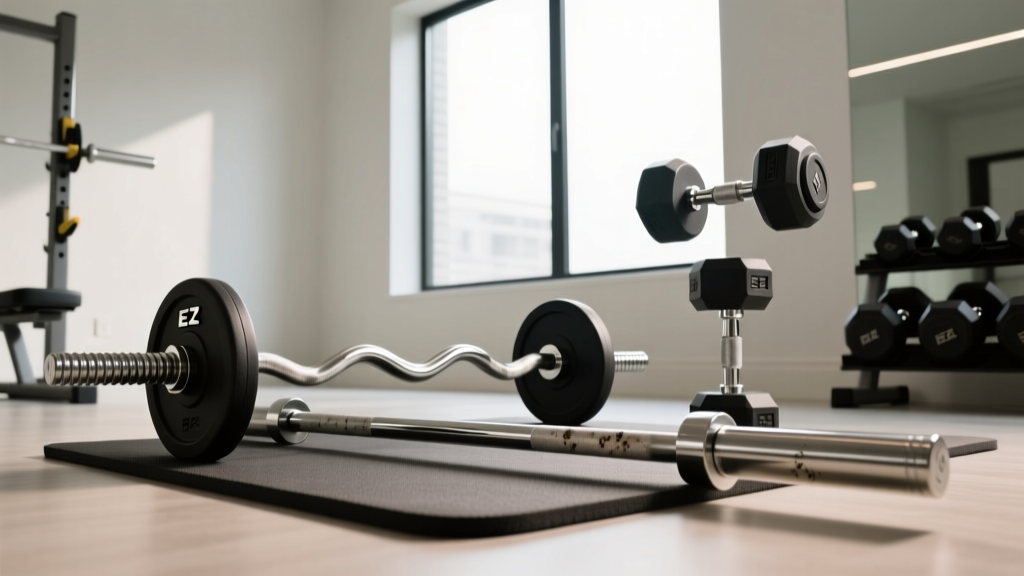
Conversely, an EZ curl bar (such as the CAP Barbell OB-86SZ, typically $65-$90) relies on a bent, cambered shaft. Because of the tight angles near the sleeve joints, manufacturers often use shorter, welded sleeve caps and lower-grade brass bushings. According to Rogue Fitness engineering specifications, the tolerance required for a straight bar's sleeve spin is measured in thousandths of an inch—a standard rarely met in budget EZ bars. This structural difference dictates entirely different maintenance schedules and failure modes.
Maintenance Showdown: Where Do They Fail?
1. Sleeve Bearings and Bushing Wear
The most common failure point for an EZ curl bar is sleeve seizure. During heavy skull crushers or upright rows, the asymmetrical grip creates a twisting torque that binds the cheap brass bushings inside the EZ bar's welded sleeves. Over time, chalk dust and oxidized metal shavings mix with factory grease, creating an abrasive paste that halts rotation. Straight bars, equipped with sintered bronze bushings or sealed needle bearings, handle this torque effortlessly but still require periodic lubrication to prevent the end-caps from blowing out under dynamic Olympic drops.
2. Knurling Corrosion and Coating Fatigue
As of 2026, Cerakote has largely replaced black zinc in the premium tier, but most mid-range EZ bars still rely on decorative chrome or standard zinc. The bends in an EZ bar create micro-stress points in the chrome plating. When sweat penetrates these micro-fissures, the underlying steel oxidizes, causing the chrome to flake off in sharp, dangerous shards. Straight bars suffer from knurling rust, where dead skin and chalk pack into the diamond grooves, trapping moisture against the bare steel of the knurl valley.
⚠️ Critical Warning: Never use a stainless steel wire brush on a chrome or zinc-coated EZ bar. The steel bristles are harder than the decorative coating and will strip it entirely, exposing the raw steel to immediate oxidation. Always use a brass or nylon brush.Longevity & Cost Matrix: Straight vs. EZ Curl Bars
| Feature | Olympic Straight Bar (e.g., Rogue Ohio) | Standard EZ Curl Bar (e.g., CAP OB-86SZ) |
|---|---|---|
| Expected Lifespan | 15-20+ Years (Lifetime) | 3-7 Years (High wear environments) |
| Primary Failure Mode | Knurling rust, bearing dry-out | Sleeve weld shear, chrome flaking at bends |
| Maintenance Interval | Monthly (Brushing) / Bi-Annual (Oiling) | Weekly (Chalk removal) / Monthly (Sleeve oil) |
| Restoration Cost | $25 (DIY supplies) to $150 (Re-chroming) | Usually unrepairable; requires replacement ($75) |
| Bushing Type | Sintered Bronze / Needle Bearings | Solid Brass / Cast Bronze |
The 48-Hour Barbell Restoration Protocol
When your straight bar's knurling becomes packed with chalk and sweat, or your EZ bar's sleeves begin to squeak and bind, execute this precise restoration protocol. As outlined in the BarBend Barbell Maintenance Guide, proper cleaning extends equipment life by decades.
- Dry Scrub (Hour 1): Use a Nylo-Pro (nylon) or brass wire brush. Scrub the knurling in a circular motion to dislodge impacted chalk and dead skin. For EZ bars, pay special attention to the inner angles of the bends where moisture pools.
- Solvent Wipe (Hour 2): Dampen a microfiber cloth with a mild, non-corrosive degreaser or 90% isopropyl alcohol. Wipe down the entire shaft to remove residual oils and sweat salts. Avoid harsh chemicals like bleach or ammonia, which will instantly strip zinc and Cerakote.
- Sleeve Lubrication (Hour 12): Stand the bar vertically. Apply 3 to 4 drops of 3-in-One oil or specialized F-5-15W barbell oil directly into the seam where the sleeve meets the shaft. Spin the sleeve 50 times in both directions to work the oil into the bushings. Wipe away excess.
- Protective Coating (Hour 48): Lightly mist a rag with mineral oil or a dedicated barbell protectant and wipe the shaft. This leaves a microscopic hydrophobic barrier that prevents ambient humidity from triggering surface rust.
Training Around Maintenance: The Biomechanical Pivot
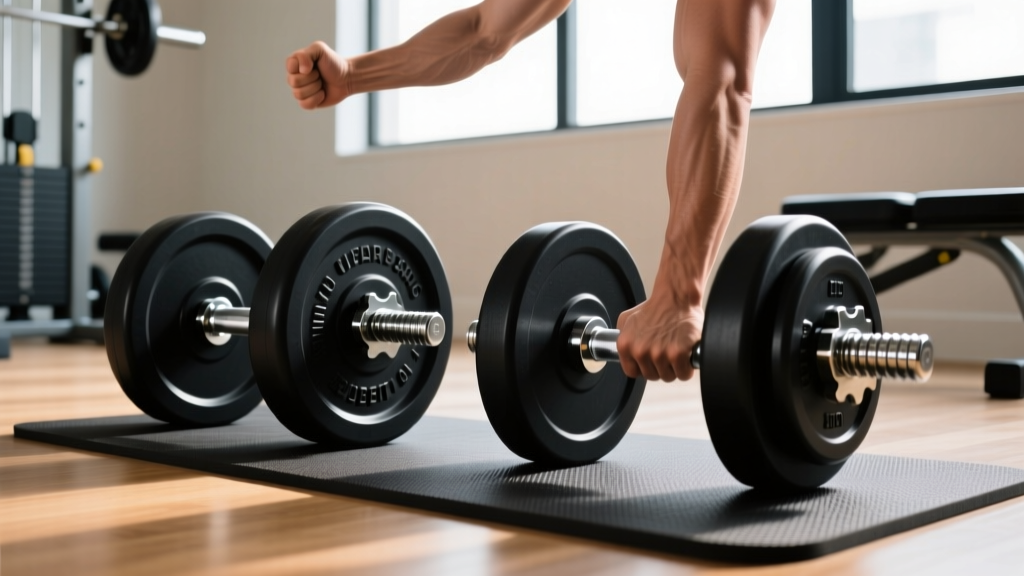
What happens when your primary straight bar is undergoing a 48-hour rust-removal and re-oiling protocol, or your EZ bar's sleeve has finally seized and is awaiting a warranty replacement? You must pivot to dumbbells to maintain your training split without compromising your joints or loading a damaged barbell sleeve.
Lower body training is particularly sensitive to this equipment downtime. When mapping the dumbbell front squat muscles worked via the ExRx Exercise Directory, you will note that the primary movers remain the quadriceps and gluteus maximus, while the synergists include the adductor magnus and soleus. However, because dumbbells are held at shoulder height rather than resting on the posterior deltoids and upper traps, the stabilization demands on the anterior deltoids, upper erector spinae, and core musculature increase dramatically.
Pro-Tip for Equipment Downtime: If your straight bar is out of commission, use the dumbbell front squat to target the exact same lower-body hypertrophy pathways. The altered center of gravity actually reduces lumbar shear force while increasing upper-back isometric demand, making it a highly effective temporary substitute while your primary barbell is being restored.
Final Verdict on Equipment Lifespan
If you view your gym equipment as a long-term investment, the straight barbell is the undisputed king of longevity. A well-maintained $300 straight bar will outlive the lifter, requiring only minutes of monthly brushing and bi-annual oiling. The EZ curl bar, while essential for targeted arm development and joint relief, is fundamentally a consumable wear-item in high-volume environments. Its welded sleeves and complex coating geometry make it prone to earlier failure. By understanding these mechanical differences and adhering to strict, material-specific cleaning protocols, you can maximize the ROI of your free weight arsenal and ensure your gear is always ready for the next heavy session.
More gear to consider
All reviews
Collar & Clamp Guide: Upgrading a Shoulder Workout Using Dumbbells

Pullover Dumbbell Chest Guide: Adjustable Picks 2026

Building a Baadass Dumbbell Setup: Bumper vs Iron Plates

Dumbbell Squat to Overhead Press: Cast Iron vs Competition
Bumper vs Iron Plates: Space for Standing Dumbbell Lateral Raises