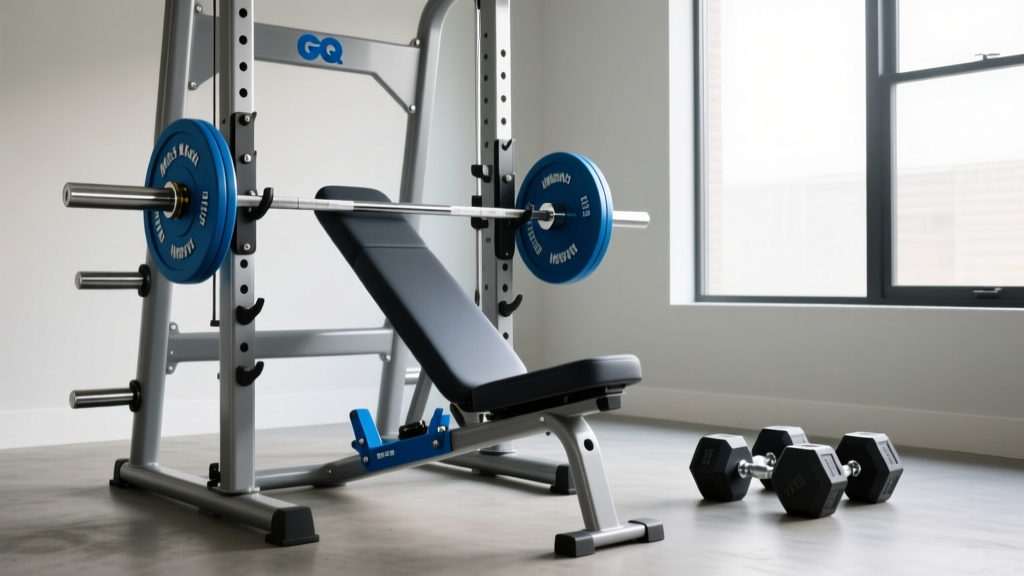
Dumbbell Pullovers for Lats: EZ Curl Bar vs Straight Bar
We compare the EZ curl bar vs straight bar for lat pullovers, analyzing biomechanics, grip angles, and top 2026 gear picks to upgrade your back training.

The Plateau: Why Move Beyond Dumbbells?
For decades, lifters have relied on traditional dumbbell pullovers for lats to build a wider, thicker back. The movement is iconic, popularized by Golden Era bodybuilders who claimed it expanded the ribcage. While the ribcage expansion claim has been largely debunked by modern biomechanics, the pullover remains one of the few exercises that trains the latissimus dorsi through a deep, loaded stretch in shoulder extension. However, as you progress in strength, the standard dumbbell pullover presents severe limitations: asymmetric loading, grip fatigue, and a restricted range of motion caused by the dumbbell striking the bench or floor before the lats are fully elongated.
This is where barbell variations enter the conversation. Transitioning to a barbell allows for micro-loading and superior bilateral stability. But this begs a critical question for home gym owners and serious lifters: should you use a straight bar or an EZ curl bar? In this hands-on review, we break down the biomechanics, the hidden mechanical flaws of cheap equipment, and our top 2026 gear picks to help you maximize lat hypertrophy.
Biomechanics Breakdown: Wrist Angles and Shoulder Extension
To understand which bar is superior, we must look at the primary function of the latissimus dorsi. According to anatomical databases like ExRx Latissimus Dorsi Anatomy, the lats are responsible for shoulder extension, adduction, and internal rotation. To isolate the lats during a pullover, you want to minimize the involvement of the pectorals (which perform horizontal adduction) and the long head of the triceps (which crosses the shoulder joint).
Expert Biomechanics Callout
A narrower grip heavily favors shoulder extension (lat bias), while a wider grip introduces horizontal abduction and adduction (pec and teres major bias). Therefore, the ideal pullover bar allows for a grip width just inside shoulder-width (roughly 14 to 18 inches apart) without forcing the wrists into extreme, painful angles.
The Straight Bar Dilemma
A standard 7-foot Olympic straight bar allows you to grip exactly where you want. However, holding a straight bar with a narrow grip forces your forearms into full pronation while simultaneously requiring extreme ulnar deviation at the bottom of the movement when the bar is behind your head. Over time, this combination places immense shear stress on the medial epicondyle and the triangular fibrocartilage complex (TFCC) in the wrist, often leading to tendonitis.
The EZ Bar Solution
The EZ curl bar features angled bends designed to place the forearm in a semi-pronated (neutral-ish) position. By gripping the inner angles of an EZ bar, you achieve the narrow grip required for lat-focused shoulder extension while drastically reducing wrist strain. It is the goldilocks zone for the pullover—provided you have the right equipment.
The Hidden Flaw: Plate Clearance and Bar Length
Here is a non-obvious edge case that 90% of fitness writers miss: bar length and sleeve placement dictate your range of motion. If you buy a standard, cheap 47-inch EZ curl bar, the sleeves (where the plates load) start very close to the center shaft. If you grip the inner bends (say, 12 inches apart), the weight plates will be hovering just inches from your hands. When you lower the bar behind your head for a deep lat stretch, the plates will smash into the flat bench or the floor long before your lats reach full elongation.
To perform EZ bar pullovers correctly, you either need to use smaller diameter plates (like 10lb or 25lb iron plates, or technique bumpers), or you need to invest in an extended-length Olympic EZ bar that pushes the sleeves further out.
Hands-On Gear Review: Top Bars for Lat Pullovers
We tested multiple bars in our facility to find the best options for the EZ bar pullover and straight bar pullover. Here are our 2026 top picks.
1. Rogue Curl Bar 2.0 (The Overall Winner)
Price: ~$225.00 | Length: 59 inches | Inner Grip Width: ~14.5 inches
Rogue’s updated Curl Bar 2.0 is an extended-length Olympic EZ bar. Unlike cheaper 47-inch models, the 59-inch shaft pushes the sleeves far enough away from the inner grip that standard 45lb plates will not clip the bench during a deep pullover. The hard chrome finish resists corrosion, and the moderate knurl provides excellent grip security without tearing calluses when your hands are sweating during high-rep back work.
2. Titan Fitness 7ft Olympic Bar (Best Straight Bar Alternative)
Price: ~$160.00 | Length: 84 inches | Shaft Diameter: 28.5mm
If you already own a standard power bar, you don't necessarily need to buy a dedicated straight bar just for pullovers. The Titan Fitness 7ft Olympic Bar features a 28.5mm shaft, which is thin enough to grip comfortably without over-taxing the forearms. For pullovers, we recommend gripping the smooth center knurl marks (usually 16 inches apart) and using lifting straps if grip fatigue precedes lat failure.
3. CAP Barbell 47' Super Curl Bar (The 'Avoid' Pick for Pullovers)
Price: ~$65.00 | Length: 47 inches
While this is a fantastic, budget-friendly bar for bicep curls and skull crushers, it is a mechanical nightmare for pullovers. The inner grip is exceptionally narrow (under 11 inches), and the sleeves are too close to the center. Unless you are exclusively using 10-pound plates, your range of motion will be severely truncated. Stick to dumbbell pullovers for lats if this is the only EZ bar you have access to.
Comparison Matrix: Dumbbell vs. EZ Bar vs. Straight Bar
| Feature | Dumbbell | EZ Curl Bar (Extended) | Straight Olympic Bar |
|---|---|---|---|
| Lat Isolation | Moderate (Neutral grip) | High (Narrow, semi-pronated) | High (Narrow, pronated) |
| Wrist Comfort | Excellent | Very Good | Poor (High strain) |
| Micro-loading | Poor (5-10lb jumps) | Excellent (2.5lb jumps) | Excellent (2.5lb jumps) |
| Stretch Depth | Limited by bench/floor | Deep (with long bar) | Deep (plates clear bench) |
Step-by-Step: Executing the EZ Bar Pullover
To replicate the deep stretch of traditional barbell pullovers while saving your wrists, follow this protocol:
- The Setup: Lie perpendicular across a flat bench, supporting only your upper back and shoulders. Keep your hips low to maintain a slight stretch in the abdominal wall and prevent the lower back from overarching.
- The Grip: Grab the innermost angled bends of the extended EZ bar. Your hands should be roughly 14 inches apart, palms facing each other at an angle.
- The Descent: With a slight bend in the elbows (lock this angle in), slowly lower the bar backward over your head. Inhale deeply to expand the ribcage.
- The Stretch: Lower the bar until you feel a profound stretch in the lats and the serratus anterior. Do not go so deep that your lower back compensates by arching.
- The Concentric: Exhale and pull the bar back to the starting position using only your lats. Stop when the bar is directly over your face; going past vertical shifts the tension onto the bones and joints rather than the muscle.
Pro-Tip: If you feel the triceps taking over, you are likely bending your elbows too much during the descent. Think about 'sweeping' the bar back with straight arms, treating the elbow joint as a rigid hinge.
Common Failure Modes and Troubleshooting
- Pec Dominance: If your chest is sore the next day instead of your back, your grip is too wide. Narrow your grip on the EZ bar to force the humerus into pure extension rather than a mix of extension and adduction.
- Shoulder Impingement: Lifters with pre-existing AC joint issues may find that even the semi-pronated grip of the EZ bar causes pinching at the bottom of the movement. If this occurs, revert to dumbbell pullovers for lats using a neutral grip, or switch to a cable pullover where the resistance vector can be adjusted.
- Grip Slippage: Because the bar is traveling in an arc behind your head, gravity is actively trying to pull the bar out of your fingers. Use Figure-8 lifting straps or versa grips to remove grip strength from the equation entirely, allowing you to train the lats to true mechanical failure.
The Final Verdict
While traditional dumbbell pullovers for lats will always have a place in hypertrophy programming, the extended EZ curl bar is the undisputed king of the pullover movement for advanced lifters. It marries the narrow grip required for maximum lat isolation with the ergonomic wrist angles necessary for long-term joint health. Skip the cheap, short 47-inch bars, invest in a 59-inch Olympic EZ curl bar, and prepare for the most intense lat stretch of your training career.
More gear to consider
All reviews
Back and Bi Dumbbell Workout Fixes: Barbell Knurling & Weight Errors

Best Adjustable Dumbbells for Arms: 2026 Setup Guide

Power Rack vs Squat Stand Setup & The Dumbbell Floor Press Exercise
Cast Iron vs Competition Kettlebells & Best Dumbbell for Traps

Bumper Plate vs Iron Plate for 1 Inch Dumbbell Handles