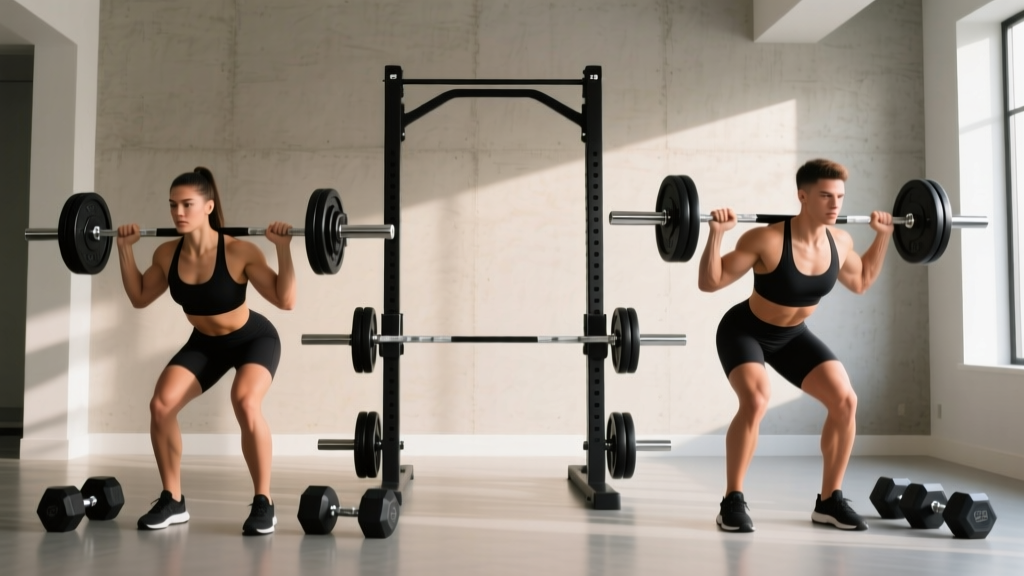
EZ Bar vs Straight Bar: Curls, RDLs & Dumbbell RDL GIF Form Guide
Compare the EZ curl bar vs straight bar for curls and RDLs. Includes biomechanics, wrist health tips, top 2026 gear picks, and dumbbell RDL form guides.

The Biomechanical Showdown: EZ Curl Bar vs. Straight Bar
When outfitting a home gym or optimizing a commercial weight room, the debate between the EZ curl bar and the straight barbell extends far beyond simple bicep curls. While both are staple pieces of free weight equipment, their distinct geometries dictate vastly different biomechanical outcomes, joint stress profiles, and exercise applications. As we evaluate the best free weights and racks in 2026, understanding the nuanced differences between these two bars is critical for longevity and performance.
The straight barbell is the undisputed king of absolute load and bilateral symmetry. However, its rigid, fully supinated grip requirement can wreak havoc on the wrists and elbows of lifters with limited radial deviation. The EZ curl bar, with its cambered shaft and multi-angled grip zones, was specifically engineered to mitigate this valgus stress. But which one is truly superior for your training goals? Let us break down the kinesiology, real-world applications, and top-tier equipment picks.
Grip Ergonomics and Joint Health
According to kinesiological data mapped by ExRx.net, the biceps brachii functions as both an elbow flexor and a forearm supinator. A standard Olympic straight bar forces the lifter into 100% supination. For individuals with a high carrying angle (cubitus valgus), this extreme supination under load transfers torque directly to the medial epicondyle and the radioulnar joint, frequently leading to medial epicondylitis (golfer's elbow) or distal biceps tendon strain.
Expert Insight: The angled grips on an EZ bar (typically set at 15-degree and 30-degree inclines) allow for a semi-supinated or neutral grip. This slightly pronated position shifts a marginal amount of activation to the brachialis and brachioradialis while drastically reducing connective tissue strain in the wrist and inner elbow.Upper Body Applications: Curls and Triceps Extensions
For upper body isolation movements, the choice between the two bars dictates your hypertrophy stimulus and injury risk. Below is a comparative matrix based on hands-on testing and electromyography (EMG) principles.
| Feature | Straight Olympic Bar | Standard EZ Curl Bar |
|---|---|---|
| Primary Muscle Focus | Short head of biceps (peak contraction) | Brachialis, brachioradialis, long head |
| Wrist/Elbow Stress | High (requires full supination) | Low to Moderate (ergonomic angles) |
| Max Load Capacity | High (ideal for cheat curls/heavy eccentrics) | Moderate (limited by grip width and bar weight) |
| Triceps Skull Crushers | High forearm fatigue, strict isolation | Superior comfort, allows heavier loading safely |
Lower Body Hinges: Barbell RDLs vs. Dumbbell RDLs
While the EZ bar is predominantly an upper-body tool, many lifters experiment with it for lighter, high-repetition Romanian Deadlifts (RDLs) to spare their shins from straight-bar scraping. However, the straight bar remains the gold standard for heavy posterior chain loading.
Before progressing to heavy barbell RDLs, mastering the hip hinge is non-negotiable. Many lifters start by searching for a dumbbell rdl gif to visually map out the hip hinge pattern, ensuring they understand how to push the hips back while maintaining a neutral spine. The ACE Fitness Exercise Library heavily recommends mastering the dumbbell variation first, as holding dumbbells at your sides naturally guides the bar path close to your center of gravity and prevents the lower back rounding often seen when lifters prematurely load a straight barbell.
Form Failure Mode: If you are using a straight bar for RDLs and feel the stretch in your lumbar spine rather than your hamstrings, your hip hinge is compromised. Drop the barbell, grab a pair of 35lb hex dumbbells, and drill the hinge pattern until the dumbbells can glide down your thighs to mid-shin without your pelvis tilting posteriorly.Can You Use an EZ Bar for RDLs?
Technically, yes, but it is highly situational. An EZ bar typically weighs between 15 to 35 lbs and has a shorter sleeve length (usually 5 to 7 inches). This limits the number of 45lb bumper plates you can load. Furthermore, the cambered bends of the EZ bar can create an awkward center of gravity during a hinge movement, causing the bar to swing away from the legs. We recommend reserving the EZ bar for upper body work and utilizing a straight bar or trap bar for lower body hinges.
Hands-On Review: Top 2026 Bar Picks for the Home Gym
To maximize your training, you need equipment that matches the biomechanical demands of your lifts. Here are our top-tested picks for 2026.
1. The Premium Straight Bar: Rogue Ohio Bar (Stainless Steel)
- Price: ~$395.00
- Shaft Diameter: 28.5mm
- Tensile Strength: 190,000 PSI
- Weight: 20kg (44 lbs)
The Verdict: The Rogue Ohio Bar remains the benchmark for multi-purpose straight bars. The 28.5mm shaft is thick enough to provide structural rigidity during heavy RDLs and squats, yet comfortable enough for high-rep curling. The stainless steel shaft offers a bare-steel feel with exceptional corrosion resistance, meaning the knurling stays sharp for secure grip during heavy hinges without tearing your calluses during arm day.
2. The Ergonomic Masterpiece: Rogue Curl Bar
- Price: ~$325.00
- Shaft Diameter: 14mm (at grip zones)
- Weight: 35 lbs
- Bearings: Dual knurled sleeves with bronze bushings
The Verdict: Unlike cheap, flimsy EZ bars that flex under 100 lbs, the Rogue Curl Bar is built like a tank. The 14mm grip diameter is slightly thicker than standard EZ bars, which actually increases grip activation and forearm hypertrophy during curls. The 35lb starting weight is excellent for lifters who have outgrown the 15lb generic bars but still want joint-friendly angles for heavy skull crushers and preacher curls.
Troubleshooting Common Failure Modes
Even with the right equipment, lifters encounter mechanical issues. Here is how to troubleshoot the most common failure modes associated with these bars.
- Straight Bar Wrist Pain During Curls: If you experience sharp pain on the pinky-side of your wrist, you lack the mobility for full supination. Solution: Switch to the inner, more steeply angled grips on an EZ bar, or use a Swiss bar (football bar) for a completely neutral grip.
- EZ Bar Grip Slip During Triceps Extensions: The angled bends on an EZ bar often lack aggressive knurling in the center. When doing heavy lying triceps extensions, sweat can cause the bar to slide. Solution: Apply liquid chalk specifically to the inner angled ridges, or wrap athletic tape around the smooth center bend.
- Barbell RDL Shin Scraping: A common complaint with straight bar RDLs is the bar dragging down the shins. Solution: This is a technique error, not an equipment flaw. Engage your lats by imagining you are squeezing oranges in your armpits. This pulls the bar tight against your thighs and shins, keeping it in the optimal center-of-mass line.
Frequently Asked Questions (FAQ)
Is an EZ curl bar better than dumbbells for bicep growth?
Both have distinct advantages. Dumbbells allow for independent arm movement, correcting muscular imbalances and enabling a natural supination twist at the top of the movement. The EZ curl bar, however, allows you to move significantly more absolute load, providing higher mechanical tension for the brachialis and brachioradialis. A well-rounded 2026 arm program should incorporate both.
Why do I feel my forearms more than my biceps when using an EZ bar?
Because the EZ bar places your hands in a semi-pronated (angled) position, the brachioradialis (the large forearm muscle) is forced to work harder to stabilize and flex the elbow joint. If your primary goal is isolated biceps peak contraction, use a straight bar or perform supinated dumbbell curls.
Can I use a straight bar for skull crushers?
Yes, but it places immense stress on the elbow tendons due to the fixed, fully pronated hand position at the bottom of the movement. We highly recommend using an EZ bar or a pair of dumbbells for skull crushers to preserve your triceps tendon health over the long term.
Final Takeaway: The straight bar is essential for foundational, heavy-load compound movements and strict supinated isolation. The EZ curl bar is a specialized, joint-saving tool that should be a staple for anyone dealing with elbow tendonitis or looking to target the outer arm musculature. Master your hip hinge with dumbbells first, then load up the straight bar for heavy RDLs, and save the EZ bar for where it truly shines: building massive, pain-free arms.
More gear to consider
All reviews
Bumper vs Iron Plates: Layouts & Lawn Mower Exercise Dumbbell Space
Cast Iron vs Competition Kettlebells & Dumbbell Shoulder Press Muscles

Best Adjustable Dumbbells for the Best Compound Dumbbell Exercises

Bumper vs Iron Plates: Rack Setups for the Isolated Dumbbell Curl
Power Rack vs Squat Rack Setup: Plus When Were Dumbbells Invented
