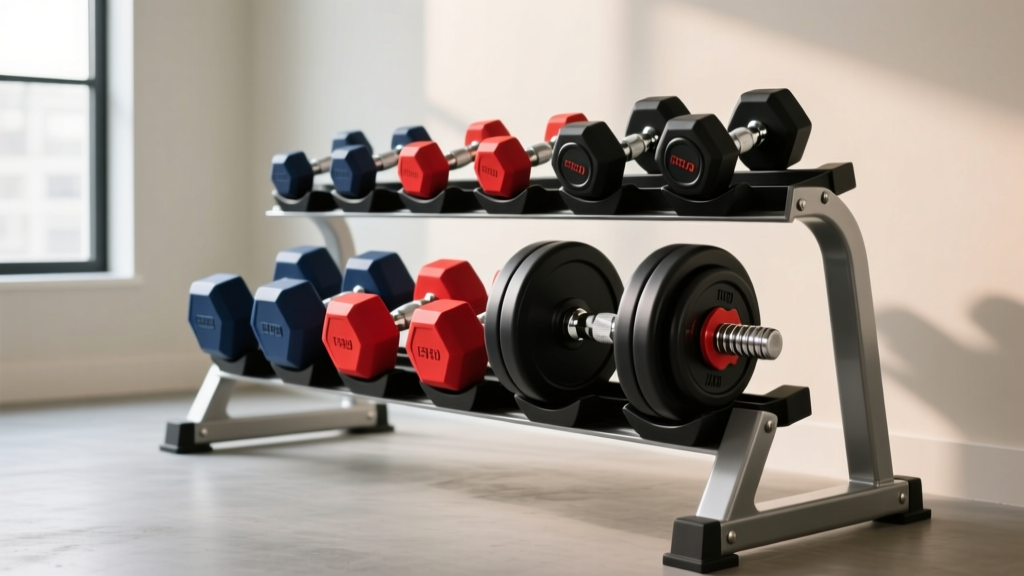
Ergonomic Dumbbells Storage: Rack Solutions & Care Guide
Protect your investment with our guide to ergonomic dumbbells storage. Discover the best rack solutions, maintenance tips, and longevity care protocols.

The Hidden Cost of Improper Storage
Investing in premium ergonomic dumbbells—whether you are using fixed urethane models with contoured grips like the REP Fitness Urethane Series or precision adjustable sets like the Nuobell 80lb or PowerBlock Elite USA—is a significant financial commitment. These specialized tools often cost between $300 and $850 per pair. Yet, the most common point of failure for these high-end weights is not the lifting itself, but how they are stored. Standard, narrow-rail wire racks and open-floor stacking degrade ergonomic handles, misalign adjustable selector pins, and compromise premium coatings.
Proper ergonomic dumbbells storage is not just about gym aesthetics; it is a critical maintenance protocol. The unique geometry of ergonomic grips, designed to reduce wrist strain and improve force transfer, creates micro-crevices where sweat and humidity pool. When stored incorrectly, these design advantages become liabilities. According to facility maintenance guidelines outlined by the National Strength and Conditioning Association (NSCA), improper equipment storage accelerates oxidation and material fatigue, reducing the lifespan of commercial-grade fitness gear by up to 40%.
Anatomy of Storage-Related Failure Modes
Before selecting a rack, it is essential to understand exactly how poor storage destroys the specific features that make ergonomic dumbbells valuable.
- Contoured Chrome Oxidation: Ergonomic fixed dumbbells often feature knurled or wave-contoured chrome handles. When rested on uncoated metal rack rails, the chrome plating suffers micro-abrasions. Combined with residual sweat (which has a pH of 4.5 to 7.0), this leads to rapid pitting and rust inside the ergonomic grooves.
- Adjustable Dial Misalignment: Sets like the Bowflex SelectTech or Nuobell rely on precise internal selector mechanisms. Storing them on vibrating surfaces or angled wire racks can cause the internal weight plates to shift, jamming the dial or causing the handle to detach during a lift.
- Urethane Compression Set: High-end fixed dumbbells use 90 Shore A durometer urethane. When heavy (50lb+) dumbbells are wedged tightly onto narrow, 1-inch metal rack tiers, the constant pressure creates a 'compression set,' permanently deforming the hex shape and causing the ergonomic heads to roll unpredictably.
Matching the Rack to Your Ergonomic Dumbbell Type
Not all storage solutions are created equal. The ideal rack must support the specific weight distribution and mechanical vulnerabilities of your dumbbell type. Below is a decision matrix for selecting the correct storage hardware in 2026.
| Dumbbell Type | Ideal Rack Style | Example Product | Price Range | Longevity Benefit |
|---|---|---|---|---|
| Adjustable (Nuobell, Bowflex) | Flat-Bottom Cradle / Tray | Nuobell Official Tray | $59 - $79 | Prevents dial jamming; keeps dust out of selector pins. |
| Adjustable (PowerBlock) | Column Stand / Anchor | PowerBlock Anchor Stand | $149 - $179 | Supports the square block base; prevents tipping and casing cracks. |
| Fixed Urethane (Hex) | 3-Tier A-Frame with UHMW Pads | REP Fitness 3-Tier Rack | $189 - $249 | UHMW plastic pads prevent urethane abrasion; wide spacing prevents compression. |
| Fixed Rubber (Round/Pro-style) | Vertical Tree or Saddle Rack | Rogue Dumbbell Tree | $295 - $350 | Cradles the handle, keeping the rubber heads suspended to prevent flat-spotting. |
Step-by-Step Maintenance Protocol for Stored Weights
Storage and maintenance are deeply intertwined. A dumbbell should never be placed on a rack until it has undergone a rapid post-workout stabilization process. Follow this 3-minute protocol to ensure maximum longevity.
Step 1: The Neutral pH Wipe-Down
Ergonomic grips trap dead skin, chalk, and sweat. Use a microfiber cloth lightly dampened with a neutral pH cleaner (between 6.5 and 7.5). Never use bleach, ammonia, or alcohol-based sanitizers on ergonomic rubber or urethane coatings. As noted in equipment care guides by Rogue Fitness, harsh chemicals break down the plasticizers in urethane, leading to dry rot, cracking, and a sticky residue that ruins the ergonomic feel of the grip.
Step 2: Mechanism Lubrication (Adjustables Only)
For adjustable ergonomic dumbbells, the storage cradle is where maintenance happens. Once a month, apply two drops of 100% silicone oil (not WD-40, which attracts dust and degrades plastics) to the selector rails and dial mechanisms. Wipe away excess before returning them to the storage tray.
Step 3: Chalk Eradication
If you use lifting chalk, the ergonomic knurling or contoured grooves will become clogged, reducing grip traction and trapping moisture. Use a stiff nylon brush (never wire) to sweep the grooves before racking. Wire brushes will strip the chrome or zinc plating, exposing the raw steel core to rapid oxidation.
Environmental Controls: The Invisible Storage Factor
The physical rack is only half the storage equation; the ambient environment dictates the chemical stability of your equipment. Ergonomic dumbbells with rubberized handles or internal steel components are highly susceptible to atmospheric corrosion.
'Maintaining a relative humidity (RH) level between 40% and 50% is the single most effective way to prevent flash rust on knurled steel handles and prevent rubber degradation in home and commercial gym environments.'
— Facility Management Best Practices, Fitness Industry Standards
If your home gym is located in a garage or basement, you must invest in a high-capacity dehumidifier. During the summer months, ambient humidity can easily exceed 70%, causing condensation to form on the steel cores of your dumbbells overnight. Furthermore, ensure your storage rack is positioned at least three feet away from direct sunlight or HVAC vents. UV exposure breaks down the molecular bonds in rubber and urethane, causing the ergonomic heads to fade, chalk, and eventually crumble.
Troubleshooting Common Storage-Related Damage
Even with excellent storage practices, issues can arise. Here is how to diagnose and fix the most common storage-induced failures.
1. Sticky or Jammed Adjustable Dials
Cause: Dust accumulation in the storage tray mixing with sweat residue, creating a cement-like paste in the selector pins.
Fix: Remove the dumbbell from the rack. Use a can of compressed air to blow out the internal mechanism. Wipe the exterior dial with a dry microfiber cloth. Avoid using liquid cleaners near the dial housing, as liquid can seep into the internal weight plates and cause them to fuse together.
2. Peeling or Flaking Rubber Coatings
Cause: Storing rubber-coated ergonomic dumbbells on wire racks in direct sunlight, or using alcohol-based gym wipes that strip the protective factory oils.
Fix: Unfortunately, rubber degradation is irreversible. To halt further flaking, wipe the heads with a damp cloth to remove loose particles, and apply a very thin layer of 303 Aerospace Protectant to the rubber heads (avoiding the handle). This restores UV inhibitors and halts the dry rot process. For future storage, upgrade to a flat-shelf rack lined with EVA foam.
3. Asymmetrical Urethane Wear
Cause: Dropping dumbbells into tight rack slots at an angle, chipping the bottom edge of the hex head.
Fix: If the ergonomic dumbbells are heavy (over 50 lbs), consider a rack with a 'drop-in' sloped design rather than a flat tier. Sloped racks guide the dumbbell into place, eliminating the lateral impact that chips urethane edges. Alternatively, apply heavy-duty rubber bumpers to the rack's guide rails.
Conclusion
Ergonomic dumbbells are precision-engineered tools designed to optimize your biomechanics and protect your joints. Treating them like generic iron weights by tossing them onto inadequate wire racks is a disservice to your investment and your training. By selecting a rack that supports the specific geometry of your dumbbells, controlling your gym's humidity, and implementing a strict pre-racking cleaning protocol, you will ensure your equipment remains safe, hygienic, and mechanically flawless for years to come. For more insights on optimizing your training space, consult the educational resources available through the American Council on Exercise (ACE) regarding home gym safety and equipment longevity.
More gear to consider
All reviews
Fixing Dumbbell Exercises for Arms at Home: Barbell Knurl Guide
2026 Market Trends: Loadable Dumbbells for the Dumbbell Clean and Press

Dumbbell Tenement Definition & Gym Setup: Olympic vs Standard Plates

EZ Curl Bar vs Straight Bar & Low to High Dumbbell Fly Budget Guide

Best Neoprene Dumbbells for Sitting Dumbbell Exercises (2026)
