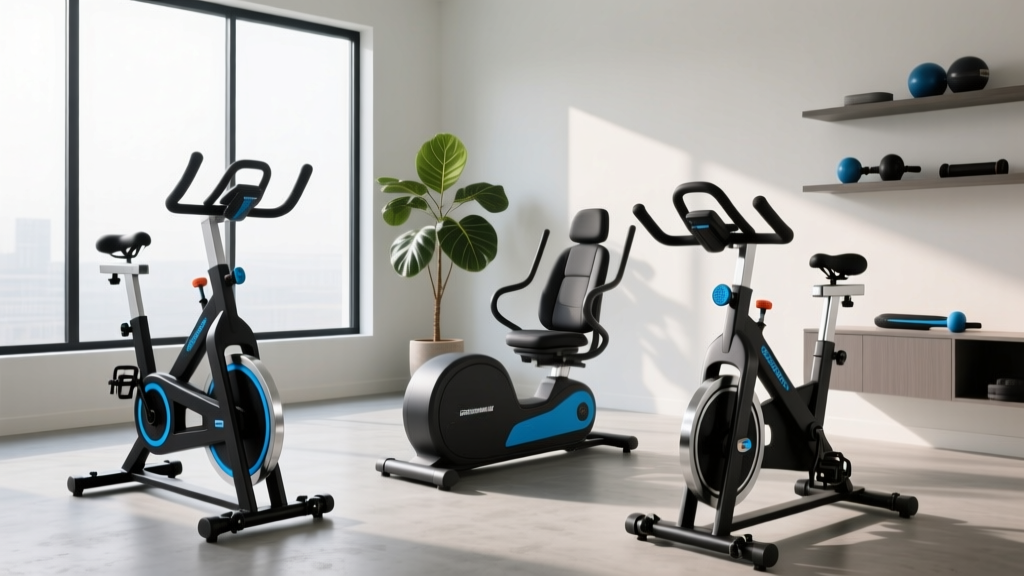
Elliptical vs Treadmill: Value & How to Apply Treadmill Lubricant
Compare elliptical vs treadmill for home cardio with a 2026 budget breakdown. Learn hidden costs, resale value, and how to apply treadmill lubricant.

The True Cost of Home Cardio: Beyond the Price Tag
When deciding between an elliptical and a treadmill for home cardio, most buyers fixate on the upfront retail price or the console's interactive features. However, as we navigate the fitness equipment market in 2026, the smartest consumers are analyzing the Total Cost of Ownership (TCO). A machine's true value is determined by its upfront cost, energy consumption, long-term maintenance requirements, and eventual resale value.
While both machines offer excellent cardiovascular benefits, their financial footprints diverge significantly after the first year of ownership. According to the Mayo Clinic, the choice also impacts joint health, which can translate to hidden medical or physical therapy costs down the line. This comprehensive budget breakdown will dissect the financial realities of both machines and provide a critical, money-saving maintenance guide—including exactly how to apply treadmill lubricant to prevent catastrophic motor failure.
Upfront Investment: 2026 Market Pricing Matrix
The barrier to entry for treadmills is generally higher than for ellipticals. This is primarily due to the cost of manufacturing a continuous-duty motor (measured in Continuous Horsepower, or CHP) and a heavy-duty steel deck capable of absorbing repetitive impact. Below is a breakdown of what you can expect to pay in the current market for reliable, non-commercial home models.
| Equipment Tier | Treadmill (Avg. Cost & Specs) | Elliptical (Avg. Cost & Specs) | Value Winner |
|---|---|---|---|
| Budget (Under $700) | $499 - $699 (2.5 CHP, 50" belt) | $450 - $650 (Front-drive, manual incline) | Elliptical |
| Mid-Range ($800 - $1,300) | $899 - $1,199 (3.0 CHP, 60" belt, cushioning) | $800 - $1,200 (Center-drive, power incline) | Tie (Depends on use case) |
| Premium ($1,500+) | $1,599 - $2,499 (4.0 CHP, HD touchscreen) | $1,500 - $2,200 (Heavy flywheel, adaptive stride) | Treadmill (Better longevity at high tier) |
Note: At the budget tier, treadmills often suffer from premature motor burnout due to inadequate cooling and smaller rollers. Mid-range ellipticals, such as the Sole E35 or Schwinn 470, tend to offer a much higher reliability-to-cost ratio than budget treadmills.
The Hidden Cost of Ownership: Maintenance and Repair
This is where the budget analysis shifts dramatically. Treadmills and ellipticals require vastly different maintenance routines, and neglecting them leads to expensive, often unrepairable failure modes.
Treadmill Upkeep: Preventing the $400 Motor Burnout
The most common point of failure on a home treadmill is not the belt snapping, but the control board frying or the motor overheating. This happens when friction between the walking belt and the wooden deck increases, forcing the motor to draw excess amperage. Understanding how to apply treadmill lubricant correctly is the single most effective way to protect your $1,000+ investment. Manufacturers like Sole Fitness and NordicTrack mandate this every 130 miles or 3 months to keep warranties valid.
⚠️ WARRANTY WARNING: Never use WD-40, petroleum jelly, or household silicone sprays. These will degrade the belt's cotton underlayer and immediately void your warranty. You must use 100% pure liquid silicone treadmill lubricant.Step-by-Step: How to Apply Treadmill Lubricant
- Power Down and Secure: Unplug the treadmill from the wall. Remove the safety key to ensure the machine cannot accidentally start.
- Loosen the Belt: Locate the two rear roller adjustment bolts at the back of the machine. Using the correct Allen wrench (usually 6mm or 1/4-inch), turn both bolts counter-clockwise exactly 3 to 4 full turns. Keep track of your turns.
- Apply the Silicone: Gently lift the edge of the walking belt near the middle of the deck. Insert the nozzle of your 100% silicone lubricant bottle. Squeeze exactly 0.5 ounces (about half the bottle) in a zig-zag pattern toward the center. Repeat on the opposite side.
- Retighten the Belt: Turn both rear roller bolts clockwise the exact same number of turns you loosened them (3 to 4 turns) to re-center the belt.
- Distribute the Lube: Plug the machine back in. Stand on the side rails, start the treadmill at 2.0 mph, and let it run for 3 minutes. Then, walk on the belt at 3.0 mph for another 2 minutes to evenly distribute the silicone across the entire deck.
Elliptical Upkeep: Pivot Points and Drive Belts
Ellipticals do not require belt lubrication, which saves you roughly $15 a year in silicone costs. However, they are not maintenance-free. The primary failure mode for ellipticals is the degradation of the track wheels and the stretching of the internal drive belt.
- Track Maintenance: Every 6 months, wipe the aluminum rails with a damp cloth to remove microscopic dust that acts like sandpaper on the polyurethane wheels.
- Joint Greasing: The pivot points on the pedal arms require white lithium grease annually. If you hear a rhythmic 'squeak-click' during your stride, the bearings are drying out.
- Internal Drive Belt: After 3-5 years of heavy use, the internal ribbed drive belt may slip. Replacing this part costs about $40-$60, but requires completely disassembling the side shrouds, which can take 2 hours of labor.
Energy Consumption: The Utility Bill Impact
While often overlooked, the electrical draw of cardio machines impacts your monthly budget, especially if you train daily in a climate-controlled room.
'A 3.5 CHP treadmill motor drawing peak amperage during a high-incline run can pull upwards of 900 to 1,200 watts. Over a year of daily hour-long sessions, this can add $40 to $75 to your annual electricity bill, depending on local kilowatt-hour rates.'
— 2026 Home Gym Energy Audit Report
Conversely, magnetic-resistance ellipticals are incredibly energy-efficient. The console and resistance magnets typically draw less than 50 watts. Some premium 2026 elliptical models are even self-generating, requiring zero wall power. If you are running a home gym on a strict utility budget or using a solar-generator setup, the elliptical is the undisputed financial winner.
Depreciation and Resale Value Analysis
If you plan to upgrade your equipment in 3 to 5 years, you must factor in depreciation. The secondary market for fitness equipment is brutal, but the rates of depreciation differ between these two machine types.
Treadmill Depreciation
Treadmills lose approximately 40% to 50% of their value the moment they are assembled. Buyers on the used market are highly skeptical of used treadmill motors and worn decks. A $1,200 mid-range treadmill will typically resell for $400-$500 on local marketplaces after three years of moderate use. Furthermore, moving a 200-pound treadmill requires specialized equipment or two strong people, limiting your buyer pool to locals.
Elliptical Depreciation
Ellipticals hold their value slightly better, losing about 30% to 40% over the same period. Because there is no walking belt to inspect for wear and tear, and the motor is under significantly less stress, buyers perceive used ellipticals as a safer bet. A $1,000 elliptical can often be resold for $500-$600. The major caveat is the footprint: ellipticals are notoriously difficult to disassemble and move through standard doorways, which can deter some buyers.
The Final Verdict: Which Machine Wins the Budget Battle?
When analyzing the long-term reliability and cost data from Consumer Reports alongside current market pricing, the 'value' winner depends entirely on your maintenance discipline and fitness goals.
Choose the Elliptical If:
- You want the lowest Total Cost of Ownership (TCO).
- You are prone to joint issues and want to avoid potential physical therapy costs (ellipticals offer zero-impact movement).
- You want to minimize your home gym's electrical draw.
- You dislike performing routine mechanical maintenance.
Choose the Treadmill If:
- You are training for outdoor running events and need biomechanical specificity.
- You are willing to commit to a strict maintenance schedule (learning how to apply treadmill lubricant every 90 days).
- You are purchasing in the Premium tier ($1,500+), where treadmill build quality and motor longevity vastly outpace budget models.
Ultimately, the most budget-friendly machine is the one that keeps you out of the doctor's office and gets used consistently. Factor in the hidden costs of electricity, replacement parts, and your own willingness to perform maintenance, and the right financial choice for your home gym will become clear.
More gear to consider
All reviews
Stair Climber Home Guide & VacuTherm Treadmill Comparison

Elliptical vs Treadmill: Can You Match Treadmill Results?
Rucking on a Treadmill: Best Folding Models for Small Spaces & Maintenance Guide

Treadmill Shocking Me? 2026 Folding Treadmill Small Space Reviews
From the Inventor of the Treadmill to Modern Setup: Feature Guide