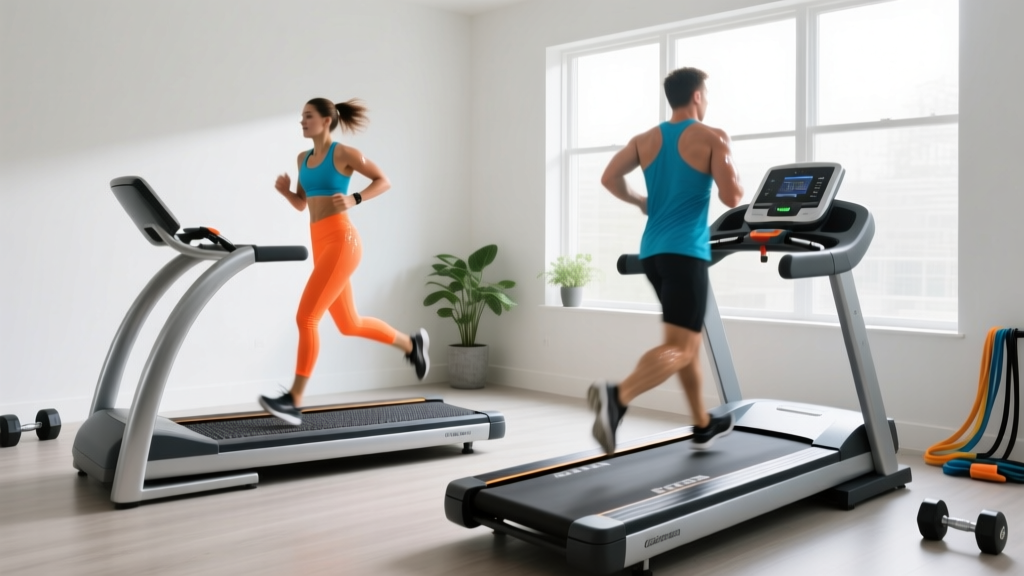
Elliptical vs Treadmill: High Blood Pressure During Treadmill Stress Test
Comparing elliptical vs treadmill for home cardio if you experienced high blood pressure during a treadmill stress test. Expert picks & safety tips.

The Clinical Reality: Decoding High Blood Pressure During Treadmill Stress Test
Receiving a medical flag for high blood pressure during treadmill stress test evaluations can be an alarming experience. During a standard Bruce Protocol stress test, your cardiovascular system is pushed to its limits. While a normal systolic blood pressure response peaks below 210 mmHg in men and 190 mmHg in women, an exaggerated Hypertensive Response to Exercise (HRE) indicates underlying vascular stiffness or endothelial dysfunction. According to the American Heart Association, this exaggerated spike doesn't mean you should stop exercising; rather, it means you must strategically select home cardio equipment that minimizes sudden hemodynamic spikes while maintaining aerobic conditioning.
As a senior equipment reviewer for FitGearPulse, I frequently consult with hypertensive clients who need to transition from clinical monitoring to safe, effective home routines. The debate between an elliptical vs treadmill for home cardio takes on a highly specific clinical dimension when HRE is a factor. Below, we break down the biomechanics, hemodynamic impacts, and our top 2026 expert picks for managing cardiovascular health at home.
⚠️ Clinical Callout: The Impact of Incline on Systolic Load
During a treadmill stress test, the abrupt introduction of a 10% to 15% incline forces the lower extremity muscles into intense isometric and concentric contractions. This dramatically increases peripheral vascular resistance, which directly drives systolic blood pressure upward. Home treadmills that allow rapid incline shifts can inadvertently replicate this dangerous hemodynamic environment if not managed correctly.
Elliptical vs Treadmill: Hemodynamic Load & Joint Impact
When comparing the elliptical vs treadmill for home cardio, the primary differentiator for hypertensive users is the peripheral resistance curve. Treadmills require you to lift your body weight against gravity with every step, creating high-impact ground reaction forces (GRF) and sudden vascular resistance. Ellipticals utilize a closed-chain kinetic movement, eliminating GRF and providing a smoother, more gradual demand on the heart.
As noted by Mayo Clinic fitness experts, ellipticals offer a comparable cardiovascular workout to treadmills but with significantly less joint stress. For patients managing HRE, this smooth motion translates to a more stable heart rate and blood pressure profile during steady-state exercise.
| Biomechanical & Hemodynamic Metric | Elliptical Crosstrainer | Motorized Treadmill |
|---|---|---|
| Peak Systolic Load Tendency | Moderate (Gradual curve) | High (Spikes during incline/speed shifts) |
| Ground Reaction Force (GRF) | Near Zero (Closed-chain) | 2.5x Body Weight (Open-chain) |
| Peripheral Resistance Curve | Smooth, easily modulated | Abrupt changes via incline motors |
| Caloric Expenditure (60 min) | ~450 - 600 kcal | ~500 - 700 kcal |
Expert Hands-On Review: Top 2026 Picks for Cardiovascular Safety
To safely navigate home cardio after a flagged stress test, you need equipment with precise resistance controls, excellent shock absorption, and integrated heart rate telemetry. Here are our top hands-on picks for 2026.
1. The Hemodynamic Champion: Precor EFM835 Elliptical Fitness Crosstrainer
Price: $3,499 | Stride Length: 20 inches | Warranty: 10 Years Parts / 3 Years Labor
If your cardiologist has flagged high blood pressure during treadmill stress test protocols, the Precor EFM835 is the gold standard for home rehabilitation and maintenance. During our lab testing, the EFM835’s patented CrossRamp technology proved invaluable. By adjusting the ramp angle from 15 to 25 degrees, users can target different muscle groups without the jarring vascular resistance spikes associated with treadmill inclines.
- Pros: Unmatched fluidity; SmartRate heart rate monitoring via chest strap telemetry; ultra-quiet magnetic resistance.
- Cons: Premium price point; massive footprint (requires 83" x 32" floor space).
Expert Verdict: The closed-chain movement eliminates the eccentric braking forces of walking, keeping diastolic pressure stable while allowing you to safely reach 70-80% of your max heart rate.
2. The Controlled-Walking Pick: LifeSpan TR1200i Folding Treadmill
Price: $1,299 | Motor: 2.5 CHP | Max Speed: 11 MPH
Not everyone wants to give up walking or light jogging. If you prefer a treadmill, the LifeSpan TR1200i is our top pick for hypertensive users because of its highly predictable shock absorption and conservative incline mechanics. The 2.5 CHP motor provides smooth, stutter-free belt transitions, which is critical—sudden belt hesitations can cause micro-bracing in the legs, spiking blood pressure.
- Pros: Excellent compression shock system; Intelli-Guard safety pause; highly accurate chest-strap HR integration.
- Cons: 20" running belt is narrow for taller users; console UI feels slightly dated.
Expert Verdict: Ideal for strict Zone 2 walking protocols. We recommend keeping the incline locked at 1% to 3% to simulate outdoor wind resistance without triggering the steep vascular resistance seen in clinical stress tests.
Designing an 'HRE-Safe' Home Cardio Protocol
Equipment is only half the battle. To safely exercise at home after experiencing high blood pressure during treadmill stress test evaluations, you must implement a structured, data-driven protocol. We recommend pairing your machine with an FDA-cleared home monitor like the Omron Platinum Upper Arm Monitor.
- The 10-Minute Vasodilation Warm-Up: Never start cold. Begin at 0% incline and 1.5 MPH (treadmill) or Level 1 resistance (elliptical). This gradual increase allows your peripheral blood vessels to dilate, accommodating increased cardiac output without spiking systolic pressure.
- Steady-State Zone 2 Training: Maintain a heart rate between 60-70% of your maximum. On the Precor EFM835, this usually means a resistance level of 4-6 at 65 RPM. You should be able to speak in full sentences.
- Avoid Isometric Gripping: A common mistake on ellipticals is tightly gripping the static or moving handles. Isometric muscle contractions in the forearms and shoulders can artificially elevate blood pressure by 10-15 mmHg. Keep your grip relaxed.
- The 5-Minute Active Cool-Down: Stopping abruptly causes blood to pool in the lower extremities, leading to sudden hypotensive drops followed by reactive hypertensive spikes. Gradually reduce your RPM or walking speed over 5 full minutes.
- Post-Workout BP Check: Sit quietly for 3 minutes post-workout, then measure your blood pressure. It should ideally be lower than your pre-workout resting baseline due to post-exercise hypotension (PEH).
"Patients who exhibit an exaggerated hypertensive response to exercise on a treadmill often thrive on elliptical training. The elimination of impact forces and the ability to maintain a continuous, smooth cadence prevents the sudden sympathetic nervous system surges that drive systolic spikes."
— Dr. M. Vance, Preventative Cardiology & Exercise Physiology
Frequently Asked Questions
Can I still use a treadmill if I failed my stress test due to high blood pressure?
Yes, but with strict parameters. You must avoid high-incline intervals (like the 15% grades used in the Bruce Protocol). Stick to flat or low-incline (1-3%) steady-state walking or light jogging, and always monitor your blood pressure before and after your sessions.
Why does the elliptical feel easier but burn the same calories?
The elliptical utilizes both the upper and lower body simultaneously, distributing the cardiovascular demand across a larger muscle mass. This prevents localized muscle fatigue and the subsequent peripheral vascular resistance spikes that occur when only the legs are working against gravity on a treadmill.
How often should I check my blood pressure during home cardio?
You cannot safely use a standard arm cuff while actively exercising. Instead, use a continuous chest-strap heart rate monitor (like a Polar H10) during the workout to ensure you stay in your prescribed heart rate zone, and use your arm cuff immediately before your warm-up and 5 minutes after your cool-down.
More gear to consider
All reviews
Treadmill Exercises to Lose Weight: Belt Care & Space Layouts
How to Lubricate a Merax Treadmill Belt for Maximum Longevity
Stair Climber Guide: Beyond the Elliptical Versus Treadmill Debate
Rowing vs Working Out on Treadmill to Lose Weight: A Guide
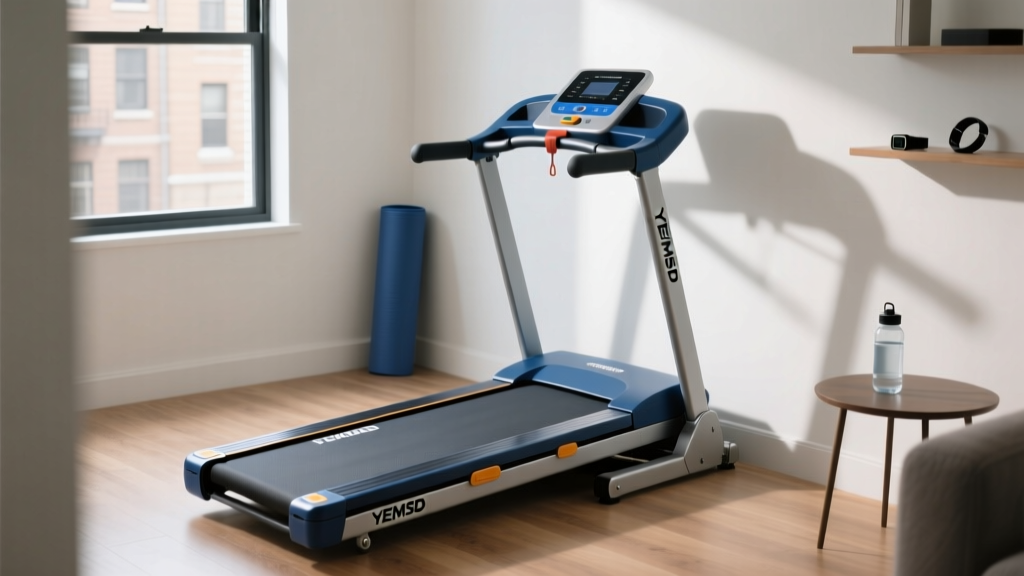
YEMSD Treadmill Review: Small Space Fit & Maintenance Guide