
Easy Move Treadmill Motor Guide: Troubleshooting HP Mistakes
Master your easy move treadmill motor size and horsepower. Learn to troubleshoot stalling, overheating, and CHP mistakes with our expert guide.

The Hidden Costs of Underpowered Compact Treadmills
The popularity of the easy move treadmill has skyrocketed as remote workers and apartment dwellers seek space-saving cardio solutions. These folding, lightweight machines—often marketed as walking pads or compact runners—are engineering marvels of spatial efficiency. However, their compact footprint introduces a critical vulnerability: the motor. In 2026, the market is flooded with ultra-slim models boasting aggressive marketing claims about horsepower, leading to widespread consumer confusion, premature motor burnout, and frustrating mid-workout stalls.
As a senior equipment technician, I see the same mistakes repeatedly. Users buy a 1.5 HP walking pad expecting it to handle high-intensity interval training (HIIT), or they misdiagnose a dry, high-friction belt as a failing motor. This comprehensive troubleshooting guide dissects treadmill motor size, horsepower metrics, and the exact diagnostic steps to resolve stalling, overheating, and error codes on your easy move treadmill.
Mistake #1: Falling for the "Peak HP" Marketing Trap
The most common mistake consumers make when evaluating an easy move treadmill is confusing Peak Horsepower with Continuous Duty Horsepower (CHP). Peak HP is the maximum power the motor can draw for a fraction of a second before the circuit breaker trips or the windings melt. It is a useless metric for real-world application.
⚠️ Technician Warning: If a budget-friendly easy move treadmill advertises a "3.0 HP Motor" for under $300, it is almost certainly referring to Peak HP. A true 3.0 CHP motor requires a heavy, bulky chassis and costs significantly more. Always check the fine print or the manufacturer's specification sheet for the CHP rating.According to equipment testing standards highlighted by Consumer Reports, a motor must be rated by its continuous output to accurately reflect its ability to sustain a workout. For compact folding treadmills, the physical limitations of the motor housing mean true CHP ratings generally cap out between 1.5 and 2.5.
Matching CHP to Your Biomechanical Profile
Motor sizing is not just about the machine; it is about the kinetic energy and friction generated by your specific body weight and stride. Using an underpowered motor forces the internal pulse width modulation (PWM) controller to draw excess amperage, leading to thermal shutdowns.
| User Weight | Primary Activity | Minimum Required CHP | Common Easy Move Treadmill Failure Mode if Underpowered |
|---|---|---|---|
| Under 150 lbs | Walking (1-3.5 mph) | 1.25 - 1.5 CHP | Gradual belt slipping; minor overheating after 60+ mins. |
| 150 - 190 lbs | Power Walking / Light Jog | 1.75 - 2.0 CHP | Sudden stalling during foot strike; E01/E02 overcurrent errors. |
| 190 - 240 lbs | Running (4-7 mph) | 2.25 - 2.5 CHP | Immediate thermal trip; control board IGBT burnout. |
| Over 240 lbs | Any | Not Recommended* | Catastrophic motor winding failure within first 30 days. |
*Note: Users over 240 lbs should avoid slim-profile easy move treadmills entirely and opt for full-size commercial chassis treadmills with 3.0+ CHP motors and 55-inch running surfaces.
Troubleshooting Matrix: Is it the Motor or the Belt?
When an easy move treadmill stalls, hesitates, or throws an error code (commonly E01, E02, or E07 on generic control boards), 80% of users immediately assume the motor is dead. In reality, Treadmill Doctor repair statistics consistently show that excessive deck friction is the primary culprit. The motor is simply doing its job by shutting down to prevent a fire when amperage spikes.
The 3-Step Friction vs. Motor Diagnostic Test
- The Manual Drag Test: Unplug the machine. Stand on the side rails and pull the belt backward with your hand. It should move with moderate, smooth resistance. If it feels "gritty," sticks in specific spots, or requires immense force to move, your deck lacks lubrication or the belt is warped. The motor is likely fine; the belt is choking it.
- The Amp-Draw Measurement: If you have a multimeter with an amp clamp, measure the current draw on the red motor wire while walking at 3 mph. A healthy 1.5 CHP easy move treadmill motor should draw between 4 to 8 amps. If it spikes above 12-15 amps, you have severe deck friction or a failing motor bearing.
- The Spin-Down Test: Start the treadmill at 4 mph, then turn off the power switch. Observe how long the belt coasts. A well-lubricated belt with healthy motor bearings will coast for 15 to 25 seconds. If it stops abruptly in under 5 seconds, mechanical resistance is the issue, not electrical motor failure.
Edge Cases: When the Control Board Mimics Motor Failure
If your diagnostics confirm low friction and smooth manual belt movement, but the easy move treadmill still stalls under load, the issue often lies in the motor controller, not the motor itself. Compact treadmills use MOSFET or IGBT (Insulated-Gate Bipolar Transistor) components to regulate power.
When a user repeatedly exceeds the CHP limit—such as a 200 lb user doing sprint intervals on a 1.5 CHP walking pad—the IGBT overheats. Over time, the thermal paste degrades, and the transistor develops micro-fractures. The symptom is a treadmill that works perfectly for the first 10 minutes, then abruptly stops and displays an overcurrent error once the board reaches thermal saturation.
Pro-Tip for Board Diagnostics: Smell the motor controller enclosure. A failing IGBT or blown capacitor will emit a distinct, sharp ozone or burnt-plastic odor. Replacement control boards for popular easy move treadmill brands (like UREVO or Sunny Health & Fitness) typically cost between $45 and $85, whereas a replacement DC motor costs $90 to $140. Always replace the board if you see visible scorch marks near the main power terminals.
Preventative Maintenance Protocol for Compact Motors
Because easy move treadmills feature smaller motors with less thermal mass and smaller cooling fans, they are highly sensitive to maintenance neglect. Following a strict maintenance protocol will double the lifespan of your motor. The American Council on Exercise (ACE) emphasizes that proper equipment maintenance is crucial for both safety and biomechanical consistency.
- 100% Silicone Lubrication: Never use WD-40 or petroleum-based products. Apply exactly 5ml to 10ml of 100% silicone treadmill lubricant under the belt every 30 to 50 miles (or every 3 months for daily walkers). This single step reduces motor amp-draw by up to 40%.
- Belt Tension Calibration: A belt that is too tight puts lateral stress on the motor bearings, causing them to whine and eventually seize. You should be able to lift the center of the belt 2 to 3 inches off the deck. If it is tighter, loosen the rear roller bolts by exactly one-quarter turn on each side.
- Vacuum the Motor Hood: Compact treadmills sit closer to the floor, sucking in dust, pet hair, and lint. Every 6 months, remove the front motor hood (usually 4 to 6 Phillips-head screws) and use a vacuum with a brush attachment to clear the motor cooling fins and the PWM board heat sink.
Frequently Asked Questions
Can I upgrade the motor on my easy move treadmill to a higher HP?
No. The motor mount brackets, drive belt length, and PWM controller on an easy move treadmill are engineered for a specific physical motor size and voltage. Installing a higher HP motor will likely fry the existing control board and void your warranty.
Why does my folding treadmill smell like burning rubber after 20 minutes?
This is rarely the motor burning. It is almost always the friction between a dry belt and the MDF/phenolic deck generating enough heat to melt the belt's undercoating. Stop immediately, allow the machine to cool, and apply silicone lubricant. If the smell persists after lubrication, check the front roller bearings for seizure.
Are AC or DC motors better for easy move treadmills?
Almost all easy move and folding treadmills use DC (Direct Current) motors. DC motors are lighter, more compact, and offer better torque at low speeds, which is essential for walking pads. AC motors are reserved for heavy commercial gym treadmills due to their weight and size.
More gear to consider
All reviews
Reebok Jet Series Treadmill Setup: Curved vs Motorized

NordicTrack 6.5 S Treadmill Noise Levels vs. Top 2026 Cardio Machines

Curved Manual vs Motorized: Troubleshooting the Wahoo KICKR Treadmill

Treadmill Motor Guide: Match HP to Your Treadmill Plan
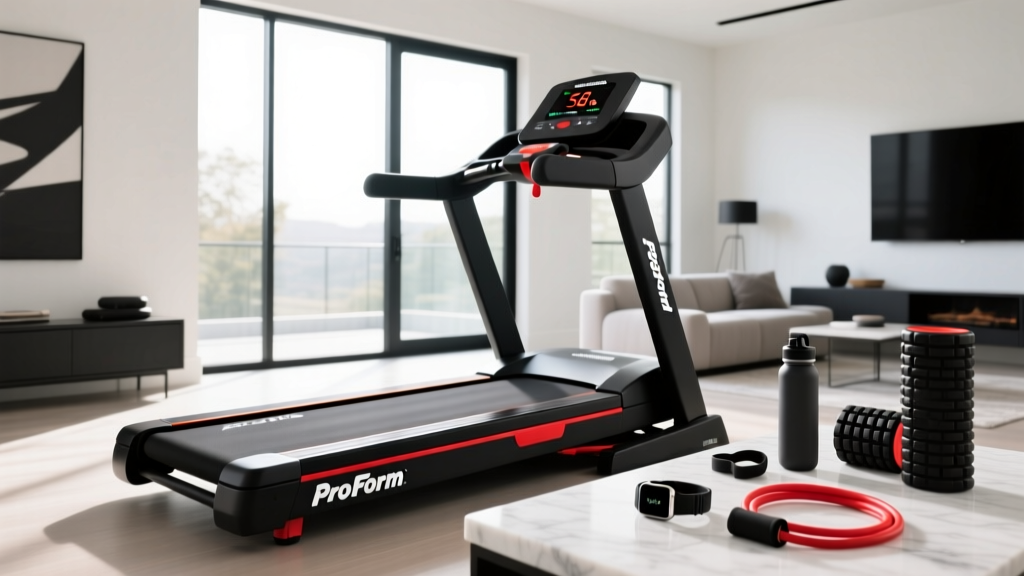
Cardio Noise Comparison: ProForm Pro 2000 Treadmill Manual Data
