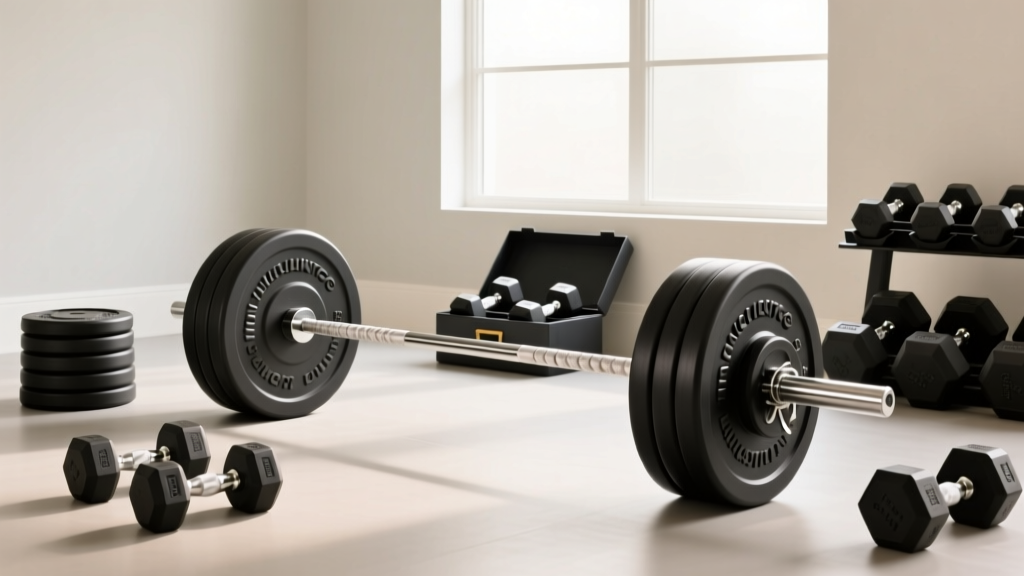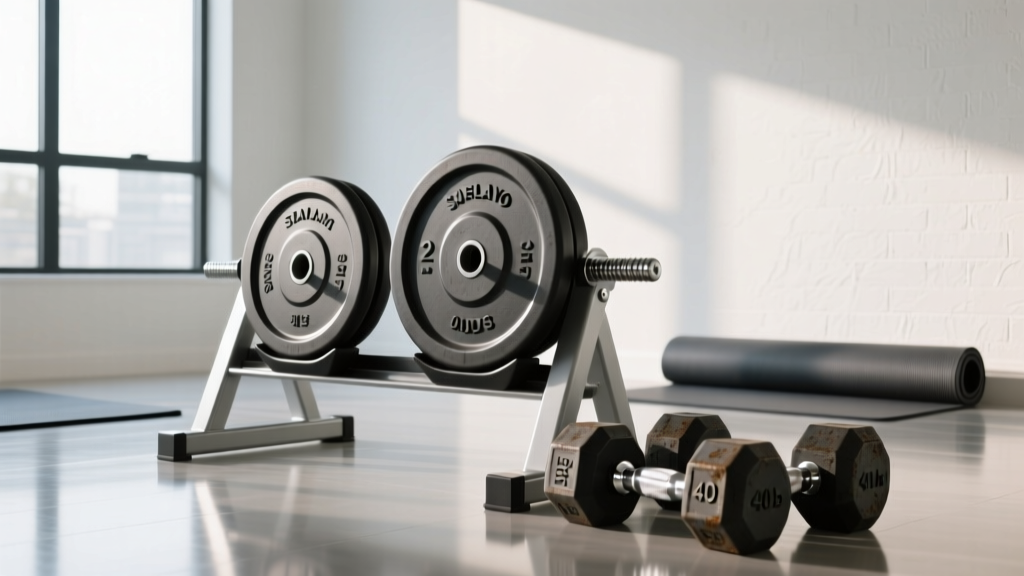
Standard vs Olympic Plates: Upgrading Your 40lb Dumbbell Set
Outgrown your 40lb dumbbell set? Follow our beginner step-by-step guide to choosing between standard and Olympic weight plates for your home gym.

Every home gym lifter eventually hits the same frustrating milestone. You started with a budget-friendly, adjustable spinlock weight set, and through consistent training, you have finally maxed out your 40lb dumbbell capacity. Suddenly, the weights feel awkward, the collars are slipping, and your progress is stalling. If this sounds familiar, you have reached the critical junction of home gym ownership: deciding between standard and Olympic weight plate ecosystems.
Transitioning your gear is a major financial and spatial commitment. In this step-by-step guide, we will break down the exact biomechanical and financial differences between standard (1-inch) and Olympic (2-inch) plates, helping you make a confident, future-proof upgrade for your garage gym.
Step 1: Recognize the 40lb Dumbbell Ceiling
Before spending a dime on new equipment, you need to understand the physics of why your current setup is failing. Most beginner standard dumbbell handles are 14 inches in total length, featuring a 5-inch loading sleeve on each side.
Let us look at the math of building a 40lb dumbbell using standard 1-inch cast iron plates. Assuming the steel handle itself weighs roughly 5 lbs, you need to load 35 lbs of plates. Using standard 10 lb cast iron plates (which are typically 1.25 inches thick each), you must stack three 10 lb plates and one 2.5 lb plate per side.
⚠️ The Collar Failure Point: Three 10 lb plates take up 3.75 inches of sleeve space. The 2.5 lb plate adds another 0.75 inches. Your total plate stack is now 4.5 inches on a 5-inch sleeve. This leaves a mere 0.5 inches for the spinlock star collar to thread onto the bar. The collar cannot grip securely, creating a severe safety hazard during overhead presses or chest flyes.Furthermore, standard 1-inch solid steel bars lack rotating sleeves. When you perform dynamic movements like dumbbell snatches or curls, the torque transfers directly into your wrists and elbows, increasing the risk of tendinitis. Recognizing these physical limitations is the first step toward upgrading.
Step 2: Decode the 1-Inch vs 2-Inch Divide
The fundamental difference between the two ecosystems lies in the center hole diameter of the plates and the corresponding barbell sleeves. According to equipment testing by Garage Gym Reviews, the 2-inch Olympic standard is universally adopted in commercial gyms and competitive environments for superior load management and safety.
Comparison Matrix: Standard vs. Olympic Ecosystems
| Feature | Standard (1-Inch) | Olympic (2-Inch) |
|---|---|---|
| Center Hole | 1 inch (25mm) | 2 inches (50mm) |
| Bar Sleeve Rotation | None (Solid Steel) | Bushings or Bearings |
| Max Weight Capacity | 150 - 250 lbs | 500 - 1,500+ lbs |
| Plate Material Options | Cast Iron, Cement/Vinyl | Cast Iron, Rubber, Urethane, Bumper |
| Resale Value | Low | High (Holds ~70% value) |
As standardized by USA Weightlifting, the 50mm Olympic sleeve allows for thicker, high-tensile steel bars that can withstand heavy axial loads without bending, while the rotating sleeves protect the lifter's joints during rotational lifts.
Step 3: Evaluate Your Budget and Space
Upgrading to Olympic plates requires a realistic look at your budget. Pricing in the fitness industry fluctuates based on raw steel and rubber costs, but as of 2026, you can expect the following average market rates:
- Standard Cast Iron: $1.20 to $1.50 per pound.
- Olympic Cast Iron: $1.50 to $2.00 per pound.
- Olympic Rubber/Urethane: $2.50 to $4.00 per pound.
- Olympic Bumper Plates: $3.50 to $6.00 per pound.
If you are outfitting a home gym with 300 lbs of weight, a standard cast iron set will cost roughly $450. An equivalent Olympic cast iron set will cost around $600. However, consider the long-term value. If you look at premium options like the Rogue Fitness Echo Bumper Plates, you are paying for high-density virgin rubber that survives thousands of drops without cracking—a durability standard that simply does not exist in the 1-inch market.
Step 4: The Step-by-Step Upgrade Path
Do not throw away your standard plates just yet. Follow this transition framework to upgrade safely and economically.
- Liquidate the Standard Gear: Sell your standard plates and 1-inch bars on local marketplace apps. Standard sets are highly sought after by absolute beginners, allowing you to recoup 50% to 70% of your initial investment.
- Invest in an Olympic Barbell First: Before buying plates, secure a high-quality 20kg (44lb) Olympic barbell. Look for a bar with a tensile strength of at least 190,000 PSI and bronze bushings for smooth sleeve rotation.
- Purchase Loadable Dumbbell Handles: To replace your 40lb dumbbell, buy a pair of Olympic loadable dumbbell handles. These feature 2-inch sleeves and built-in collars, allowing you to safely load up to 100+ lbs per hand without the plates sliding or the handle bending.
- Buy a Master Pack of Olympic Plates: Start with a cast iron or urethane master pack (typically including pairs of 2.5, 5, 10, 25, and 45 lb plates). This gives you the micro-increment options needed for progressive overload on isolation exercises.
Step 5: Avoid the 'Adapter' Trap
When transitioning, many beginners attempt to save money by purchasing 2-inch to 1-inch sleeve adapters. These are small plastic or brass rings that slide over an Olympic bar, allowing you to use your old standard plates.
Expert Warning: Never use adapters for heavy compound lifts. Adapters add 1 to 2 lbs of uncalibrated dead weight per side, shifting the bar's center of gravity. More importantly, the plastic can crack under heavy axial loads, and the friction will permanently scratch and gouge the zinc or chrome finish on your expensive Olympic bar sleeves.
Adapters are only acceptable for very light, temporary isolation work (like 20lb tricep extensions) while you wait for your new Olympic plates to ship. For heavy pressing, squatting, or deadlifting, the 2-inch hole-to-sleeve connection must be direct and flush.
Frequently Asked Questions
Can I use Olympic plates on a standard barbell?
No. Olympic plates have a 2-inch center hole, which will simply slide right off a 1-inch standard barbell sleeve. There is no safe workaround for this configuration.
Are bumper plates necessary for a beginner home gym?
Not necessarily. If you are strictly doing bodybuilding-style hypertrophy work (squats in a rack, bench presses, dumbbell work), standard Olympic cast iron or rubber-grip plates are perfectly fine and much thinner, saving sleeve space. Bumper plates are only strictly required if you plan to perform Olympic weightlifting movements (cleans, snatches) where the weight is dropped from overhead onto the floor.
How much space do Olympic plates require compared to standard?
Olympic plates, particularly cast iron, are actually denser and often thinner than standard plates of the same weight. However, Olympic storage racks and trees require a larger footprint due to the 2-inch pegs and the wider diameter of 45 lb bumper plates (which are universally 17.7 inches in diameter).
Final Thoughts on Your Upgrade
Outgrowing your 40lb dumbbell set is a positive indicator of your strength progression. By leaving the 1-inch standard ecosystem behind and investing in 2-inch Olympic plates, you are securing a lifetime of safe, progressive, and joint-friendly training. Evaluate your budget, sell your beginner gear, and build a foundation that will support your fitness goals for decades to come.
More gear to consider
All reviews
Kettlebell Maintenance: Cast Iron vs Competition for Dumbbell Pec Exercises No Bench
Collar & Clamp Guide: Upgrading a Shoulder Workout Using Dumbbells

Dumbbell vs Barbell Overhead Press: Rack Setup & Collar Guide

Dumbbell vs Barbell Curls: Best Neoprene Dumbbells for Home Use

Analyzing Pictures of Dumbbells: 2026 Loadable Market Trends