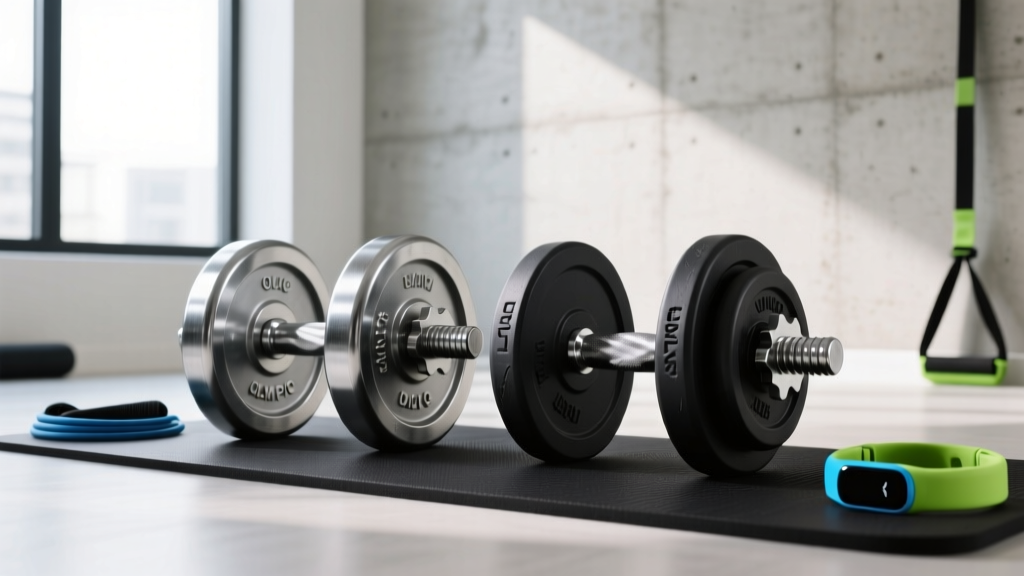
Dumbbell Training Program Stalled? Olympic vs Standard Plate Fixes
Is your dumbbell training program stalling? Discover the hidden equipment mistakes of Olympic vs standard weight plates and how to troubleshoot your home gym.

The Hidden Saboteur in Your Dumbbell Training Program
You have followed your dumbbell training program to the letter. You are tracking your sets, managing your rest periods, and prioritizing recovery. Yet, your progressive overload has flatlined, your joints ache during pressing movements, and your adjustable dumbbells feel inexplicably unbalanced. Before you blame your programming or your diet, you need to audit your iron. The most common, yet rarely discussed, bottleneck in home gym setups is the fundamental mismatch between Olympic and standard weight plates.
Many lifters begin their fitness journey by purchasing budget-friendly standard plates and 1-inch dumbbell handles. However, as your strength adapts and your dumbbell training program demands heavier loads and precise micro-loading, this entry-level equipment transitions from a helpful tool to a severe liability. In this troubleshooting guide, we will dissect the exact mechanical, dimensional, and calibration failures that occur when you outgrow standard plates, and provide a definitive framework for upgrading to Olympic specifications.
The Core Mistake: Dimensional and Calibration Failures
The root of most home gym equipment frustration lies in a misunderstanding of manufacturing tolerances. Standard weight plates feature a 1-inch (25.4mm) center hole, while Olympic plates are engineered with a 2-inch (50.8mm) center hole to fit Olympic barbell sleeves and specialized loadable dumbbell handles. But the difference is not just about the hole size; it is about the metallurgy and the physics of the lift.
Standard plates are typically cast from lower-grade iron using sand molds. This process introduces air pockets and porosity, resulting in wild weight variances. According to extensive equipment testing by Garage Gym Reviews, a standard 45-pound cast-iron plate can weigh anywhere from 41 to 48 pounds. When you are running a highly structured dumbbell training program that requires exact tonnage calculations, a 15% variance in your equipment completely invalidates your progressive overload metrics.
⚠️ Troubleshooting Alert: If your dumbbell lateral raises feel significantly heavier on the right side than the left, do not assume it is a muscular imbalance. Weigh your standard plates on a digital floor scale. You will frequently find that mismatched casting weights are pulling your rotator cuff out of alignment.Olympic vs. Standard Plates: The Troubleshooting Matrix
To effectively troubleshoot your equipment setup, you must understand the exact specifications of what you are lifting. The following matrix breaks down the critical differences that impact your training efficacy.
| Feature | Standard Plates (1-Inch) | Olympic Plates (2-Inch) |
|---|---|---|
| Center Hole | 1 inch (25.4mm) | 2 inches (50.8mm) |
| Weight Tolerance | +/- 5% to 10% | +/- 1% to 2% (Calibrated: +/- 10g) |
| Max Dumbbell Load | ~40 lbs (Handle failure risk) | 100+ lbs (Sleeve dependent) |
| Plate Density | Low (Bulky cast iron) | High (Machined steel/Urethane) |
| Avg Cost Per Pound | $1.00 - $1.50 | $1.75 - $3.50 |
3 Common Equipment Mismatches (And How to Fix Them)
When transitioning from beginner to intermediate lifting, home gym owners frequently make three critical errors regarding plate types. Here is how to identify and resolve them.
Mistake 1: The 'Frankenstein' Adjustable Dumbbell
The Problem: You attempt to load 60 pounds onto a standard 1-inch threaded dumbbell handle. Because standard 10-pound plates are roughly 9 inches in diameter, stacking four of them on a short 6-inch sleeve creates a massive, unbalanced cylinder. The threaded collar strips under the torque, and the plates shift mid-rep.
The Fix: Abandon standard handles for heavy loads. Upgrade to Olympic loadable dumbbell handles, such as the Rogue Loadable Dumbbell Handles. These feature a 50mm sleeve and high-quality snap-ring or clamp collars that secure dense Olympic plates, allowing you to safely press 80+ pounds per hand without the hardware vibrating loose during a dumbbell bench press.
Mistake 2: The Biomechanical Width Problem
The Problem: Standard cast iron is incredibly bulky. If your dumbbell training program prescribes heavy dumbbell floor presses or close-grip work, the physical width of standard plates forces your hands into an unnatural, overly wide position. This alters the biomechanical groove of the lift, placing excessive shear stress on the acromioclavicular (AC) joint and limiting your range of motion.
The Fix: Switch to Olympic urethane or steel plates. As detailed in equipment analyses by BarBend, Olympic plates are significantly denser. A 25-pound Olympic urethane plate is remarkably thin compared to its standard cast-iron counterpart. This density keeps the center of mass tight against the dumbbell handle, preserving your natural joint alignment and allowing for a deeper, safer stretch at the bottom of pressing movements.
Mistake 3: The Sleeve Adapter Trap
The Problem: You recently bought an Olympic barbell and a set of Olympic dumbbell handles, but you still have 300 pounds of cheap standard 1-inch plates. To save money, you purchase plastic or thin metal sleeve adapters (1-inch to 2-inch converters) to use your old plates on your new gear.
The Fix: Throw the adapters in the trash. Adapters introduce a secondary point of failure, add unwanted lateral play (wobble), and drastically reduce the usable sleeve length of your dumbbell handles. The rotational inertia of a heavy dumbbell will snap cheap plastic adapters during dynamic movements like dumbbell snatches. Sell your standard plates on local marketplace apps and reinvest the capital into entry-level Olympic bumper or cast-iron plates.
"Progressive overload requires absolute precision. If your equipment lies to you about the weight you are lifting, your central nervous system cannot adapt optimally. Calibrated Olympic iron is not a luxury; it is a prerequisite for advanced programming."
Budgeting Your Upgrade: Cost vs. Longevity in 2026
Upgrading from standard to Olympic plates requires a financial commitment, but viewing it through the lens of 'cost per usable year' changes the perspective entirely. Standard plates, often coated in cheap enamel, chip, rust, and degrade within 3 to 5 years of heavy garage gym use. Furthermore, their 1-inch holes elongate over time, causing them to rattle violently on the sleeves.
In 2026, high-quality Olympic cast iron plates (like those from REP Fitness or Titan Fitness) average between $1.75 and $2.25 per pound. Urethane-coated Olympic plates, which protect your flooring and eliminate the 'iron clank,' range from $2.50 to $3.50 per pound. While the initial outlay for 200 pounds of Olympic iron might be $400 to $500, this equipment carries a lifetime structural warranty and will easily outlast the lifter. When you factor in the cost of replacing stripped standard dumbbell handles and the physical therapy bills from joint strain caused by unbalanced loads, the Olympic upgrade pays for itself within the first year of a serious dumbbell training program.
Expert Verdict: Future-Proofing Your Home Gym
If your dumbbell training program has stalled, look closely at the iron in your hands. Standard 1-inch plates are designed for light, high-repetition endurance work and beginner fitness kits. They lack the dimensional accuracy, density, and structural integrity required for heavy, progressive hypertrophy and strength cycles. By auditing your equipment, discarding uncalibrated standard plates, and investing in precise 2-inch Olympic plates and loadable handles, you eliminate the hidden variables sabotaging your lifts. Stop fighting your equipment, and start forcing your muscles to adapt.
More gear to consider
All reviews
Bumper vs Iron Plate Trends & Dumbbell Exercises for Seniors PDF

2026 Barbell Collar Guide & Dumbbell Exercises for Female Beginners
Bumper vs Iron Plate Trends: Gear for the Dumbbell Chest Fly Exercise

Power Rack vs Squat Rack vs Stand: Setup for Dumbbell Butt Exercise

Back Rows With Dumbbells: Rubber Hex vs Urethane Value Guide
