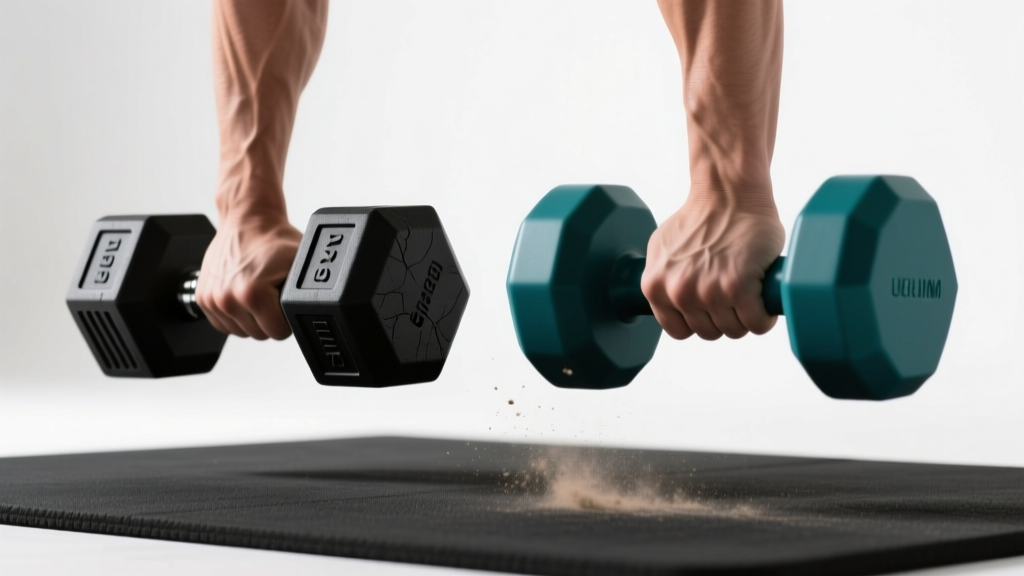
Dumbbell Stiff-Leg Deadlift Wear: Rubber Hex vs Urethane
Discover how the dumbbell stiff-leg deadlift impacts your gear. Compare rubber hex vs urethane dumbbell maintenance, longevity, and care tips.

The Biomechanical Toll of the Dumbbell Stiff-Leg Deadlift on Equipment
When evaluating free weights, most buyers focus on drop tests and bounce ratings. However, specific exercises introduce unique, repetitive wear vectors that standard testing ignores. The dumbbell stiff-leg deadlift is a prime example. Unlike a standard Romanian deadlift where the barbell or dumbbells hover, the stiff-leg variation often requires the weights to travel further down the shins, frequently resulting in the dumbbell heads tapping, grazing, or resting on the floor or weight plates at the bottom of the eccentric phase.
This repetitive floor proximity creates a high-friction abrasion environment. Furthermore, the immense grip demand of heavy hinge movements accelerates knurling degradation through sweat, chalk accumulation, and oxidative corrosion. If you are programming high-volume dumbbell stiff-leg deadlift blocks, the material composition of your dumbbells—specifically the choice between rubber hex and cast urethane—will dictate your long-term maintenance costs and equipment lifespan.
⚠️ Edge Case: The Floor-Tap Micro-Fracture
During the bottom position of a dumbbell stiff-leg deadlift, lifters often let the hex corners lightly 'kiss' the rubber matting to reset their lumbar posture. Over thousands of reps, this micro-impact causes vulcanized rubber to compress and eventually split at the seams, whereas urethane disperses the kinetic energy, leaving only superficial scuffs.
Rubber Hex Dumbbells: Maintenance and Failure Modes
Rubber hex dumbbells, such as the ubiquitous CAP Barbell Cast Iron Hex series, remain the workhorse of commercial gyms due to their accessible price point (typically $1.25 to $2.00 per pound). The hexagonal head prevents rolling, which is highly beneficial when setting up for floor-level hinge movements. However, virgin and recycled rubber blends are highly susceptible to environmental degradation.
Common Failure Modes
- Photodegradation (Dry Rot): Exposure to UV light breaks down the polymer chains in rubber, causing the hex edges to become brittle. When tapped against the floor during stiff-leg deadlifts, these brittle edges chip and flake.
- Off-Gassing and Odor: Cheaper rubber compounds release volatile organic compounds (VOCs). While not a structural failure, it degrades the user experience in poorly ventilated home gyms.
- Seam Separation: The mold line where the rubber meets the iron core can split if the dumbbell is repeatedly dropped or aggressively tapped on hard surfaces.
Longevity and Care Protocol
To maximize the lifespan of rubber hex dumbbells, you must combat oxidation and UV damage. Clean the heads monthly with a mild dish soap and water solution—never use bleach or ammonia-based cleaners, which accelerate dry rot. Every 90 days, apply a light coat of 303 Aerospace Protectant or a water-based silicone spray. This restores moisture to the rubber and creates a UV-blocking barrier. Store them on horizontal racks away from direct sunlight or garage windows.
Urethane Dumbbells: The Premium Longevity Play
Urethane (specifically cast polyurethane) represents the gold standard for modern free weights. As of 2026, supply chain stabilizations have brought premium sets, like Rogue's Urethane Dumbbells, down to a more accessible $4.50 to $6.50 per pound. Urethane is a highly engineered elastomer that offers superior resistance to abrasion, tearing, and environmental factors compared to traditional rubber.
Why Urethane Excels for Hinge Movements
The secret to urethane's durability lies in its polymer cross-linking. Most premium fitness urethane is rated between 85A and 92A on the Shore A durometer scale. This means it is hard enough to resist the abrasive friction of gym flooring during the lowering phase of a dumbbell stiff-leg deadlift, yet possesses enough tensile elasticity to absorb shock without cracking. Unlike rubber, urethane does not contain the same plasticizers that leach out over time, meaning it will not dry rot or emit foul odors.
Longevity and Care Protocol
Urethane is practically maintenance-free regarding structural integrity, but it requires specific cleaning agents to preserve its aesthetic finish. Avoid petroleum distillates, harsh degreasers, or alcohol-based sanitizers, as these can break down the polyurethane bonds over time, leading to a sticky or cloudy surface. Instead, use a 10:1 diluted solution of Simple Green or a dedicated pH-neutral gym wipe. Simply wipe down the heads after heavy use to remove chalk dust and skin oils.
Material Showdown: Wear Metrics for Hinge Movements
When selecting equipment specifically for high-volume posterior chain training, refer to the comparative data below to understand how each material responds to the unique stresses of floor-proximate exercises.
| Feature | Virgin Rubber Hex | Cast Urethane (Premium) |
|---|---|---|
| Shore A Hardness | 75A - 85A (Softer) | 85A - 92A (Denser) |
| Floor-Tap Durability | Moderate (Prone to edge chipping) | Exceptional (Resists abrasion) |
| UV / Ozone Resistance | Low (Requires chemical protectants) | High (Inherently stable) |
| Avg. Cost per Pound (2026) | $1.25 - $2.00 | $4.50 - $6.50 |
| Expected Lifespan (Heavy SDL) | 3 - 5 Years | 10 - 15+ Years |
Handle and Knurling Care: The Hidden Casualty of Hinge Lifts
While the dumbbell heads take the physical impact of the floor, the handles bear the brunt of the biomechanical load. The dumbbell stiff-leg deadlift requires immense grip endurance. Lifters heavily rely on magnesium carbonate (gym chalk) to maintain a secure hold as the weight pulls away from the body's center of mass.
When chalk mixes with sweat, it forms a highly corrosive, abrasive paste that settles deep into the knurling valleys. If left uncleaned, this paste traps moisture against the steel, leading to rapid zinc or black oxide oxidation (rust). Once the knurling rusts, it loses its 'bite,' forcing the lifter to squeeze harder, which prematurely fatigues the forearms before the hamstrings and glutes reach failure.
Pro-Tip: Never use a stainless steel wire brush on your dumbbell handles. Steel is harder than the zinc or black oxide protective coating and will strip it away, exposing the raw steel to immediate rust. Always use a brass wire brush, which is hard enough to dislodge chalk but soft enough to preserve the factory finish.
Step-by-Step Post-Workout Maintenance Routine
To ensure your dumbbells survive years of heavy hinging, implement this 5-minute maintenance routine at the end of every leg day:
- Dry Brush the Knurling: Use a stiff nylon brush to sweep out the bulk of the dry chalk and skin cells from the handle grooves.
- Brass Brush Detailing: For stubborn, sweat-caked chalk, gently scrub the handle with a brass wire brush in a circular motion.
- Wipe the Heads: Use a microfiber cloth lightly dampened with a pH-neutral cleaner (Simple Green or diluted dish soap) to wipe down the rubber or urethane heads, removing floor dust and shoe scuffs.
- Oil the Handles (Weekly): Once a week, apply 3-4 drops of 3-in-One Multi-Purpose Oil to a rag and rub it thoroughly into the knurling. This displaces microscopic moisture and prevents oxidation.
- Rack Properly: Return the dumbbells to a horizontal saddle rack. Avoid leaving them on the floor where ambient moisture and temperature fluctuations can accelerate material degradation.
Final Verdict: Which Should You Choose?
If your programming heavily features the dumbbell stiff-leg deadlift and other floor-proximate hinge variations, urethane dumbbells are the undisputed winner for longevity. The higher upfront investment is quickly offset by the elimination of replacement costs and the frustration of flaking rubber ruining your gym mats. However, if you are outfitting a budget-conscious facility and opt for rubber hex dumbbells, strict adherence to a UV-protection and cleaning schedule will ensure they remain safe and functional for years to come.
More gear to consider
All reviews
Dumbbell Pinwheel Curl Form Guide & Neoprene Weight Tips

EZ vs Straight Bar: Beyond the Beginner Upper Body Dumbbell Workout

Dumbbell Lateral Lunges vs Kettlebells: A Cast Iron Budget Guide

EZ Curl Bar vs Straight Bar: Space Layout & Dumbbell Jumps

Power Rack vs Squat Rack: Space for Side Plank Dumbbell Raises?
