Beyond the Dumbbell Shoulder Press GIF: Loadable Dumbbell Trends 2026
Analyze the 2026 loadable dumbbell market shift. Discover why interchangeable plate handles are replacing fixed weights for overhead pressing and more.

The Social Media Catalyst: Decoding the 'Dumbbell Shoulder Press GIF' Phenomenon
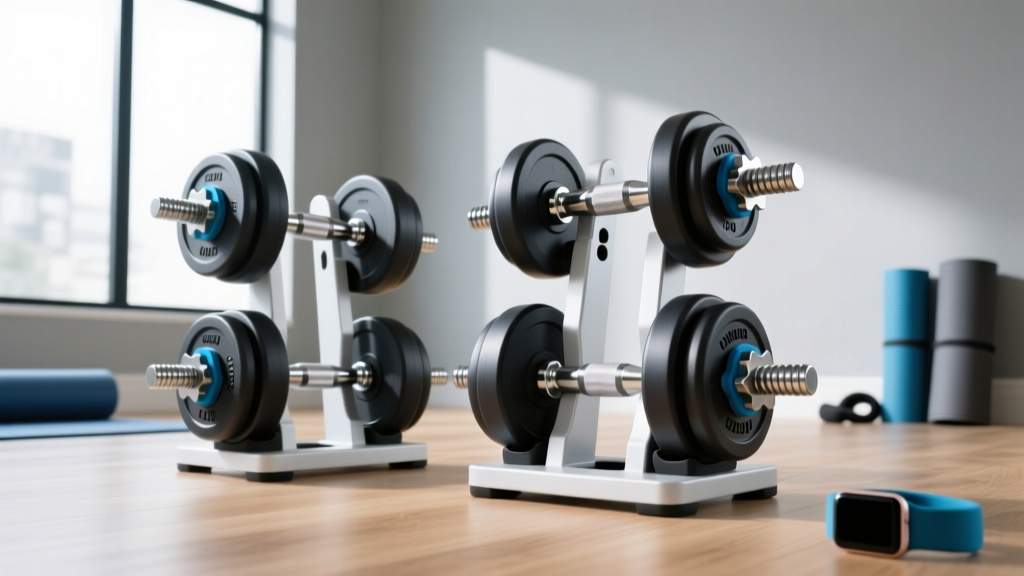
If you have spent any time on fitness subreddits, strength coaching forums, or digital biomechanics hubs over the past year, you have likely searched for a perfectly looped dumbbell shoulder press gif to analyze form, grip width, or scapular upward rotation. However, a fascinating trend has emerged in 2026: the equipment featured in these viral looping clips has fundamentally shifted. Where fixed hex rubber dumbbells once dominated the background of home gym videos, loadable dumbbells with interchangeable plates are now the undisputed kings of the digital iron game.
This is not merely an aesthetic shift. The transition toward plate-loaded dumbbell handles represents a broader market correction. Lifters are prioritizing micro-loading capabilities, extreme durability, and space efficiency over the convenience of fixed-weight racks. According to RunRepeat's comprehensive home gym statistics, over 68% of dedicated home gym owners in 2026 cite 'space-to-weight ratio' as their primary purchasing driver, directly fueling the rise of interchangeable plate systems.
2026 Market Shift: Fixed Urethane vs. Interchangeable Plate Systems
The global fitness equipment market has matured significantly since the home-gym boom of the early 2020s. Grand View Research notes that consumers are now moving away from entry-level gear and investing in commercial-grade, modular equipment. Loadable dumbbells sit at the exact intersection of this demand.
To understand the economic and spatial advantages, we must compare the three primary dumbbell categories available to the modern consumer:
| Equipment Type | Avg. Cost (5-50 lbs per hand) | Floor Space Required | Weight Increments | Lifespan / Warranty |
|---|---|---|---|---|
| Fixed Urethane Set (10 pairs) | $850 - $1,200 | 12 - 15 sq. ft. (with rack) | 5.0 lb jumps | Lifetime (Commercial) |
| Dial Adjustable (e.g., Nuobell) | $350 - $450 | 2 sq. ft. | 5.0 lb jumps | 2-5 Years (Plastic gears) |
| Loadable Handles + Plates | $400 - $550 (Handles + 220lbs plates) | 4 - 6 sq. ft. (plate tree) | 0.5 lb to 2.5 lb jumps | Lifetime (Solid steel) |
While dial-adjustable dumbbells offer unmatched speed for drop-sets, they fail the durability test for heavy, explosive movements. Fixed urethane sets offer premium aesthetics but demand a massive financial and spatial footprint. Loadable handles with interchangeable plates provide the ultimate middle ground: commercial-grade indestructibility paired with the granular weight progression required for advanced hypertrophy and strength cycles.
Top Loadable Dumbbell Handles Dominating the 2026 Market
Not all loadable handles are created equal. The market has split into two distinct camps: 1-inch standard sleeves and 2-inch Olympic sleeves. Here is a deep dive into the two models currently setting the industry standard.
Titan Fitness 2" Olympic Loadable Dumbbell Handles
Priced at $129.99 per pair, the Titan 2-inch handles are the heavy artillery of the loadable market. Featuring a 20-inch sleeve length, these handles can accommodate upwards of 160 lbs per hand when loaded with thin competition bumper plates or calibrated steel plates. The 35mm shaft diameter features a medium 'volcano' knurl pattern that provides exceptional grip security without tearing calluses during high-rep overhead pressing. The primary drawback is the overall length; at 20 inches per sleeve, the total dumbbell length approaches 24 inches, which can feel unwieldy during close-grip neutral-press variations.
Rogue DB-15 Loadable Dumbbell Handles
For lifters utilizing standard 1-inch plates, the Rogue DB-15 remains the gold standard at $110.00 per pair. The DB-15 features a 13.5-inch sleeve length and a robust 1-inch shaft. Because it uses standard plates, the overall profile is much more compact than the Olympic variants, mimicking the feel of a traditional fixed hex dumbbell. The max load sits around 115 lbs per hand, which is more than sufficient for the vast majority of unilateral upper-body movements.
⚠️ CRITICAL SAFETY WARNING: Overhead Collar SecurityWhen performing strict overhead shoulder presses, gravity is actively trying to pull your plates off the sleeve. Standard spring-clip collars are a massive failure risk when the dumbbell is inverted at the top of the press. For loadable dumbbells, you must use threaded spin-lock collars (like the Rogue DB-15 includes) or specialized jaw-clamp collars with secondary locking mechanisms (such as the Titan Fitness Lock-Jaw Collars). Never use cheap spring clips for overhead interchangeable plate work.
Biomechanical Edge: Why Interchangeable Plates Win for Overhead Pressing
Returning to the original catalyst—the dumbbell shoulder press gif—strength coaches frequently use these looping videos to highlight the sticking point of the overhead press. The shoulder press is notoriously sensitive to load jumps. When using fixed dumbbells, moving from 40 lbs to 45 lbs per hand represents a 10 lb total increase, or a 12.5% jump in total system load. For the relatively small anterior deltoid and supraspinatus muscles, a 12.5% jump is often enough to cause form breakdown, excessive lumbar extension, or impingement.
Loadable dumbbells solve this biomechanical bottleneck through fractional plates. By utilizing 0.5 lb or 1.25 lb interchangeable micro-plates, lifters can increase the load by just 1 to 2.5 lbs per hand. This allows for seamless progressive overload, keeping the lifter in the optimal hypertrophy rep range (8-12) for months longer than they could with fixed 5 lb increments.
'The shoulder joint complex requires highly granular progressive overload. If you are forcing 5-pound jumps on a strict seated dumbbell press, you are no longer training the deltoids; you are training your ego and risking your rotator cuff. Interchangeable micro-plates are non-negotiable for advanced pressing.' — Dr. Stuart McGill, Biomechanics Researcher
Future Forecast: What's Next for Loadable Dumbbells?
As we move deeper into 2026, manufacturers are addressing the primary pain point of loadable dumbbells: the time it takes to change weights. We are seeing the early prototyping of 'quick-swap' sleeve mechanisms that allow plates to slide on and off without the need to thread a spin-lock collar. Furthermore, the integration of magnetic fractional plates—allowing lifters to snap 0.25 lb increments onto the ends of steel plates without removing the main collars—is gaining massive traction in the competitive bodybuilding and powerlifting communities.
Frequently Asked Questions (FAQ)
Can I use bumper plates on loadable dumbbell handles?
Yes, but only on 2-inch Olympic handles like the Titan Fitness models. However, because bumper plates are thick (a 10 lb bumper is roughly 2.2 inches wide), you will quickly run out of sleeve space. For dumbbells, it is highly recommended to use calibrated steel plates or specialized 'dumbbell bumper' plates that are thinner and denser.
Are loadable dumbbells good for drop sets?
Traditional loadable dumbbells are poor for rapid drop sets due to the time required to unthread collars and remove plates. If drop sets are a staple of your hypertrophy programming, a dial-adjustable dumbbell or a fixed dumbbell rack remains the superior, albeit more expensive, choice.
What is the best plate tree for a loadable dumbbell setup?
For 2-inch Olympic plates, a vertical 'A-frame' plate tree is best for space saving. For 1-inch standard plates, a wall-mounted peg rack is the most efficient use of space, keeping the floor completely clear for your pressing movements.
More gear to consider
All reviews
EZ vs Straight Bar: Space Layouts and Dumbbell Press Form
Home Dumbbell Back Exercises: Barbell Collar & Clamp Types Compared

Free Weight Care: Kettlebells & Dumbbell Chest Fly on Floor Tips
Bumper vs Iron Plate Care for the Heavy Bent Over Dumbbell Row

Barbell Collars After Upper Body Dumbbell Exercises for Women: 2026