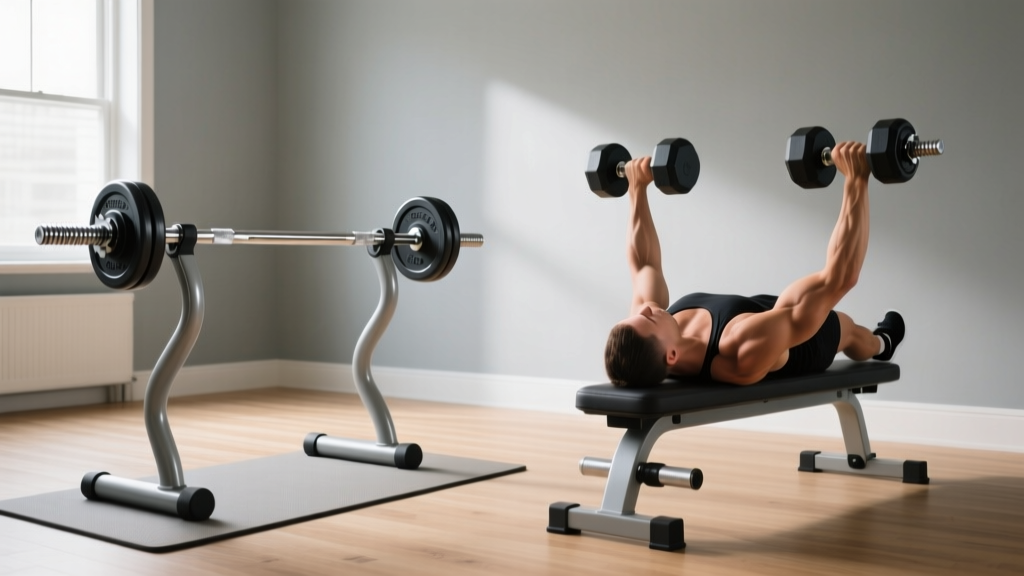
Dumbbell Exercises for Back Muscles: Loadable Dumbbell Maintenance
Master loadable dumbbell maintenance to ensure safety during heavy dumbbell exercises for back muscles. Learn cleaning, threading, and plate care tips.

The Biomechanical Toll of Back Training on Loadable Handles
When building a comprehensive home gym, a loadable dumbbell with interchangeable plates remains one of the most cost-effective and versatile investments you can make. However, not all movements subject your equipment to the same mechanical stress. While pressing movements generally apply vertical, linear force through the handle, heavy dumbbell exercises for back muscles introduce complex torque, lateral shear, and asymmetric loading that can rapidly degrade poorly maintained equipment.
According to biomechanical analyses from ExRx.net, exercises like the single-arm dumbbell row and the renegade row require the lifter to stabilize the weight against rotational forces. When you pull a 90-pound loadable dumbbell toward your hip during a single-arm row, the lateral drag places immense shear stress on the collar and threading. Over time, this repetitive lateral torque can cause micro-fractures in cheap spinlock threads or slowly back out a loosely secured collar. Understanding how to maintain your loadable dumbbells is not just about preserving your financial investment; it is a critical safety protocol for your training longevity.
Threaded vs. Quick-Lock: Collar Maintenance Protocols
The collar is the single most critical failure point on any loadable dumbbell. In 2026, the market is largely divided into two primary locking mechanisms: traditional threaded spinlocks and proprietary quick-lock systems. Each requires a distinctly different maintenance approach to ensure longevity and safety during intense back workouts.
1. Threaded Spinlock Handles (Standard and Olympic)
Spinlock handles rely on steel or zinc-plated threads that mate with a threaded nut. The primary enemy of these threads is a mixture of magnesium carbonate (lifting chalk) and sweat. This combination creates a mildly alkaline, abrasive paste that acts like cement, leading to thread galling and seizing.
- The Brass Brush Rule: Never use a steel wire brush on zinc-plated spinlock handles. Steel is harder than zinc and will strip the protective coating, exposing the raw steel to rapid oxidation (rust). Always use a soft brass wire brush to clean the threads.
- Solvent Cleaning: Once a month, wipe the threads with 90% isopropyl alcohol to dissolve sweat oils and chalk residue.
- Proper Lubrication: Avoid standard WD-40, which attracts dust and creates a grinding paste. Instead, apply a PTFE (Teflon) dry lubricant, such as Finish Line Dry Teflon or 3-IN-ONE PTFE. This provides friction reduction without trapping chalk dust.
2. Quick-Lock Mechanisms (e.g., Ironmaster, PowerBlock)
Quick-lock systems utilize steel pins, locking screws, or magnetic retention to secure interchangeable plates. While they eliminate threading issues, they introduce new failure modes. The locking screws on models like the Ironmaster Quick-Lock V2 can accumulate debris in the receiving holes, preventing the pin from seating fully. If you are performing dumbbell exercises for back muscles that involve sudden directional changes—like a heavy dumbbell pullover—an unseated pin can shear under the dynamic load.
⚠️ CRITICAL SAFETY WARNING: The Pullover TestThe dumbbell pullover is a staple latissimus dorsi and serratus anterior exercise, but it is the ultimate stress test for your collars. Holding a loadable dumbbell directly over your face and neck with a compromised collar is catastrophic. Before any overhead or pullover movement, physically tug on the plates and collars with your free hand to verify zero lateral play. If a spinlock nut requires more than a quarter-turn to tighten, the threads are stripped and the handle must be retired immediately.
Comprehensive Maintenance Schedule for Loadable Dumbbells
To maintain peak condition and ensure your equipment can handle the rigors of progressive overload, adhere to the following maintenance matrix. This schedule assumes you are training 3 to 4 times per week in a standard garage or basement gym environment.
| Maintenance Task | Frequency | Required Supplies | Estimated Cost |
|---|---|---|---|
| Thread brushing & chalk removal | Weekly | Brass wire brush, microfiber cloth | $8 - $12 |
| Deep solvent cleaning (threads & pins) | Monthly | 90% Isopropyl alcohol, cotton swabs | $5 |
| PTFE Dry Lubrication | Bi-Monthly | PTFE dry lube spray | $10 - $15 |
| Cast Iron Plate rust inspection & oiling | Quarterly | 3-IN-ONE oil, fine steel wool (0000) | $12 |
| Calibration check (digital scale) | Annually | Luggage or postal scale | $20 |
Plate Care: Preventing Rust and Calibrating Weight
The interchangeable plates themselves require attention, particularly if you are using raw cast iron or machined steel plates. During exercises like the bent-over dumbbell row, plates frequently clank together and scrape against the floor when setting the weight down. This chips away paint and exposes the raw iron to ambient humidity.
For raw cast iron plates, keep a light coat of 3-IN-ONE oil on the surface. If surface rust appears, gently buff it with 0000-grade (super fine) steel wool. Avoid coarse sandpaper, which will alter the physical dimensions of the plate and ruin the center hole tolerance, leading to a sloppy fit on the handle shaft. For urethane-coated plates, which are highly popular in 2026 for their noise-dampening qualities, simply wipe them down with a mild dish soap and water solution. Never use harsh chemical degreasers on urethane, as they will break down the polymer chains, causing the coating to become sticky and eventually peel.
Top Loadable Dumbbells for Heavy Back Work in 2026
Not all loadable dumbbells are engineered to withstand the high-torque demands of back training. Based on current market durability testing and user feedback, here are the top contenders for heavy back work:
Ironmaster Quick-Lock V2 (120 lb Set)
Price: ~$459 | Locking Mechanism: Steel locking screw
The Ironmaster V2 is widely considered the gold standard for loadable dumbbells. The square, blocky design prevents the dumbbell from rolling away when placed on the floor during renegade rows. The steel-on-steel locking screw mechanism is virtually indestructible and can survive drops from waist height onto rubber matting, a common occurrence when failing a heavy single-arm row.
Titan Fitness Loadable Dumbbell Handles
Price: ~$89.99 (Handles only) | Locking Mechanism: Olympic Spinlock
For lifters who already own Olympic bumper plates, Titan's loadable handles are an excellent, budget-friendly option. The thick 2-inch sleeves accommodate standard Olympic plates. However, the spinlock nuts require diligent weekly cleaning to prevent chalk buildup from seizing the threads during high-volume back workouts.
Yes4All Adjustable Dumbbell Set (105 lb)
Price: ~$119.99 | Locking Mechanism: Standard Threaded Spinlock
A staple in budget home gyms. While highly affordable, the standard 1-inch threaded handles are susceptible to bending if dropped laterally. When performing dumbbell exercises for back muscles with the Yes4All set, always lower the weights under strict control to preserve the structural integrity of the steel shaft.
Pre-Lift Safety Protocol for Back Training
Before initiating any high-intensity back session, implement this 60-second safety protocol to ensure your loadable dumbbells are secure:
- Visual Inspection: Check the handle shaft for any visible bending or deep rust pitting. Check urethane plates for deep tears that could cause the plate to split under pressure.
- The Shake Test: Grip the collar and the plate simultaneously and attempt to twist and pull them apart. There should be zero audible rattling or lateral movement.
- Thread Engagement Check: For spinlock dumbbells, ensure the nut is threaded on completely straight. Cross-threading weakens the load-bearing capacity of the collar by up to 70%.
- Weight Symmetry: Verify both dumbbells are loaded with the exact same plate configuration. Asymmetric loading during bilateral movements like the chest-supported dumbbell row can lead to severe spinal torsion and injury.
Frequently Asked Questions
Can I use standard WD-40 to lubricate my spinlock dumbbell threads?
No. Standard WD-40 is primarily a solvent and water displacer, not a long-term lubricant. It leaves a sticky residue that attracts chalk dust and dirt, eventually creating an abrasive paste that will destroy your threads. Always use a PTFE (Teflon) or silicone-based dry lubricant.
How do I know if my loadable dumbbell handle is bent?
Roll the bare handle (without plates or collars) across a perfectly flat surface, such as a glass table or granite countertop. If the handle wobbles or produces a clicking sound as it rolls, the steel shaft has yielded and is permanently bent. A bent handle will prevent plates from seating flush, creating a severe safety hazard during overhead and pulling movements.
Are loadable dumbbells better than fixed hex dumbbells for back exercises?
From a biomechanical standpoint, the muscle activation during dumbbell exercises for back muscles is identical whether you use fixed hex dumbbells or loadable ones. However, loadable dumbbells offer superior micro-loading capabilities, allowing you to increase weight in 2.5 lb or 5 lb increments. This is crucial for back isolation movements like rear delt flyes, where jumping up 10 lbs on a fixed dumbbell rack might be too drastic an increase for progressive overload.
More gear to consider
All reviews
Barbell Collar Types: A Dumbbell Manufacturer's Troubleshooting Guide

Dumbbell Exercise for Belly Workouts: Neoprene Mistakes & Fixes

Budget Breakdown: Is a Loadable Dumbbell the Best Weighted Pull Ups Dumbbell?

Power Rack vs Squat Rack vs Stand: The Leg Dumbbell Exercise Guide

Loadable Dumbbells & Lat Muscle Exercises With Dumbbells: 2026 Trends