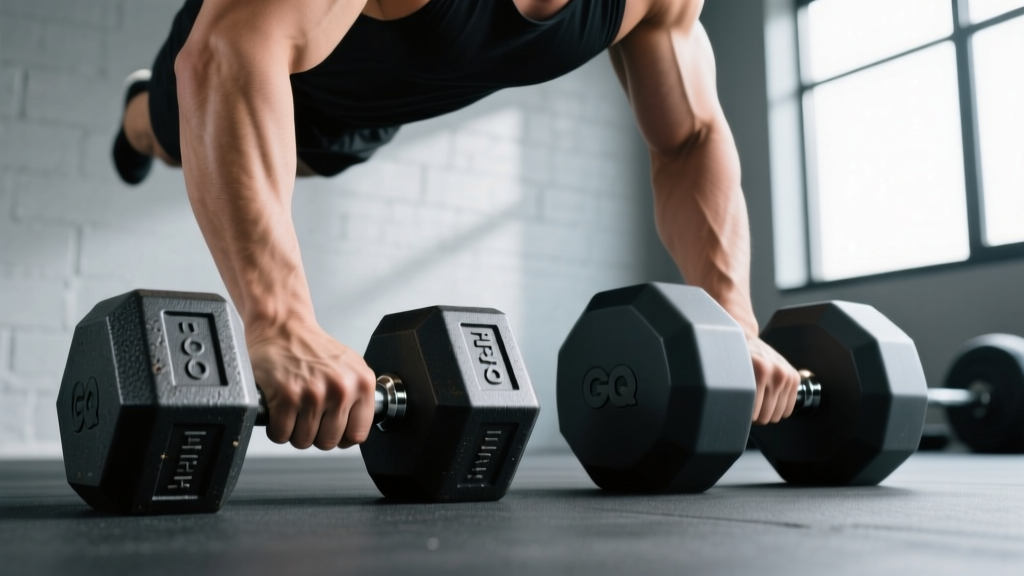
Dumbbell Landmine Press: Rubber Hex vs Urethane Value Guide
Analyze the true cost and value of rubber hex vs urethane dumbbells, featuring durability tests for the dumbbell landmine press and home gyms.

The 2026 Free Weight Market: Budget vs. Long-Term Value
Building a commercial-grade home gym in 2026 requires navigating a saturated market of fitness equipment. When outfitting your space, the choice between rubber hex dumbbells and premium urethane dumbbells is one of the most significant budget decisions you will make. While the upfront cost of rubber hex dumbbells is undeniably attractive, analyzing their true value requires looking beyond the initial price tag. We must evaluate material degradation, ergonomic performance, and how each material withstands high-torque, unconventional movements like the dumbbell landmine press.
This comprehensive budget breakdown and value analysis dissects the molecular differences, real-world failure modes, and 5-year cost of ownership for both dumbbell types, ensuring your investment aligns with your training demands.
Quick Verdict: The ROI of Free Weights
Rubber Hex Dumbbells are the undisputed champions of low-budget, low-impact home gyms. However, for heavy lifters, commercial facilities, or athletes frequently performing high-shear exercises like the dumbbell landmine press, Urethane Dumbbells offer a superior 5-year return on investment due to their near-indestructible elastomer properties and ergonomic handle designs.
Material Science: Recycled Rubber vs. Virgin Urethane
To understand the value proposition, we must first examine the manufacturing processes. According to industry specifications from leading manufacturers like Rogue Fitness, budget rubber hex dumbbells are typically crafted from vulcanized recycled rubber. This process involves compressing rubber crumbs under high heat and pressure. While effective at dampening sound and protecting floors, the recycled nature of the material leaves it vulnerable to UV degradation, temperature fluctuations, and the infamous 'off-gassing' odor that can plague poorly ventilated home gyms.
Urethane, specifically cast polyurethane elastomer, is a synthetic polymer engineered for extreme abrasion resistance. Premium urethane dumbbells are poured into molds as a liquid virgin material, creating a seamless, dense bond with the steel core. Urethane does not off-gas, is impervious to UV light, and maintains its structural integrity across extreme temperature ranges. This molecular stability is the primary driver behind the higher upfront cost, but it is also the key to its long-term value.
The Stress Test: The Dumbbell Landmine Press
While barbell landmines are a staple in strength and conditioning, the dumbbell landmine press has surged in popularity for unilateral shoulder work, core stabilization, and rotational power development. The exercise involves wedging the handle or one head of a heavy dumbbell into a landmine base (or a reinforced corner) and pressing the opposite end upward at an angle.
This movement creates a unique biomechanical and mechanical stress profile that perfectly highlights the differences between rubber and urethane:
1. Shear Stress and Fulcrum Degradation
When a dumbbell is anchored for a landmine press, the anchored head becomes a fulcrum. The rotational torque and lateral shear stress applied during the pressing motion are concentrated on a small surface area of the dumbbell head.
- Rubber Hex: The vulcanized rubber is relatively soft. Repeated landmine presses will cause the rubber to deform, tear, or separate from the inner steel core. Furthermore, the sharp edges of the hex shape can catch on the landmine sleeve, accelerating structural failure.
- Urethane: The high durometer (hardness) rating of urethane resists this shear stress effortlessly. The material will glide smoothly within a landmine attachment without tearing, chipping, or losing its shape, even under loads exceeding 100 lbs per hand.
2. Handle Knurling and Grip Fatigue
The dumbbell landmine press requires immense grip strength to prevent the handle from rotating in your palm at the top of the movement. Budget rubber hex dumbbells often feature shallow, passive knurling or smooth chrome handles that become slippery with sweat. Urethane dumbbell lines almost universally feature aggressive, deep-diamond knurling on hardened chrome or stainless steel handles, providing the necessary tactile feedback and security for heavy, off-axis pressing movements.
Budget Breakdown: 5-Year Cost of Ownership Matrix
To determine true value, we must calculate the cost per year of usable life. The following matrix is based on 2026 market averages for a pair of 50 lb dumbbells subjected to heavy, daily use (including drops, outdoor storage, and high-torque exercises).
| Metric | Rubber Hex Dumbbells | Urethane Dumbbells |
|---|---|---|
| Average Cost per Pound (Pair) | $1.75 - $2.25 | $4.50 - $6.50 |
| Upfront Cost (50 lb Pair) | $175 - $225 | $450 - $650 |
| Expected Heavy-Use Lifespan | 2 - 3 Years | 10 - 15+ Years |
| Cost Per Year of Usable Life | $58 - $112 / year | $30 - $65 / year |
| Landmine Press Durability | Poor (High tear risk) | Excellent (Shear resistant) |
| Odor / Off-Gassing | High (Recycled rubber) | None (Virgin polymer) |
Information Gain Insight: While urethane requires a 250% higher initial capital expenditure, its cost-per-year of usable life is actually lower than rubber hex dumbbells in a heavy-use environment. If you are running a commercial facility or a serious garage gym, rubber hex is a depreciating liability; urethane is a permanent asset.
Edge Cases and Real-World Failure Modes
Understanding how equipment fails is critical for making informed purchasing decisions. Based on warranty claims and long-term gym equipment maintenance data, here are the specific failure modes for each material:
Common Rubber Hex Failure Modes
- Core Separation: The steel handle and inner core eventually pull away from the rubber casing, especially if dropped on the hex corners.
- UV Dry Rot: If stored in a garage or patio with direct sunlight, the recycled rubber will dry out, crack, and flake within 18 to 24 months.
- Abrasive Floor Damage: The rough texture of cheap rubber acts like sandpaper on hardwood or epoxy floors when dragged during exercises like renegade rows or dumbbell landmine presses.
Common Urethane Failure Modes (and How to Avoid Them)
- Concrete Chipping: While urethane is highly resistant to tearing, dropping a 100+ lb urethane dumbbell directly onto bare concrete from chest height can chip the edges. Solution: Always use 3/4-inch horse stall mats or specialized dropping pads.
- Knurling Rust: The urethane head will outlive you, but if the chrome handle is not wiped down after use, sweat will corrode the knurling. Solution: Wipe handles with a microfiber cloth and apply a light coat of 3-in-One oil monthly.
Strategic Purchasing Framework: Which Should You Buy?
The decision between rubber hex and urethane ultimately depends on your specific training modalities and budget constraints. According to biomechanical principles outlined by the National Strength and Conditioning Association (NSCA), unilateral exercises like the dumbbell landmine press require equipment that can safely handle off-center loading and rotational torque without compromising the lifter's grip or the equipment's integrity.
Buy Rubber Hex If:
- Your total free-weight budget is strictly under $500.
- You primarily perform standard, two-handed, or floor-based movements (e.g., goblet squats, floor presses, renegade rows).
- You are outfitting a low-impact commercial space (like a physical therapy clinic or hotel gym) where heavy drops and high-shear landmine movements are prohibited.
Buy Urethane If:
- You regularly perform high-torque, unconventional movements like the dumbbell landmine press, heavy Turkish get-ups, or rotational throws.
- You are building a 'buy-it-for-life' home gym and want to eliminate the need for replacement purchases in the next decade.
- You are sensitive to the strong chemical odors associated with recycled vulcanized rubber in enclosed spaces.
- You require precise, aggressive handle knurling to maintain grip security during heavy, sweaty unilateral pressing.
Final Thoughts on Equipment Value
In the realm of strength training, 'cheap' and 'valuable' are rarely synonymous. Rubber hex dumbbells serve a vital purpose in the fitness ecosystem by lowering the barrier to entry for home gym owners. However, when subjected to the rigorous demands of advanced programming—specifically the shear forces generated by the dumbbell landmine press—their structural limitations become a liability. Urethane dumbbells demand a premium upfront, but their molecular resilience, ergonomic superiority, and decade-long lifespan make them the undisputed champions of long-term value analysis in 2026 and beyond.
More gear to consider
All reviews
Adjustable Dumbbell Review & Cando Vinyl Coated Dumbbell Setup
Beyond a Basic Dumbbell Exercise Routine: EZ vs Straight Bar
Deadlift Exercise with Dumbbells: Adjustable Set Setup & 2026 Review

Power Rack vs Squat Stand for Barbell and Dumbbell Shoulder Press

Barbell Collar Clamp Comparison & Preacher Curl Dumbbell No Bench
