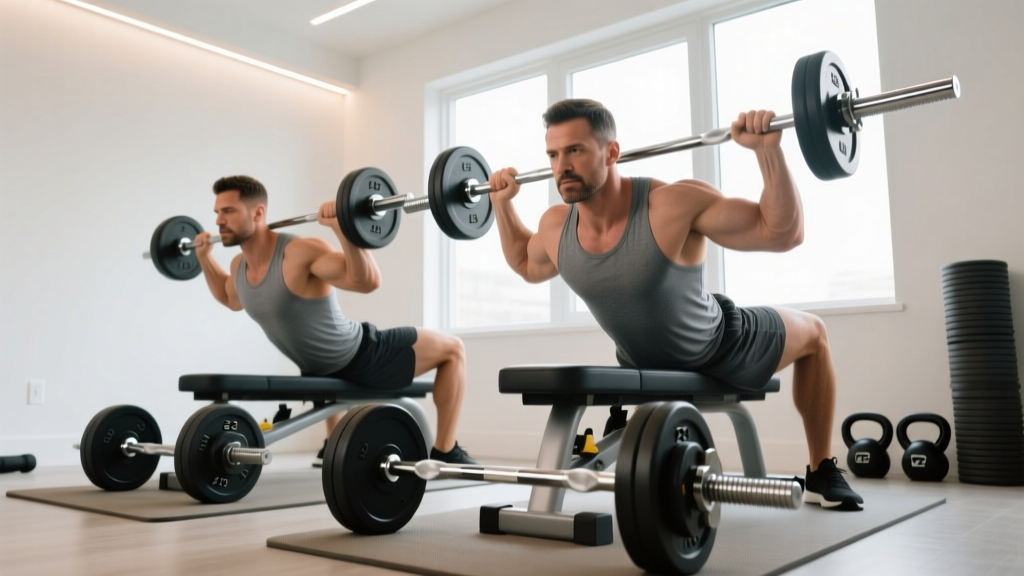
Dumbbell Bench Max Calculator & Plate Guide: Olympic vs Standard
Learn to use a dumbbell bench max calculator to track strength, then follow our step-by-step guide to choose between Olympic vs standard weight plates.

Building a home gym is a journey that typically begins with a pair of dumbbells and a simple bench. As a beginner, your first major milestone is tracking your strength progression. However, once you outgrow your adjustable dumbbells or decide to transition to barbell training, you will face a critical fork in the road: choosing between Olympic and standard weight plates. This guide will show you how to use a dumbbell bench max calculator to establish your baseline, and then walk you step-by-step through the metallurgy, pricing, and practical realities of choosing the right plate system for your garage gym in 2026.
Step 1: Establish Your Baseline With a Dumbbell Bench Max Calculator
Before investing hundreds of dollars in iron, you need to know where your strength currently stands. A dumbbell bench max calculator uses established mathematical formulas (like the Epley or Brzycki equations) to estimate your one-rep max (1RM) based on the weight you can lift for multiple repetitions.
💡 The Dumbbell-to-Barbell Conversion RealityDumbbell pressing requires significantly more stabilization than barbell pressing. If you use a calculator and find your estimated 1RM with 70 lb dumbbells (140 lbs total) is 165 lbs, your actual barbell bench press 1RM will likely be 10% to 15% higher (around 185 lbs) once you adapt to the bar path. Always factor in this 'stabilization tax' when buying your first barbell plates.
To use the calculator effectively, pick a weight you can lift with perfect form for 5 to 8 reps. Plug the total weight (both dumbbells combined) and the rep count into the ExRx 1RM Calculator. This number dictates how much weight you need to buy. If your estimated max is approaching 200 lbs, standard weight plates will no longer be a safe or viable option for your barbell journey.
Step 2: The Core Divergence — 1-Inch vs. 2-Inch Holes
The entire weight plate industry is divided by a single, unyielding measurement: the diameter of the center hole. This seemingly minor detail dictates the type of barbell you must use, the maximum weight you can safely load, and the rotational mechanics of your lifts.
- Standard Plates: Feature a 1-inch (25.4 mm) center hole. They are designed for lightweight, budget-friendly, or multi-purpose home gym bars.
- Olympic Plates: Feature a 2-inch (50 mm) center hole. They are the global standard for commercial gyms, powerlifting, and Olympic weightlifting.
Step 3: Evaluating Standard Weight Plates (The 1-Inch System)
Standard plates are often the first purchase for casual home gym owners due to their low upfront cost. You can typically find standard cast iron plates for $1.20 to $1.50 per pound, or vinyl/cement-filled plates for as low as $0.80 per pound.
The Good, The Bad, and The Bending
While the price is attractive, the structural limitations of the 1-inch system are severe. Standard barbells are usually made from lower-grade steel with a thinner shaft. According to equipment stress tests detailed by BarBend's equipment analysis, standard bars begin to yield, wobble, and permanently bend when loaded past 200 to 250 pounds.
Pros:
- Highly affordable and widely available at big-box sporting goods stores.
- Lighter starting weight (standard bars often weigh only 15 lbs compared to an Olympic bar's 45 lbs).
Cons:
- Severe weight capacity limits (usually maxing out at 300 lbs including the bar).
- Zero sleeve rotation, making explosive movements dangerous for your wrists.
- Cement/vinyl options are incredibly bulky, limiting how much weight you can physically fit on the sleeve.
Step 4: Evaluating Olympic Weight Plates (The 2-Inch System)
If your dumbbell bench max calculator indicates you are nearing intermediate strength levels, Olympic plates are a non-negotiable investment. The 2-inch (50mm) hole accommodates the thick, high-tensile steel sleeves of Olympic barbells, which boast weight capacities ranging from 700 to 1,500 pounds.
Why the 50mm Sleeve Matters
The true genius of the Olympic system isn't just the hole size; it's the rotating sleeve. Olympic bars use bushings or needle bearings to allow the sleeves to spin independently of the shaft. When you perform a barbell curl or a clean, the plates want to spin due to rotational inertia. The rotating sleeve absorbs this torque, saving your wrists and elbows from severe injury.
"Upgrading to Olympic plates isn't just about lifting heavier; it's about lifting safer. The rotational mechanics of a 50mm sleeve protect your connective tissue during dynamic movements." — NSCA Biomechanics Guidelines
Pricing in 2026: Expect to pay $2.00 to $2.80 per pound for basic Olympic cast iron (like the Titan Fitness Cast Iron Plates). If you opt for virgin rubber bumper plates (like the Rogue Echo Bumpers), prices range from $3.50 to $5.00 per pound, but they offer the crucial ability to be dropped from overhead without destroying your floor.
Step 5: Head-to-Head Comparison Matrix
Use this table to quickly contrast the physical and financial realities of both systems.
| Feature | Standard Plates (1-Inch) | Olympic Plates (2-Inch) |
|---|---|---|
| Center Hole | 1 inch (25.4 mm) | 2 inches (50 mm) |
| Bar Capacity | 200 - 300 lbs | 700 - 1,500+ lbs |
| Sleeve Rotation | None (Fixed) | Yes (Bushings/Bearings) |
| Cost per Pound | $0.80 - $1.50 | $2.00 - $5.00+ |
| Resale Value | Poor | Excellent |
Step 6: Your Purchasing Decision Framework
Don't waste money on gear you will outgrow in six months. Follow this step-by-step framework to make your final decision:
- The 'Strictly Beginner' Route: If your dumbbell bench max calculator shows your 1RM is under 135 lbs, and you only plan to do basic floor presses and light curls, a standard cast iron set is a safe, budget-friendly starting point. Avoid cement-filled plates at all costs.
- The 'Future-Proof' Route (Recommended): If you are lifting 50+ lb dumbbells for reps, you are close to outgrowing standard equipment. Buy an Olympic barbell and Olympic plates immediately. The initial $300-$400 investment prevents you from having to sell your standard gear at a loss and rebuy Olympic gear a year later.
- The 'Garage Floor' Factor: If you do not have dedicated rubber horse-stall mats in your gym, you must buy Olympic Rubber Bumper plates. Standard cast iron dropped on a concrete garage floor will crack the plate and spall the concrete.
Frequently Asked Questions
Can I use Olympic plates on a standard bar?
No. The 2-inch hole of an Olympic plate will not fit onto a 1-inch standard bar sleeve. While you can buy cheap plastic 'adapter sleeves' that slide over a standard bar to make it 2 inches thick, this is highly discouraged. The underlying standard bar will still bend and fail under heavy Olympic plate loads, creating a severe safety hazard.
Why are my dumbbell maxes so much lower than my barbell maxes?
Dumbbells require each arm to stabilize the weight independently in three dimensions, engaging more micro-stabilizer muscles in the rotator cuff and chest. A barbell locks your hands into a fixed path, allowing you to push more raw force. This is why tracking your progress with a dumbbell bench max calculator is vital for accurate programming, rather than directly comparing the numbers to your barbell lifts.
More gear to consider
All reviews
Loadable Dumbbell Care for the Lying Tricep Extension with Dumbbells

Top Loadable Dumbbells to Accelerate Dumbbell Fat Loss (2026 Review)
Budget Breakdown: Loadable Dumbbells for Dumbbell Stationary Lunges
Loadable Barbell Dumbbell Handles: 2026 Budget Breakdown

Olympic vs Standard Plates: Best for Dumbbell Pull Day?