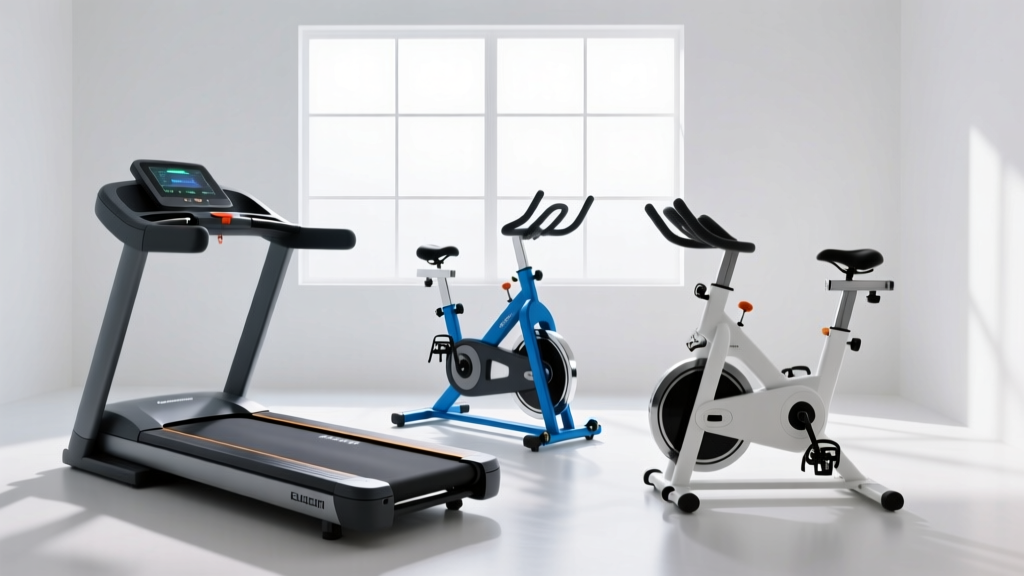
Curved Manual vs Motorized Treadmill: How to Fix a Slipping Belt
Discover how to fix a slipping treadmill belt on motorized models and why curved manual treadmills eliminate belt slip entirely in this head-to-head guide.

The Anatomy of a Slip: Motorized vs. Manual Mechanics
There are few things more jarring during a high-intensity interval session than the sudden, stomach-dropping sensation of your foot slipping backward while the treadmill belt stutters. According to Consumer Reports, belt slippage remains one of the most common maintenance complaints among home cardio equipment owners. But before you grab a wrench, it is critical to understand that the mechanics of traditional motorized treadmills and modern curved manual treadmills are fundamentally different.
In this head-to-head comparison, we break down exactly how to fix a slipping treadmill belt on standard motorized decks, and contrast this with the engineering of curved manual treadmills—which utilize slat-belt technology to virtually eliminate underfoot slippage. Whether you own a 2026 NordicTrack Commercial series or an AssaultRunner Elite, understanding your machine's drive system is the first step toward a permanent fix.
How to Fix a Slipping Treadmill Belt (Motorized Models)
Motorized treadmills (like the popular Sole F80 or ProForm Pro 9000) rely on a continuous loop of PVC or multi-ply rubber stretched over two rollers. The front roller is driven by a motor, and friction is what pulls the belt backward. When that friction degrades, the belt slips. Here is the exact, step-by-step protocol to diagnose and resolve the issue.
Step 1: Isolate the Slip Type
Before adjusting anything, perform the 'Stomp Test'. Walk on the treadmill at 2.0 mph and firmly plant your foot to stop your forward momentum for a split second.
- Scenario A (Running Belt Slip): The motor continues to hum smoothly, the front roller keeps spinning, but the belt under your feet stops or stutters. Fix: Tension and lubricate the walking belt.
- Scenario B (Drive Belt Slip): The motor hums loudly, but the front roller itself stops turning. Fix: Adjust the motor drive belt (see Edge Cases below).
Step 2: The Quarter-Turn Tension Method
If you are dealing with Scenario A, you need to increase the tension on the rear roller. Locate the two adjustment bolts at the very back of the treadmill deck (usually requiring an 8mm hex key or a 3/4-inch wrench).
- Turn the treadmill on to a slow walk (3.0 mph).
- Using your hex key, turn the left adjustment bolt clockwise by exactly one-quarter (1/4) turn.
- Repeat the exact same 1/4 clockwise turn on the right bolt.
- Observe the belt for 60 seconds. If it still slips, repeat with another 1/4 turn on both sides.
Step 3: The 100% Silicone Lubrication Protocol
Tensioning a dry belt will only cause friction burns on the deck. If your belt is slipping, it likely lacks lubrication. Lift the edge of the belt and apply exactly 1 ounce of 100% pure silicone treadmill lubricant in a zig-zag pattern across the center of the deck. Never use WD-40 or petroleum-based oils, as these will dissolve the PVC backing and void your warranty.
The Curved Treadmill Advantage: Why Slat Belts Don't Slip
If you are tired of the endless tensioning and lubricating required by motorized decks, the curved manual treadmill offers a radically different biomechanical solution. According to the American Council on Exercise (ACE), curved treadmills force the user to drive the belt using their own kinetic energy, engaging the posterior chain more effectively than motorized counterparts.
But from a maintenance perspective, the real advantage lies in the belt design. Premium curved treadmills like the Woodway Curve or the AssaultRunner Elite do not use continuous PVC loops. Instead, they use individual vulcanized rubber or urethane slats mounted on a heavy-duty, sealed ball-bearing track.
Why 'Slipping' is Physically Impossible on a Slat Belt
Because a curved manual treadmill has no motorized front roller relying on surface friction to pull a continuous belt, underfoot slippage does not exist. The slats are physically locked into the gear track. When your foot strikes the slat, the bearing track rotates instantly. You are driving the mechanical track directly, not relying on the friction of a stretched rubber loop.
Curved Treadmill Maintenance: Slat Drag vs. Belt Slip
While they don't slip, curved treadmills can experience 'slat drag' if the bearings dry out or debris enters the track. To fix a sluggish curved treadmill:
- Inspect the Slats: Look for cracked urethane (common on older Assault models). Individual slats can be unbolted and replaced in about 5 minutes ($45-$65 per slat).
- Grease the Track: Once a year, apply a specialized white lithium grease to the exposed sections of the ball-bearing track to ensure frictionless rotation.
Head-to-Head Maintenance & Cost Matrix (2026 Data)
When deciding between these two cardio giants, long-term maintenance costs and mechanical failure rates should heavily influence your purchasing decision.
| Feature | Motorized Treadmill (e.g., Sole F80) | Curved Manual (e.g., AssaultRunner Elite) |
|---|---|---|
| Belt Material | Continuous Multi-Ply PVC | Individual Urethane/Rubber Slats |
| Underfoot Slip Risk | High (if unlubricated/loose) | Zero (Mechanically locked to track) |
| Routine Maintenance | Quarterly silicone lube & tensioning | Annual bearing grease & wipe-down |
| Belt Lifespan | 3 to 5 years (approx. 5,000 miles) | 10+ years (150,000+ mile track rating) |
| 2026 Avg. Entry Price | $1,199 - $2,499 | $2,999 - $6,500+ |
Edge Cases: When the Drive Belt is the Real Culprit
If you have properly tensioned and lubricated your motorized walking belt, but the machine still hesitates under heavy foot strikes, you are likely dealing with a slipping motor drive belt. This is the ribbed rubber belt that connects the motor's flywheel to the front roller's pulley.
How to Fix a Slipping Motor Drive Belt
- Safety First: Unplug the machine and remove the safety key.
- Access the Hood: Use a Phillips-head screwdriver to remove the front motor hood (usually 4 to 6 screws).
- Check the Ribs: Inspect the ribbed drive belt. If it is glazed, cracked, or shedding black dust, it must be replaced (Part numbers vary, but generic 6-rib poly-V belts cost around $25 online).
- Adjust Motor Tension: If the belt is in good condition but loose, locate the motor mount pivot bolts. Loosen them slightly, use a pry bar or firm hand pressure to pivot the motor away from the front roller to increase tension on the drive belt, and retighten the mount bolts. There should be about 1/2 inch of deflection when you press the center of the drive belt.
The Verdict: Choosing Your Long-Term Cardio Partner
If your primary goal is to minimize mechanical interventions and you are willing to invest in a premium upfront price tag, a curved manual treadmill is the undisputed champion of reliability. By eliminating the motorized continuous belt entirely, manufacturers have engineered out the most common failure point in home gym equipment. You will never need to learn how to fix a slipping treadmill belt because the physics of the slat-track system simply will not allow it.
However, if you prefer the passive pacing of a motorized deck, the slip issue is easily managed. By committing to a strict 90-day silicone lubrication schedule and mastering the quarter-turn tension method, a high-quality motorized treadmill will deliver thousands of miles of stutter-free running. Just remember: when the belt slips, diagnose the friction point before you start turning wrenches.
More gear to consider
All reviews
Maintaining a Treadmill for Seniors Walking: Belt Lubrication

Actin Treadmilling vs Mechanical Wear: Belt Maintenance Budget
Bifanuo Treadmill E 7 & Air Bike Assault Bike Comparison

Folding Shock Absorbing Treadmill: 2026 Market Trend Report
Planet Fitness Treadmill Screen: Home Feature Guide