
Curved vs Motorized: How to Lose Weight on a Treadmill in 2 Weeks
Discover how to lose weight on a treadmill in 2 weeks. We troubleshoot common mistakes on curved manual vs motorized treadmills to maximize your burn.

The 14-Day Weight Loss Reality Check
When users search for how to lose weight on a treadmill in 2 weeks, they are often chasing a rapid transformation. As fitness equipment analysts in 2026, we must first troubleshoot your expectations before troubleshooting your machine. According to the Mayo Clinic, a safe and sustainable rate of fat loss is 1 to 2 pounds per week. However, in a 14-day window, you can realistically drop 4 to 8 pounds on the scale by combining a strict caloric deficit with high-intensity treadmill protocols that deplete glycogen stores and shed intracellular water weight.
⚠️ Troubleshooting Your Mindset: If you step on the scale after 14 days and haven't lost weight, the issue is rarely the treadmill. It is almost always a failure to track hidden caloric intake. You cannot out-train a surplus, whether you are on a $5,000 curved manual treadmill or a $600 budget motorized model.The real variable in your 2-week sprint is the type of treadmill you are using. The biomechanical demands of a curved manual treadmill versus a traditional motorized treadmill dictate entirely different workout strategies, failure modes, and caloric expenditures. Let us break down the common mistakes users make on both machines and how to fix them.
Curved Manual vs. Motorized: The Biomechanical Breakdown
Before diving into troubleshooting, you must understand the mechanical differences. Curved manual treadmills (like the AssaultRunner Elite V2 or TrueForm Trainer) are self-powered, relying on your stride to pull the slatted belt down and around. Motorized treadmills (like the Sole F80 or NordicTrack EXP 14i) use an electric motor to pull the belt beneath you, forcing you to keep pace.
| Feature | Curved Manual (e.g., AssaultRunner V2) | Motorized (e.g., Sole F80) |
|---|---|---|
| Average 2026 Price | $3,999 - $5,499 | $1,199 - $2,299 |
| Caloric Expenditure | Up to 30% higher (self-powered resistance) | Baseline (assisted belt momentum) |
| Foot Strike Pattern | Promotes forefoot/midfoot strike | Often encourages heel striking |
| Posterior Chain Activation | High (glutes and hamstrings pull the belt) | Moderate (hamstrings act as stabilizers) |
| Primary Maintenance | Slat bearing lubrication, tension adjustment | Deck waxing, belt alignment, motor dusting |
3 Fatal Mistakes on Curved Manual Treadmills
Curved treadmills are phenomenal for rapid caloric burn, but they are unforgiving of poor form. If you are trying to maximize a 14-day weight loss protocol on a curved machine, avoid these critical errors.
Mistake 1: Overstriding and Leaning Back
Because the belt only moves when you push it, many users instinctively lean backward and reach their feet far forward to 'catch' the belt. This destroys your kinetic chain. The Fix: Maintain a slight forward lean from the ankles, keeping your center of mass directly over the apex of the curve. Your foot should land directly beneath your hips, engaging the glutes rather than placing sheer force on the knees.
Mistake 2: Ignoring the 'Sweet Spot' of the Curve
Every curved treadmill has a mechanical sweet spot. If you run too high on the front curve, the resistance becomes overwhelming, turning a cardio session into a grueling, slow-motion squat march. If you run too far back on the descending curve, the belt accelerates uncontrollably. The Fix: During high-intensity interval training (HIIT), stay on the upper-middle apex for sprints, and drop to the lower-middle section for active recovery jogs.
Mistake 3: Wearing the Wrong Footwear
The aggressive grip of rubber slats on models like the TrueForm Runner will chew through the soft foam of maximalist running shoes (like Hoka Bondis) in a matter of weeks, while simultaneously altering your foot strike. The Fix: Use low-drop, firmer-soled cross-training or minimalist running shoes (e.g., Altra Escalante or Nike Metcon) to maintain proprioceptive feedback and protect the treadmill's slat bearings.
3 Fatal Mistakes on Motorized Treadmills
Motorized treadmills offer precise speed and incline controls, making them excellent for structured, progressive weight loss programs. However, user error often negates the machine's advantages.
Mistake 1: The 'Handrail Death Grip'
Holding onto the handrails while walking at a steep incline is the most common sabotage tactic in home gyms. According to biomechanics data cited by ACE Fitness, holding the rails reduces your caloric expenditure by up to 25% and completely alters your spinal alignment, leading to lower back pain. The Fix: If you must hold on, the speed or incline is too high. Drop the incline from 15% to 10%, release the rails, and pump your arms to engage the core and upper body.
Mistake 2: Steady-State Boredom and Adaptation
Running at 6.0 mph at a 1% incline for 45 minutes every day for two weeks will yield diminishing returns. The human body is an adaptation machine; it will quickly become more efficient at that specific movement, burning fewer calories over time. The Fix: Utilize the motorized treadmill's programmability. Alternate days between LISS (Low-Intensity Steady State) and HIIT. Use the 1-Click incline buttons to simulate rolling hills, forcing your heart rate to constantly fluctuate.
Mistake 3: Ignoring the 1% Rule
Running on a perfectly flat, motorized belt is mechanically easier than running outdoors because there is no wind resistance and the belt pulls your foot back. The Fix: Always set your motorized treadmill to a minimum 1% incline to accurately simulate outdoor wind resistance and level-ground energy costs.
"The treadmill is not a magic eraser for a poor diet. It is a precision tool for creating a metabolic deficit. Treat the console data as a guide, not a gospel, and prioritize heart-rate zones over displayed caloric counts." — Sports Biomechanics Consensus, 2025
Troubleshooting Hardware Failures That Sabotage Your Workout
Nothing derails a 2-week weight loss challenge faster than equipment failure. Here is how to troubleshoot the most common mechanical issues that interrupt your cardio flow.
- Motorized Belt Slipping (The 'Stutter' Effect): If the belt hesitates when your foot strikes, the drive belt or the walking belt is loose. Troubleshooting: Unplug the machine. Use the provided Allen wrench to turn the rear roller adjustment bolts exactly one-quarter turn clockwise on both sides. Retest. Do not overtighten, or you will burn out the motor capacitor.
- Curved Treadmill Slat 'Catching': If a curved treadmill feels jerky or makes a grinding noise, the polyurethane bearings inside the slats are dry or the tension cable has stretched. Troubleshooting: Apply 100% silicone lubricant specifically rated for treadmill bearings to the guide rails. Check the lateral tension cables on the underside and tighten via the turnbuckles until the slat track glides without side-to-side wobble.
- Console Caloric Inaccuracy: Both machine types overestimate caloric burn by 15-20% because they do not account for your specific body fat percentage or resting metabolic rate. Troubleshooting: Stop using the console's calorie counter. Wear a chest-strap heart rate monitor (like the Polar H10) synced to a smartwatch for accurate, real-time metabolic tracking.
Your 14-Day Treadmill Protocol: Maximizing the Burn
To successfully execute a 2-week weight loss push, you need a structured plan that leverages the specific strengths of your machine. Below is a troubleshooting-proof schedule designed to maximize EPOC (Excess Post-exercise Oxygen Consumption).
Days 1, 4, 7, 10, 13: The HIIT Protocol (Best for Curved Treadmills)
- Warm-up: 5 minutes easy jog (keep heart rate in Zone 2).
- Work Interval: 30 seconds all-out sprint (push the curve to maximum speed / set motorized to 10mph+).
- Recovery Interval: 90 seconds active walk or slow shuffle.
- Repeat: 8 to 10 rounds.
- Cool-down: 5 minutes walking.
Days 2, 5, 8, 11, 14: The Incline LISS Protocol (Best for Motorized Treadmills)
- Setup: Set incline to 12% - 15%. Speed to 3.0 - 3.5 mph.
- Execution: 40 minutes continuous walking. NO HANDRAILS.
- Target: Maintain Zone 3 heart rate (approx. 120-140 BPM depending on age) to maximize fat oxidation without spiking cortisol levels, which can cause water retention and mask scale weight loss.
Final Verdict: Which Machine Wins the 2-Week Sprint?
If your primary goal is sheer caloric annihilation in a compressed 14-day window, the curved manual treadmill wins. The requirement to manually pull the heavy slatted belt engages the posterior chain and spikes the heart rate faster, yielding up to a 30% higher caloric burn per minute compared to a motorized belt at the same perceived exertion. However, if you are recovering from joint issues, prefer structured incline walking, or are on a budget under $2,000, a high-quality motorized treadmill with a robust continuous horsepower (CHP) motor (minimum 3.0 CHP for daily HIIT) remains an exceptional, versatile tool for long-term weight management.
More gear to consider
All reviews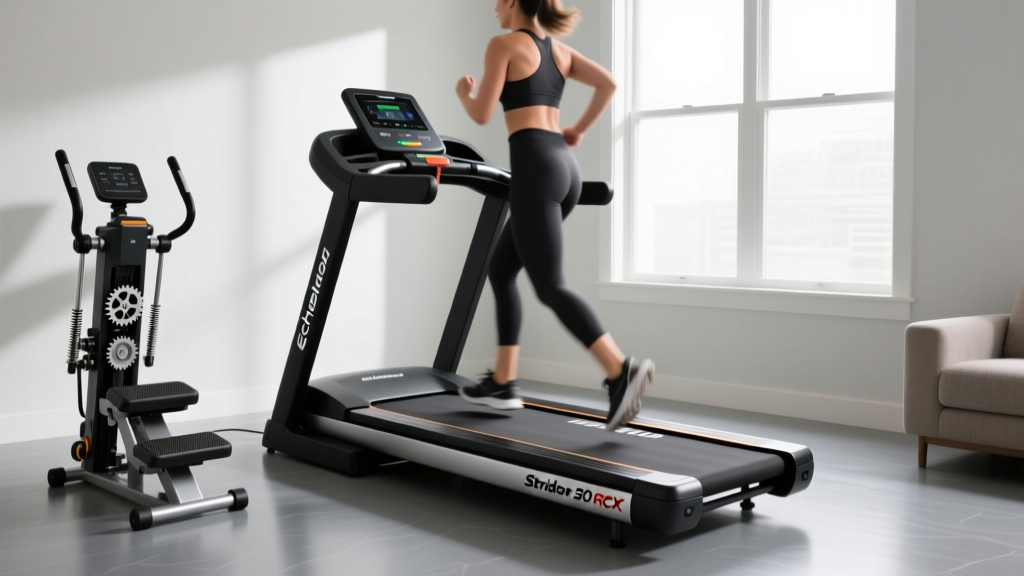
Home Stair Climber Fixes & Echelon Stride 50 RCX Treadmill Guide
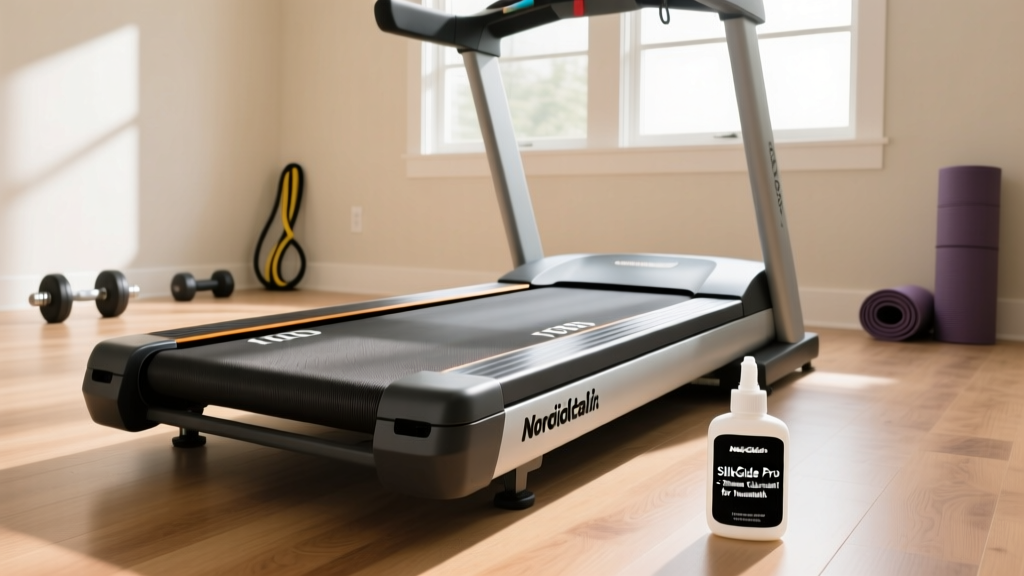
NordicTrack 1750 Treadmill Belt Maintenance & Best Lubricants
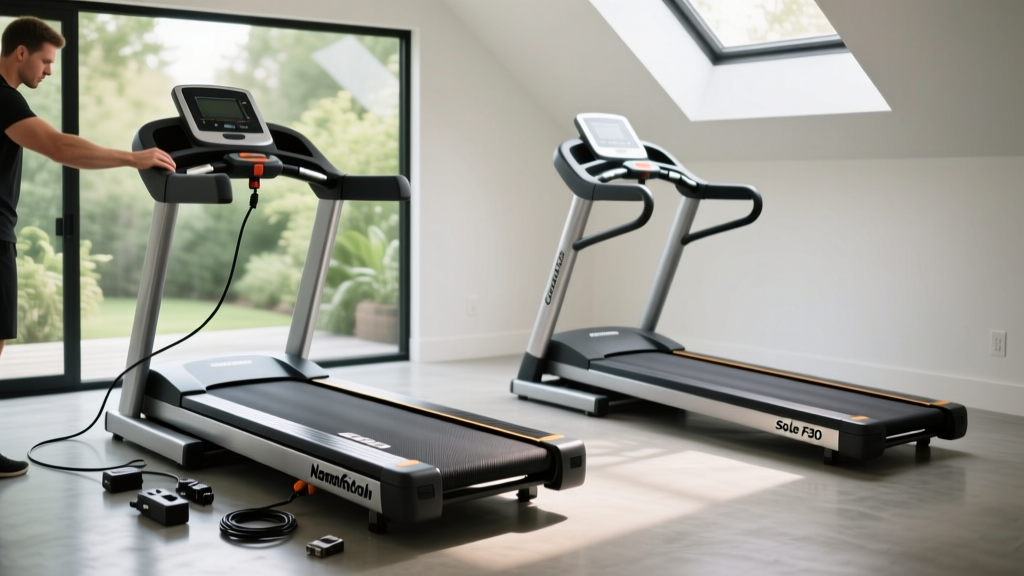
Setup Guide: NordicTrack T Series 16 vs Curved Manual Treadmills

Average Treadmill Length vs Walking Pads: 2026 Head-to-Head Review

Treadmill Speed Mile Time Vs. Bike Types: 2026 Trends
