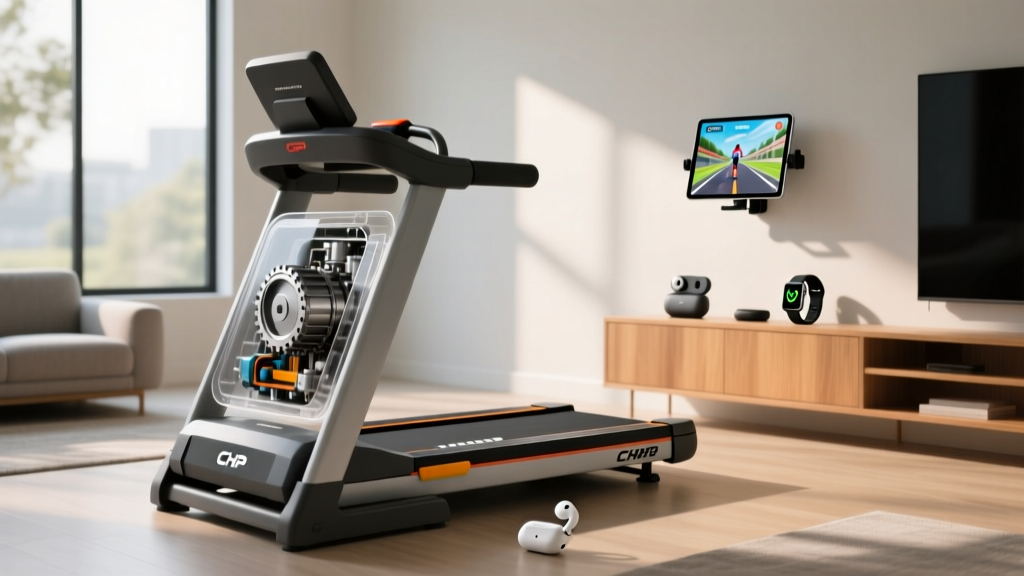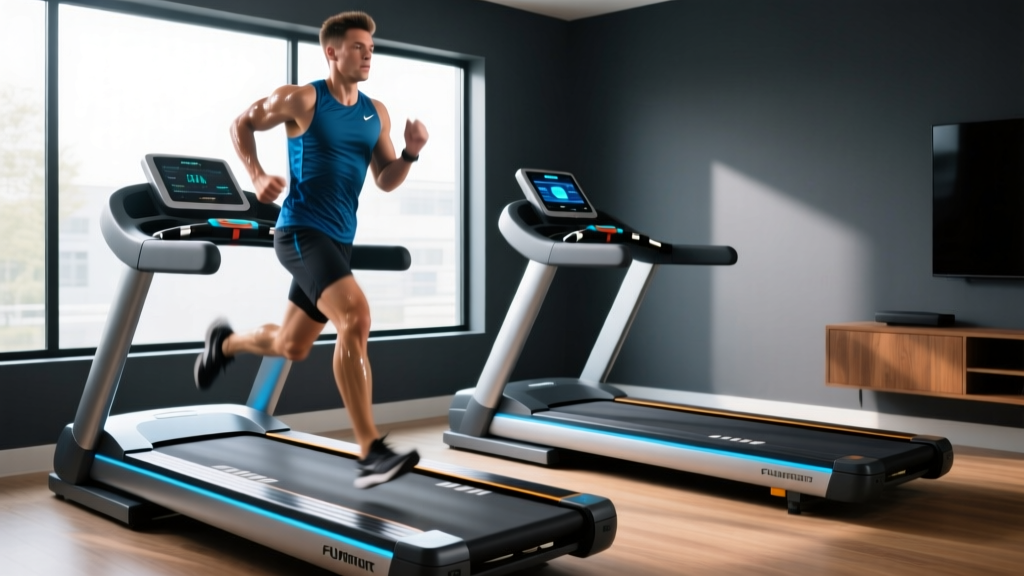
Curved vs Motorized: Best for a Treadmill Sprint Workout?
Is a curved manual or motorized deck best for your treadmill sprint workout? We compare biomechanics, top 2026 models, and HIIT protocols.

The Evolution of the Treadmill Sprint Workout
High-Intensity Interval Training (HIIT) has fundamentally changed how athletes and fitness enthusiasts approach cardiovascular conditioning. At the core of many elite conditioning programs is the treadmill sprint workout, a protocol designed to maximize VO2 max, improve anaerobic threshold, and trigger excess post-exercise oxygen consumption (EPOC). However, as home gym setups evolve in 2026, a critical debate has emerged among strength coaches and sports scientists: should you execute these sprints on a traditional motorized treadmill, or transition to a curved manual treadmill?
The answer is not merely a matter of preference; it fundamentally alters your biomechanics, muscle activation patterns, and safety profile. Below, we break down the head-to-head comparison between curved manual and motorized treadmills to help you decide which machine deserves the centerpiece spot in your home gym.
Quick Verdict: The Sprint Machine Matrix
Choose a Curved Manual Treadmill if: You want unlimited top speeds, 30% higher caloric burn, natural sprinting biomechanics, and zero safety risks associated with jumping onto a moving belt.
Choose a Motorized Treadmill if: You require precise, digitally controlled pacing, integrated incline/decline gradients, guided interactive programming, and a lower upfront financial investment.
Biomechanics and Muscle Activation: The Science of the Sprint
When you perform a treadmill sprint workout on a standard motorized deck, the belt pulls your foot backward. This mechanical assistance alters your natural gait cycle, specifically reducing the concentric activation of the hamstrings and glutes. Your body essentially 'keeps up' with the belt rather than propelling itself forward.
Conversely, a curved manual treadmill is entirely self-powered. To increase speed, you must drive your knees higher and push the belt down and back. This mimics outdoor overground running perfectly. Sports science research indicates that non-motorized curved treadmills increase energy expenditure by up to 30% compared to motorized treadmills at the same perceived exertion. The Centers for Disease Control and Prevention (CDC) emphasizes the importance of vigorous-intensity aerobic activity for cardiovascular health, and the curved deck naturally pushes your heart rate into the vigorous zone (77-95% of max HR) much faster than a flat motorized deck.
Head-to-Head Comparison Matrix
| Feature | Curved Manual Treadmill | Motorized Treadmill |
|---|---|---|
| Max Speed | Unlimited (User-dependent) | Typically capped at 12 - 14 mph |
| Hamstring/Glute Activation | High (Concentric drive required) | Moderate (Belt assists pull-through) |
| Caloric Expenditure | +20% to +30% higher | Baseline standard |
| Incline/Decline | Fixed curve (simulates 3-5% grade) | Adjustable (-3% to +15%+) |
| Safety During HIIT | Exceptional (Stops when you stop) | Moderate (Risk of falling during straddle jumps) |
| Average Price Range (2026) | $3,900 - $7,500 | $1,200 - $3,500 |
Deep Dive: Curved Manual Treadmills for HIIT
The curved treadmill has become the gold standard for CrossFit boxes, professional sports facilities, and serious home gyms. Because the belt only moves when you push it, executing a true all-out sprint is infinitely safer. You do not need to straddle the rails and jump onto a belt moving at 12 mph; you simply lean forward and drive.
Top 2026 Curved Models for Sprinting
- AssaultRunner Elite ($3,999): The staple of the functional fitness community. It features a 330 lb weight capacity, a rugged rubber belt, and a highly responsive curve. It is relatively heavy (280 lbs) but practically indestructible.
- TrueForm Runner ($5,495): Preferred by elite track and field coaches. The TrueForm features a lower profile and a unique rubber tread surface that provides incredible grip for sprint spikes or barefoot running. Its dual-belt system allows for micro-adjustments in tension.
- Woodway Curve ($6,900): Woodway’s patented vulcanized rubber slat belt is legendary for its shock absorption. The Curve offers the smoothest transition from walking to sprinting, making it ideal for users with a history of joint issues who still want to perform high-intensity intervals.
Deep Dive: Motorized Treadmills for Speed Work
Motorized treadmills remain the most popular cardio machines in the world. For a treadmill sprint workout, they offer the distinct advantage of forced pacing. When the belt is set to 11 mph, you are forced to maintain that cadence, which can be highly beneficial for runners training for specific race-pace targets.
Top Motorized Models for Speed
- NordicTrack Commercial 2450 ($2,799): Offers a top speed of 12 mph and a massive 22-inch HD touchscreen. The -3% to 15% incline range allows for varied sprint-hill intervals, something a curved treadmill cannot replicate.
- Peloton Tread+ ($2,995): While technically motorized, the Tread+ uses a slat-belt design that mimics the shock absorption of manual curves. It tops out at 12.5 mph and features a highly immersive studio experience that is excellent for guided HIIT classes.
- Horizon 7.4 ($1,299): A budget-friendly powerhouse with a 3.5 CHP motor and a top speed of 12 mph. It lacks the massive screens of its competitors but provides a stable, wide deck (22" x 60") necessary for safe lateral movements during sprint intervals.
Expert Warning: The Mayo Clinic notes that proper warm-ups are critical before high-intensity intervals. On a motorized treadmill, the most dangerous moment of a sprint workout is the 'straddle jump'—standing on the side rails and jumping onto a fast-moving belt. Over 80% of treadmill-related ER visits involving HIIT occur during these transitions. Curved treadmills entirely eliminate this risk.
Joint Impact and Ground Reaction Forces
When designing a treadmill sprint workout, joint preservation is a primary concern. Sprinting generates ground reaction forces (GRF) equivalent to 3 to 5 times your body weight.
Traditional motorized treadmills with standard 1-inch thick MDF decks backed by elastomer cushions can create a 'trampoline effect,' leading to Achilles and calf strain during explosive push-offs. Curved treadmills, particularly those with thick rubber slats (like the Woodway or TrueForm), absorb significantly more horizontal shear force. Furthermore, the geometry of a curved deck naturally encourages a forefoot or midfoot strike, which shifts the load from the patellofemoral joint (knees) to the muscular system (calves and glutes), acting as a natural shock absorber.
The Ultimate 20-Minute Treadmill Sprint Workout Protocol
Whether you are on an AssaultRunner or a NordicTrack, the American Heart Association recommends vigorous activity in concentrated bursts for optimal cardiovascular health. Here is a highly effective 1:2 work-to-rest ratio protocol designed to maximize EPOC without causing central nervous system burnout.
The 'Anaerobic Flush' Protocol
- Dynamic Warm-Up (5 Minutes): Start with a brisk walk, progressing to a light jog. Focus on high knees and opening the hips. Do not skip this; cold hamstrings are highly susceptible to tears during sprinting.
- The Sprint Block (10 Minutes):
- Work (30 Seconds): ALL OUT effort. On a curved treadmill, lean forward and drive the arms. On a motorized treadmill, safely transition to the belt at your pre-set max speed (e.g., 10-12 mph).
- Rest (60 Seconds): Complete stop or very slow walking recovery. Allow heart rate to drop below 120 BPM.
- Repeat: Complete 6 to 8 total rounds.
- Active Cooldown (5 Minutes): Gradually reduce speed to a slow walk to facilitate venous return and prevent blood pooling in the lower extremities.
Frequently Asked Questions (FAQ)
Can I do a treadmill sprint workout every day?
No. True sprinting taxes the central nervous system (CNS) and fast-twitch muscle fibers heavily. Limit all-out treadmill sprint workouts to 2 or 3 times per week, with at least 48 hours of recovery or low-intensity steady-state (LISS) cardio in between sessions.
Which machine is quieter for an apartment or home gym?
Curved manual treadmills are generally quieter regarding motor noise (since they don't have one), but the sound of your feet striking the rubber belt can be loud. Motorized treadmills produce a constant low-frequency hum from the motor, but high-end models like the Woodway or Peloton Tread+ feature excellent acoustic dampening. If noise is a concern, placing a high-density EVA foam mat under either machine is mandatory.
Is a curved treadmill better for weight loss?
Due to the 20-30% increase in caloric demand caused by the lack of motor assistance and the fixed incline of the curve, a curved treadmill will technically burn more calories per minute than a motorized treadmill at the exact same perceived exertion level. However, adherence to the program is the most critical factor for weight loss; choose the machine you will consistently use.
Final Verdict
If your primary goal is to execute a pure, unadulterated treadmill sprint workout with maximum safety, biomechanical accuracy, and caloric burn, the curved manual treadmill is the undisputed champion. Models like the TrueForm Runner or AssaultRunner Elite provide an athletic experience that flat motorized decks simply cannot replicate. However, if you require guided programming, precise pace enforcement, and incline variability—and are willing to practice safe straddle-jump techniques—a high-end motorized treadmill like the NordicTrack Commercial 2450 remains an exceptional, versatile tool for your home gym arsenal.
More gear to consider
All reviews
Maximize Benefits of Treadmill for Belly Fat: Belt Care
Commercial 2450 Treadmill vs Folding Treadmills: Small Space Review
Stair Climber Troubleshooting: Why There Is No Treadmill Safety Clip

Treadmill Motor Size Guide: Is the XTERRA TR300 Treadmill HP Enough?
Stair Climber Installation: Replacing True Treadmill Older Models