
Curve Treadmill Benefits vs Motorized: Troubleshooting Guide
Discover the real curve treadmill benefits vs motorized models. Learn common mistakes, form corrections, and troubleshooting tips for manual belts.

The Biomechanical Reality: Curve Treadmill Benefits vs. Motorized Decks
As we navigate the home fitness landscape in 2026, the debate between curved manual treadmills and traditional motorized treadmills has moved beyond simple aesthetics into the realm of applied biomechanics. Understanding the true curve treadmill benefits requires looking at ground reaction forces (GRF), posterior chain activation, and the elimination of artificial pacing. According to research published by the National Institutes of Health (NIH), running on a curved non-motorized treadmill increases physiological demand and caloric expenditure by up to 30% compared to a motorized treadmill at the same speed.
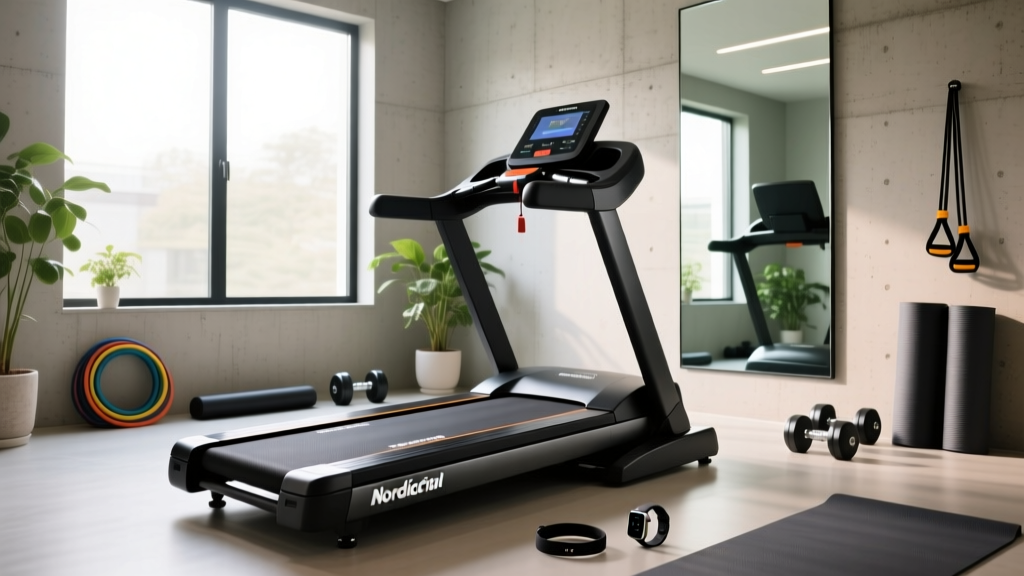
Motorized treadmills, like the popular Sole F80 or NordicTrack 1750, pull your foot backward via a DC motor and a continuous PVC belt. This artificial assistance reduces hamstring and glute activation. In contrast, curved manual treadmills—such as the Woodway Curve ($7,200), TrueForm Runner ($5,500), and AssaultRunner Elite ($3,299)—require the user to generate 100% of the forward propulsion. The concave deck design naturally encourages a midfoot strike beneath your center of mass, drastically reducing the braking forces and heel-strike impact associated with motorized decks.
3 Critical Form Mistakes on Curved Manual Treadmills
Despite the immense curve treadmill benefits, the learning curve is steep. Many users transition from motorized machines and inadvertently sabotage their biomechanics. The American Council on Exercise (ACE) frequently highlights how improper form on self-powered machines can lead to Achilles tendinopathy and lower back strain.
- The 'Death Grip' on Side Rails: Holding the side handles shifts your center of mass backward, effectively applying a braking force to the belt. This negates the 30% caloric benefit and forces you into an unnatural, upright posture that strains the lumbar spine.
- Heel Striking at the Apex: The highest point of the curve is designed for midfoot or forefoot striking. If you overstride and land on your heel at the apex, you act as a human brake. You will feel immediate resistance, and your cadence will plummet below the optimal 170-185 steps per minute (SPM).
- Leaning Too Far Forward: While a slight forward lean from the ankles is necessary to accelerate the belt, hinging at the hips and dropping your chest restricts diaphragmatic breathing and overloads the patellar tendons.
Troubleshooting Manual Curve Treadmills: Slat vs. Continuous Belt
Manual treadmills are not immune to mechanical failure. Troubleshooting a curve treadmill requires understanding whether your machine uses a vulcanized rubber slat belt or a continuous polyurethane belt.
1. Vulcanized Rubber Slat Belts (e.g., Woodway Curve, TrueForm)
Slat belts run on a track of sealed ball bearings. Over time, the belt can feel 'sluggish' or require more effort to maintain momentum at lower speeds.
- Sluggish Belt / High Friction: This is rarely a belt tension issue. Instead, it indicates bearing degradation or track debris. Inspect the side tracks for polyurethane dust. Use a vacuum with a brush attachment to clear the tracks. If the resistance persists, the sealed cartridge bearings (typically 6203 or 6204 series) inside the slats may be failing and require a manufacturer service kit.
- Lateral Belt Drift: Unlike motorized belts, slat belts do not drift left or right because they are locked into the side guide rails. If your slat belt feels misaligned, check the side tensioning springs located under the rear axle guards.
2. Continuous Polyurethane Belts (e.g., AssaultRunner Elite, Torque Fitness)
These mimic the look of a motorized belt but are heavily grooved on the underside to grip the curved deck.
- Belt Slippage During Sprints: If the belt slips under your foot during high-intensity interval training (HIIT), the rear roller tension is too loose. Locate the two 8mm hex bolts at the rear of the treadmill. Turn both bolts clockwise exactly one-half turn. Test the belt. Never over-tension, as this will destroy the front roller bearings.
- Squeaking on the Curve: Friction between the belt and the curved composite deck can cause squeaking. Do not use silicone lubricant. Silicone will cause the grooved belt to slip dangerously. Instead, clean the deck with a mild degreaser and apply a specialized PTFE (Teflon) dry-film lubricant designed specifically for manual treadmill decks.
Motorized Treadmill Troubleshooting: When the Tech Fails
While motorized treadmills eliminate the biomechanical learning curve, they introduce complex electronic and mechanical failure modes that curve treadmills simply do not have. According to maintenance guidelines outlined by Runner's World, neglecting basic motorized treadmill maintenance is the leading cause of Motor Control Board (MCB) burnout.
Motor Overheating and Amp Draw Spikes
If your motorized treadmill (like the Peloton Tread or Horizon 7.4) suddenly shuts off after 20 minutes, or the belt stutters when your foot strikes, the motor is likely overdrawing amps. This is almost always caused by a dry deck. The friction between the belt and the wooden deck forces the DC motor to work harder, eventually tripping the thermal reset switch or frying the MCB. Lift the belt; if the deck is dry to the touch, apply 100% silicone treadmill lubricant in a zigzag pattern down the center of the deck.
Incline Calibration Errors
Motorized treadmills use a linear actuator to change the incline. If your machine displays a 'Calibration Error' or grinds when moving to 0%, the potentiometer (the sensor that tells the console the deck's angle) has lost its zero-point. To fix this, enter the machine's engineering mode (usually by holding 'Incline Up' and 'Speed Down' simultaneously for 5 seconds) and run the auto-calibration sequence, allowing the deck to cycle from 0% to 15% unassisted.
Failure Mode & Maintenance Matrix
Use this comparison matrix to understand the long-term ownership realities of curved manual treadmills versus motorized models in 2026.
| Feature | Curved Manual (Slat Belt) | Curved Manual (Continuous) | Motorized (DC Motor) |
|---|---|---|---|
| Primary Failure Point | Side guide bearings | Rear roller tension loss | Motor Control Board (MCB) |
| Routine Lubrication | None (Tracks only) | PTFE Dry-Film (Deck) | 100% Silicone (Deck) |
| Belt Tensioning | Not applicable (Locked) | Rear axle hex bolts | Rear roller hex bolts |
| Avg. Out-of-Warranty Repair | $400 - $800 (Bearing/Slat) | $250 - $450 (Belt replace) | $300 - $600 (MCB/Motor) |
| Lifespan (Heavy Use) | 10 - 15+ Years | 5 - 8 Years | 5 - 10 Years |
Expert Verdict: Matching the Machine to Your Biomechanics
The decision between leveraging the raw curve treadmill benefits of a manual machine versus the technological convenience of a motorized deck ultimately comes down to your training intent and willingness to maintain the equipment. If your goal is to improve sprint mechanics, increase posterior chain recruitment, and perform high-intensity intervals without waiting for a motor to spool up, a curved manual treadmill like the AssaultRunner Elite or Woodway Curve is unmatched. However, you must commit to learning the proper midfoot strike and maintaining the specific belt tension requirements.
Conversely, if you prefer long, steady-state zone 2 runs while consuming media, or require precise, automated incline changes for specific marathon training blocks, a high-quality motorized treadmill remains the superior tool. Just remember that with motors come circuit boards, and with circuit boards come eventual electronic failures. Whichever path you choose in 2026, prioritize regular deck and track maintenance to ensure your cardio investment outlasts your fitness resolutions.
More gear to consider
All reviews
ProForm Treadmill Not Working? Best Walking Pad Alternatives

Planet Fitness Treadmills vs. Home Stationary Bikes: Value Analysis

Rowing Buying Guide: Technique & How to Use a Treadmill for Beginners
NordicTrack Treadmill Not Working? Motor HP & Size Fixes

Pad Setup: Calories Burned on Treadmill Calculator With Incline
