
Cupping for Athletes: 2026 Trends & How to Use Massage Gun Protocols
Explore 2026 smart cupping therapy equipment trends for athletes, market analysis, and how to use massage gun protocols alongside decompression.

The athletic recovery landscape has undergone a massive paradigm shift entering 2026. While percussive therapy dominated the late 2010s, myofascial decompression—specifically via automated, smart cupping therapy equipment—has captured the lion's share of elite sports science budgets. This trend report analyzes the current market for smart cupping devices, explores the physiological ROI of decompression versus percussion, and outlines how modern athletes integrate these modalities for optimal tissue adaptation.
2026 Market Snapshot: The global smart cupping therapy market is projected to hit $1.42 billion by Q4 2026, boasting a 34% CAGR in the consumer athletic sector. This growth is largely driven by hybrid devices that combine dynamic suction, localized thermotherapy, and red-light photobiomodulation.The Shift from Percussive to Decompression Therapy
For years, the recovery industry was hyper-focused on neuromuscular stimulation. Countless online guides and physical therapy clinics focused heavily on how to use massage gun attachments for superficial tissue warming and pre-workout activation. However, sports physiologists have increasingly recognized the limitations of percussive therapy for deep fascial adhesions and lymphatic stagnation.
Percussive devices (like the Theragun PRO Plus) push into the tissue, which is excellent for down-regulating the nervous system and increasing local arterial blood flow. Cupping, conversely, pulls away from the tissue. This negative pressure creates a decompression effect, separating fused fascial layers and drawing stagnant, deoxygenated blood to the surface to be cleared by the lymphatic system. According to research published by the National Center for Biotechnology Information (NCBI), cupping therapy significantly improves local microcirculation and reduces delayed onset muscle soreness (DOMS) without the mechanical trauma associated with deep tissue friction.
2026 Smart Cupping Equipment: Market Leaders & Pricing
The 2026 hardware generation has moved far beyond traditional glass cups and fire vacuums. Today's smart cupping devices utilize micro-pumps to precisely control suction pressure, measured in kilopascals (kPa). Below is a market analysis of the top-tier devices currently utilized by collegiate and professional athletes.
| Device Model | Max Suction (kPa) | Adjunct Therapies | MSRP (2026) |
|---|---|---|---|
| CuppingTech X9 | -65 kPa (Dynamic) | 660nm Red Light, 45°C Heat | $249 |
| Achedaway Pro Cupper | -50 kPa (Static/Pulse) | 12mm Percussive Vibration | $189 |
| Firecup Smart Gen-3 | -40 kPa (App-Controlled) | Biofeedback HRV Sync | $159 |
Analyst Takeaway: The CuppingTech X9 leads the premium tier by integrating 660nm red light therapy, which clinical studies show enhances mitochondrial ATP production during the decompression phase. However, the Achedaway Pro remains the most versatile for hybrid athletes, as it literally bridges the gap by including percussive vibration within the suction cup.
Physiological ROI: Decompression vs. Percussion
To build an optimal recovery stack, athletes must understand the distinct physiological mechanisms—and failure modes—of each modality.
Blood Flow and Lymphatic Drainage
Research highlighted in the Journal of Sports Science & Medicine demonstrates that percussive therapy excels at acute arterial vasodilation. It is the superior choice for pre-competition warmups. Cupping, however, excels at venous and lymphatic return. The negative pressure opens the superficial lymphatic capillaries, making it the undisputed king of post-event metabolic waste clearance.
Edge Cases and Failure Modes
- Cupping Failure Modes: The most common error is leaving high-suction devices (-60 kPa) on a single area for longer than 12 minutes. This causes severe petechiae (capillary rupture) and can exacerbate acute muscle tears. Cupping is strictly contraindicated over varicose veins, open wounds, or acute grade-2/3 strains.
- Percussive Failure Modes: Massage guns fail when users apply them over bony prominences or superficial nerve beds. Striking the common fibular nerve at the lateral knee or the ulnar nerve at the elbow can cause temporary neuropathy. Furthermore, using percussive therapy on a strained hamstring can trigger the stretch reflex, causing the muscle to spasm and tear further.
The Hybrid Protocol: Integrating Both Modalities
Elite recovery labs in 2026 no longer view these tools as mutually exclusive. Instead, they use a sequenced hybrid protocol. If you are wondering how to structure a combined session, follow this evidence-based workflow:
- Phase 1: Tissue Priming (Percussion): Use a percussive device (e.g., Theragun or Achedaway) on a low amplitude (16mm) at 40Hz for 60 seconds per muscle group. This increases local tissue temperature and down-regulates resting muscle tone.
- Phase 2: Fascial Decompression (Cupping): Apply a smart cupping device (like the CuppingTech X9) at a moderate suction level (-35 kPa) with heat enabled. Leave on the target belly (e.g., vastus lateralis or latissimus dorsi) for exactly 8 minutes. The heat increases tissue viscosity, allowing the negative pressure to separate fascial layers more effectively.
- Phase 3: Active Flushing: Remove the cups and immediately perform 5 minutes of light, active mobility work (e.g., bodyweight squats or cat-cow stretches) to pump the newly oxygenated blood through the decompressed tissue beds.
Clinical Warning: Never apply percussive therapy immediately after high-suction cupping. The capillary beds are highly engorged and fragile post-decompression; striking them with a massage gun will result in immediate, severe bruising and localized inflammation.
Expert Verdict & Purchasing Framework
The market data is clear: smart cupping therapy equipment is no longer a fringe alternative medicine practice; it is a quantifiable, data-driven recovery modality. When deciding where to allocate your recovery budget, use this framework:
Buy a Smart Cupping Device if: You are an endurance athlete, a hypertrophy-focused bodybuilder, or a grappler who deals with chronic fascial stiffness, heavy DOMS, and poor lymphatic drainage. The ROI on a $249 CuppingTech X9 is massive for post-event recovery.
Stick to a Massage Gun if: You are a powerlifter, sprinter, or field-sport athlete who primarily needs rapid neuromuscular activation, acute pain gating before a lift, and portable warm-up solutions.
Ultimately, the most sophisticated athletes in 2026 aren't choosing sides. They are mastering both the mechanical push of percussive therapy and the physiological pull of myofascial decompression, leveraging clinical data from sources like PubMed Central to periodize their recovery just as rigorously as their training.
More gear to consider
All reviews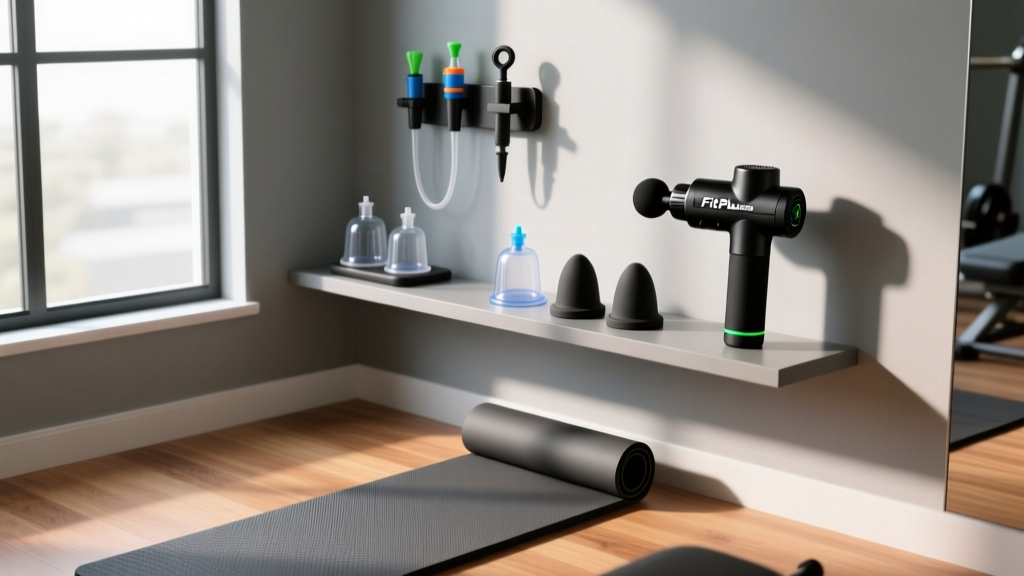
Space-Saving Recovery: Cupping & FitPlus Massage Gun Setup

2026 Massage Gun Buying Guide: Cryotex Massage Gun Charger & More

Compact Recovery: Foam Roller Guide & Trigger Points Massage Gun Chart

Home Cold Plunge Tub and Sonic Handheld Percussion Massage Gun Care

Home Flexibility Rig Setup: Do Massage Guns Actually Work With It?
