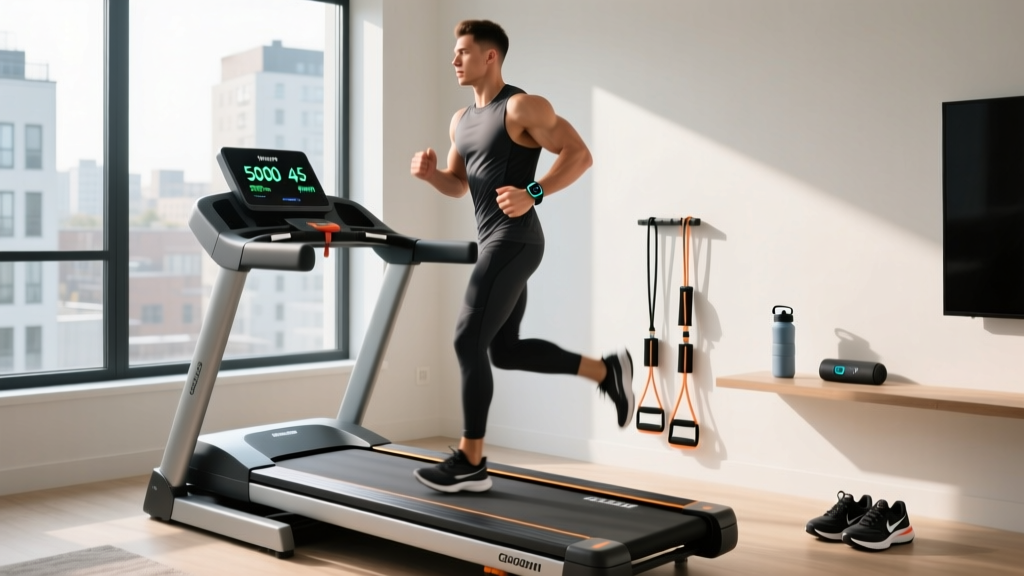
CrossFit Treadmill: Best Models, Workouts & Programming Guide
Discover the best treadmills for CrossFit, from Assault AirRunner to TrueForm. Includes WOD programming, benchmark workouts, and maintenance tips.

CrossFit Treadmill: Best Models, Workouts & Programming Guide
Treadmills have become an increasingly important piece of equipment in CrossFit boxes and home gyms worldwide. While many athletes associate CrossFit primarily with barbells, kettlebells, and gymnastics movements, running remains one of the most programmed monostructural cardio elements in WODs. Whether you are looking to equip your affiliate gym or build out a personal training space, understanding which treadmill best suits the demands of CrossFit programming can save you thousands of dollars and years of frustration.
In this comprehensive guide, we will explore why treadmills matter in CrossFit, review the best models available today, break down benchmark WODs that incorporate running, and provide programming strategies that will elevate your cardiovascular capacity without sacrificing strength gains.
Why Treadmills Belong in CrossFit Programming
CrossFit defines fitness across ten general physical skills, and cardiovascular endurance sits at the very top of that list. Running is one of the three primary monostructural movements programmed in CrossFit alongside rowing and cycling. While outdoor running is ideal in many respects, treadmills offer several critical advantages for box owners and home gym athletes alike.
Consistent Training Regardless of Weather
CrossFit programming does not stop because it is raining, snowing, or dangerously hot outside. Having a treadmill in your gym ensures that running-based WODs can proceed as programmed regardless of environmental conditions. This consistency is crucial for tracking progress over time and maintaining the integrity of benchmark workouts.
Precise Distance and Pace Tracking
One of the biggest challenges with outdoor running in a CrossFit context is measuring exact distances, particularly for shorter sprints like 200-meter or 400-meter efforts. Treadmills provide precise distance measurement, allowing athletes to hit exact targets and coaches to program specific volumes with confidence.
Warm-Up and Cool-Down Utility
Beyond WODs themselves, treadmills serve as excellent warm-up tools. A five-minute jog at moderate pace elevates core temperature, increases blood flow to working muscles, and prepares the nervous system for the intensity ahead. Many coaches program treadmill warm-ups before heavy lifting sessions or high-intensity metcons.
Space Efficiency in Box Gyms
Not every CrossFit affiliate has the luxury of a 400-meter track or even a safe running route nearby. Urban boxes in particular often face severe space constraints. A well-chosen treadmill provides consistent running stimulus in a compact footprint, making it possible to program running WODs even in tight urban environments.
Best Treadmill Models for CrossFit
Not all treadmills are created equal when it comes to the demands of CrossFit training. The constant acceleration, deceleration, and high-intensity intervals place unique stresses on treadmill components. Here are the top models we recommend for CrossFit athletes and gym owners.
Assault AirRunner Elite
The Assault AirRunner has become nearly synonymous with CrossFit treadmill training, and for good reason. This self-powered curved treadmill requires no electricity, responds instantly to changes in pace, and is built like a tank. The curved running surface encourages a natural forefoot strike pattern, which translates well to outdoor running mechanics.
Key Specifications:
- Self-powered curved design with no motor
- Weight capacity: 350 pounds
- Belt width: 17 inches
- Console displays: speed, distance, time, calories, heart rate, watts
- Weight: approximately 290 pounds
- Bluetooth connectivity for app integration
The Assault AirRunner excels in CrossFit because its self-powered design means it responds instantly to effort. When an athlete sprints, the belt speeds up immediately. When they slow down, it decelerates naturally. There is no lag from a motor trying to catch up, which makes it ideal for the stop-and-go nature of most CrossFit metcons.
TrueForm Trainer
The TrueForm Trainer is another curved, self-powered treadmill that has earned a strong following in the CrossFit community. It features a slightly different curve profile than the Assault AirRunner and uses a rubber slat belt that provides excellent traction and shock absorption.
Key Specifications:
- Self-powered with zero electricity requirements
- Rubber slat belt for durability and grip
- Weight capacity: 400 pounds
- Extremely low maintenance requirements
- Compact footprint for tight spaces
The TrueForm is particularly popular among gym owners who need multiple units because of its relatively compact size and stackability. The rubber slat belt also tends to run quieter than traditional belt designs, which matters in a busy box environment.
Technogym Skillmill
The Technogym Skillmill represents the premium end of the self-powered treadmill market. Used in CrossFit Games competitions and high-end affiliates, the Skillmill offers exceptional build quality, a sophisticated console, and the ability to simulate resistance for sled-push style training.
The Skillmill's resistance feature sets it apart from competitors. Athletes can increase resistance to simulate pushing a heavy sled, adding a strength-endurance component that traditional treadmills cannot replicate. This makes it particularly valuable for programming that targets both cardiovascular and muscular endurance simultaneously.
Motorized Options: NordicTrack and Sole
For home gym athletes who prefer motorized treadmills, brands like NordicTrack and Sole offer reliable options with incline capabilities and pre-programmed workout modes. While motorized treadmills lack the instant responsiveness of self-powered models, they provide features like automatic incline adjustment and interactive training programs that can complement CrossFit training.
The NordicTrack Commercial series, for example, offers iFIT integration with trainer-led workouts that can serve as supplemental cardio programming. Sole treadmills are known for their robust motors and generous warranties, making them practical choices for home use where volume is lower than a commercial gym setting.
CrossFit Benchmark WODs That Include Running
Understanding which benchmark WODs incorporate running helps you program treadmill work effectively. Here are some of the most commonly programmed running WODs in CrossFit.
Helen
Helen consists of three rounds for time of 400-meter runs, 21 kettlebell swings, and 12 pull-ups. This classic benchmark tests the ability to sustain effort across three rounds while managing the transition between running and gymnastics/weightlifting movements. On a treadmill, set the distance to 0.4 kilometers (approximately 0.25 miles) for each run segment.
Murph
Murph is perhaps the most famous running WOD in CrossFit: a one-mile run, 100 pull-ups, 200 push-ups, 300 air squats, and another one-mile run, all while wearing a 20-pound vest for Rx athletes. The bookend runs on the treadmill allow for precise pacing strategy, which is critical for managing energy across this grueling hour-plus effort.
Nancy
Nancy features five rounds of 400-meter runs and 15 overhead squats at 95 pounds. The repeated running intervals with heavy loading between them demand excellent pacing and recovery management. Treadmill use here allows athletes to focus purely on effort without worrying about course navigation or terrain changes.
Eva
Eva scales Helen up significantly with five rounds of 800-meter runs, 30 kettlebell swings, and 30 pull-ups. The longer run distances make treadmill use particularly valuable, as outdoor 800-meter courses can be difficult to establish in urban environments.
Mary and Cindy Variants
While the classic Mary (handstand push-ups, pistol squats, pull-ups) and Cindy (pull-ups, push-ups, air squats) do not include running, many coaches create variants that add running intervals. A common modification adds a 200-meter treadmill sprint between each round, turning a bodyweight AMRAP into a more comprehensive metabolic challenge.
Treadmill-Specific Workout Programming
Beyond standard WODs, treadmills open up unique programming possibilities that can enhance CrossFit performance.
Interval Programming
High-intensity interval training on the treadmill is one of the most effective ways to build the cardiovascular engine needed for CrossFit competition. Here is a sample interval session:
- Warm-up: 5 minutes at easy pace
- Work: 30 seconds at maximum sustainable pace
- Rest: 90 seconds walking or very slow jog
- Repeat: 8 to 12 rounds
- Cool-down: 5 minutes easy
This format builds both aerobic capacity and anaerobic power, targeting the energy systems most taxed during CrossFit metcons. The beauty of treadmill intervals is the ability to precisely control work and rest periods, ensuring consistent stimulus across sessions.
Tempo Runs for Aerobic Base
While CrossFit is known for high-intensity work, building a solid aerobic base through tempo running improves recovery between WODs and increases overall work capacity. Aim for 20 to 40 minutes at a pace where conversation is possible but challenging, typically 60 to 70 percent of maximum heart rate.
Hill Simulation Training
Motorized treadmills with incline capabilities allow for hill training without leaving the gym. Programming incline intervals builds leg strength and power that transfers directly to movements like wall balls, box jumps, and thrusters. Try 60 seconds at 10 to 15 percent incline followed by 60 seconds flat, repeated for 15 to 20 minutes.
EMOM Treadmill Work
Every Minute on the Minute treadmill work is excellent for pacing development. Program a specific distance to complete each minute, then rest for the remainder of that minute. For example, run 200 meters each minute for 10 minutes. This teaches athletes to find sustainable paces and manage effort distribution, skills that translate directly to longer WODs.
Interval vs. Steady-State for CrossFit Athletes
The debate between interval training and steady-state cardio is particularly relevant for CrossFit athletes. The answer, as with most training questions, depends on individual needs and programming phase.
When to Prioritize Intervals
Interval training should be the primary treadmill modality during competitive phases and when preparing for events that demand repeated high-intensity efforts. CrossFit competitions typically feature multiple events per day, each lasting between five and twenty minutes, with repeated bursts of maximum effort. Interval training on the treadmill mirrors these demands precisely.
When to Prioritize Steady-State
Steady-state treadmill work shines during off-season base building, recovery days, and deload weeks. Low-intensity steady-state cardio promotes blood flow, aids recovery, and builds the aerobic foundation that supports higher-intensity work. Many top CrossFit athletes incorporate 30 to 45 minutes of steady-state treadmill running two to three times per week during base phases.
The Hybrid Approach
Most successful CrossFit programs use a hybrid approach, with the ratio of intervals to steady-state shifting based on the training cycle. During competition prep, expect an 80/20 split favoring intervals. During base building, flip that ratio to 70/30 favoring steady-state work. This periodization ensures athletes peak at the right time while maintaining year-round cardiovascular health.
Maintenance for Heavy Gym Use
Treadmills in CrossFit boxes face significantly more abuse than those in traditional commercial gyms. The constant high-speed sprints, sudden stops, and heavy use throughout the day demand proactive maintenance protocols.
Daily Maintenance Tasks
- Wipe down the belt and console after each use to prevent sweat corrosion
- Check belt alignment and tension visually
- Inspect handrails and safety components for loose bolts
- Clear debris from around the motor housing on motorized units
Weekly Maintenance Tasks
- Lubricate the belt according to manufacturer specifications
- Test emergency stop mechanisms
- Inspect power cords and connections for wear
- Check belt tracking and adjust if necessary
- Clean the deck beneath the belt using compressed air
Monthly and Quarterly Maintenance
Monthly, inspect the motor brushes on motorized units, check all fasteners throughout the frame, and verify calibration accuracy. Quarterly, have a professional technician service motorized units including motor inspection, belt replacement assessment, and electronic diagnostics.
Self-powered curved treadmills like the Assault AirRunner and TrueForm require significantly less maintenance than motorized models since they lack motors, electronics, and complex drive systems. This is a major consideration for gym owners calculating total cost of ownership.
Space Considerations in Box Gyms
CrossFit affiliates are notorious for maximizing every square foot of floor space. When integrating treadmills into a box layout, consider the following factors.
Footprint and Placement
Self-powered curved treadmills typically have smaller footprints than motorized models and do not require proximity to electrical outlets. This flexibility allows placement in corners, along walls, or even in dedicated cardio zones separate from the main workout floor. Plan for at least two feet of clearance on all sides for safety and airflow.
Quantity Planning
The number of treadmills needed depends on class size and programming frequency. For boxes that program running WODs two to three times per week with classes of 12 to 15 athletes, plan for three to four units. Athletes can share treadmills during WODs by staggering heats, but having enough units minimizes transition time and keeps workout intensity high.
Stackability and Storage
Some treadmill models, particularly self-powered curved designs, can be tilted vertically for storage when not in use. This feature is invaluable for boxes that need to reconfigure floor space for different types of workouts. Check manufacturer specifications for proper storage procedures to avoid damage.
Final Recommendations
For CrossFit affiliate owners investing in treadmills, the Assault AirRunner Elite or TrueForm Trainer represent the best combination of durability, performance, and low maintenance for the demands of group training. The self-powered design eliminates electrical costs and motor failures, while the curved running surface promotes better mechanics.
For home gym athletes with space and budget flexibility, motorized options from NordicTrack or Sole provide versatility through incline training and interactive programming features that complement a broader fitness routine beyond CrossFit.
Regardless of which model you choose, integrate treadmill work thoughtfully into your programming. Use intervals to build competition-specific fitness, steady-state work to build your aerobic engine, and always prioritize proper maintenance to protect your investment. A well-chosen, well-maintained treadmill will serve CrossFit athletes for years, providing consistent, measurable cardiovascular training that translates directly to improved WOD performance.
More gear to consider
All reviews
TrueForm Trainer Manual Treadmill Noise vs. Top Cardio Machines
ProForm Trainer 420 Treadmill vs Walking Pads: 2026 Review

Khloe Kardashian Treadmill Features: Buying Mistakes & Comparison

2026 Under Desk Treadmill Review: How to Track Steps on Treadmill

Star Trac 10TRx FreeRunner Treadmill Noise Test vs Top Rivals