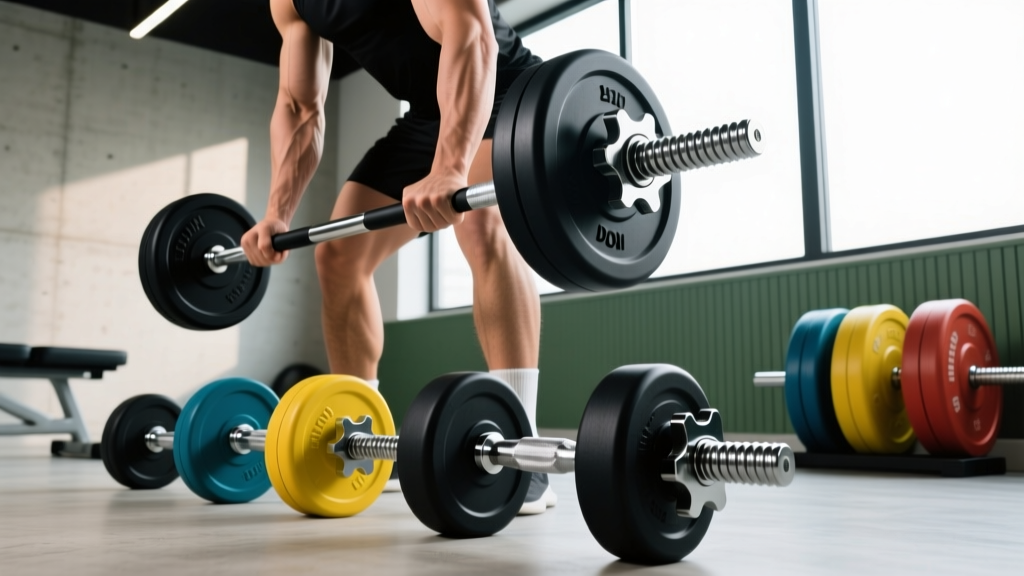
Collar and Clamp Types for a Safe Dumbbell Bicep Curl Workout
Discover how barbell collar and clamp types impact your plate-loaded dumbbell bicep curl workout. Troubleshoot slippage, compare grip forces, and lift safely.

The Hidden Danger in Your Plate-Loaded Dumbbell Bicep Curl Workout
As modular home gym setups continue to dominate the fitness industry in 2026, plate-loaded dumbbell handles have become a staple for lifters chasing progressive overload beyond the 50-pound limits of standard adjustable dumbbells. Whether you are using 14-inch CAP Barbell handles or heavy-duty Troy VTX grips, executing a high-intensity dumbbell bicep curl workout with plate-loaded iron requires absolute confidence in your weight security. Yet, one of the most frequent troubleshooting issues we see at FitGearPulse involves collar and clamp failure.
Lifters often transition directly from heavy barbell compound movements into isolation curls, mistakenly applying the wrong barbell collar logic to their dumbbell setups. A shifting plate during the supination phase of a curl doesn't just ruin your rep; it drastically alters the rotational inertia, placing asymmetric shear force on the distal biceps tendon. This guide breaks down the common mistakes, troubleshoots hardware failures, and compares barbell collar and clamp types to ensure your next arm day is both effective and injury-free.
⚠️ Troubleshooting Warning: Never use bulky 2-inch Olympic jaw clamps on 1-inch standard plate-loaded dumbbell handles. The clamp's width will consume the limited sleeve space, preventing you from loading adequate weight and creating a dangerous overhang that can snag on your torso during the concentric phase of a curl.The Biomechanics of Collar Failure During Curls
To understand why collar selection matters, we must look at the physics of the lift. According to the ExRx biomechanics lever principles, the torque placed on your elbow joint is a product of the weight multiplied by the distance from the axis of rotation (your elbow). When a cheap spring collar fails to secure a 10-pound cast iron plate, and that plate slides outward by just one inch during the eccentric lowering phase, the moment arm increases.
This outward shift forces your stabilizer muscles—specifically the brachioradialis and the supinator—to work overtime to prevent the dumbbell from twisting out of your grip. By the time you initiate the concentric curl, the center of mass has shifted, leading to premature forearm fatigue and a compromised mind-muscle connection in the biceps brachii.
3 Common Mistakes Lifters Make with Collars
1. Relying on Standard Spring Clips for Heavy Eccentrics
Spring clips are ubiquitous and cheap, but they are designed for quick changes on Olympic bars, not for the violent rotational forces of a heavy dumbbell bicep curl workout. During a slow, 3-second eccentric curl, the continuous tension and slight wrist rotation cause standard 1-inch spring clips to slowly walk down the threaded or smooth sleeve. By rep six, the collar is hanging off the edge, and the plates are rattling.
2. Cross-Threading Spinlock Star Nuts
The spinlock collar is the gold standard for 1-inch plate-loaded dumbbells. However, a common troubleshooting nightmare is cross-threading. When lifters rush their setup and force the star nut onto the threaded sleeve at an angle, they strip the zinc plating and the underlying steel threads. Once stripped, the collar will tighten initially but will violently back off the moment the dumbbell is tilted past 45 degrees.
3. Ignoring Sleeve Length vs. Collar Width Ratios
Many lifters buy Rogue's Olympic Work Saver Clips for their barbells and attempt to use similar wide-profile clamps on short-sleeve dumbbell handles. If your dumbbell sleeve is only 6 inches long, a clamp that takes up 1.5 inches of space leaves you with only 4.5 inches for plates, severely limiting your progressive overload potential.
Barbell Collar and Clamp Types: 2026 Comparison Matrix
Below is a comprehensive comparison of the most common collar and clamp types available today, analyzed specifically for their viability in hybrid barbell-to-dumbbell routines.
| Collar Type | Mechanism | Avg Grip Force | Est. Price (2026) | Slippage Risk on Curls |
|---|---|---|---|---|
| Standard Spinlock | Threaded Star Nut | High (User Dependent) | $8 - $15 / pair | Very Low (If threaded correctly) |
| 1" Spring Clip | Tension Steel Wire | ~30 lbs | $5 - $10 / pair | High (Prone to walking) |
| Lock-Jaw Pro (2") | Polyurethane Jaw Clamp | ~150 lbs | $35 - $45 / pair | N/A (Too bulky for DB handles) |
| Olympic Work Saver | Spring-Loaded Lever | ~85 lbs | $22 - $30 / pair | N/A (Olympic bars only) |
| Competition Collar | Machined Aluminum w/ Lever | 330+ lbs | $75 - $95 / pair | Zero (Used for heavy barbell work) |
Note: For elite-level barbell stability before transitioning to your dumbbell work, Eleiko's competition-grade collars remain the undisputed industry standard, ensuring zero plate shift during heavy landmine rows or barbell curls.
Step-by-Step Troubleshooting for Plate-Loaded Dumbbells
If you are experiencing rattling, shifting, or uneven tension during your dumbbell bicep curl workout, follow this diagnostic protocol:
- Inspect the Sleeve Threads: Run your fingernail across the threads of your 1-inch dumbbell handle. If you feel flattened peaks or metallic burrs, the sleeve is damaged. Fix: Use a 1-inch thread chaser or a triangular file to gently clean the grooves. Do not use a standard wrench, which will worsen the damage.
- Check the Star Nut Tolerances: Spin the collar onto the handle without any plates. It should glide smoothly with consistent resistance. If it binds at a specific point, the collar is warped. Fix: Replace the spinlock collars immediately; they cost less than $15 and are vital for joint safety.
- Implement the 'Bumper Sandwich' Method: If you are using smooth (non-threaded) plate-loaded handles with snap-ring collars, cast iron plates will slide regardless of how tight the collar is. Fix: Place a thin 1-pound rubber grip plate or a rubber washer between the cast iron plates and the collar. The rubber creates high-friction compression, locking the iron in place during supination.
- Verify Symmetrical Loading: A common troubleshooting error is loading a 10lb plate on one side and two 5lb plates on the other. Even if the total weight is identical, the physical width of the plates changes the center of mass. Always match plate widths exactly on both dumbbells to ensure a balanced dumbbell bicep curl workout.
Transitioning from Barbell to Dumbbell Safely
Many advanced hypertrophy programs utilize a hybrid approach: starting with heavy barbell curls or landmine variations, then moving to a plate-loaded dumbbell bicep curl workout for targeted isolation. When making this transition, the collars you use on the barbell dictate your safety.
If you are performing heavy barbell curls, avoid using spring clips. The downward force of gravity combined with the wrist flexion required to maintain a neutral grip can cause spring clips to compress and slip off the sleeve. Instead, invest in a pair of lever-based clamping collars (like the Work Saver or Lock-Jaw). Once your barbell work is complete, remove the 2-inch clamps entirely before picking up your 1-inch plate-loaded dumbbells. Mixing and matching Olympic clamps on standard handles is a leading cause of equipment damage and mid-rep failures in home gyms.
Frequently Asked Questions (FAQ)
Can I use hose clamps from a hardware store as dumbbell collars?
While some DIY lifters use stainless steel hose clamps on smooth 1-inch sleeves, this is highly discouraged. Hose clamps lack the sheer surface area required to grip a sleeve under rotational torque, and the screw mechanism can easily strip or slice into your palms during a tight dumbbell bicep curl workout. Stick to purpose-built spinlock or snap-ring collars.
Why do my spinlock collars loosen specifically during hammer curls?
Hammer curls involve a neutral grip, which often leads to subtle internal rotation of the forearm as you fatigue. This micro-rotation transfers torque directly into the dumbbell sleeve. If your spinlock collar is right-handed threaded on both sides (a common manufacturing shortcut in cheap sets), the rotational force of the lift will naturally unscrew one of the collars. Look for handles with opposing thread directions (reverse threading on one side) to prevent this.
What is the maximum weight I should load on a 14-inch plate-loaded dumbbell handle?
Most standard 14-inch cast iron handles have a safe working load of 100 to 120 pounds. Exceeding this requires stacking multiple narrow plates, which pushes the plates dangerously close to the collar's edge. If your dumbbell bicep curl workout requires more than 100 pounds per hand, it is time to invest in specialized heavy-duty handles or a commercial-grade adjustable dumbbell system like the Nuobell 80s or PowerBlock Pro EXPs.
More gear to consider
All reviews
Top Adjustable Dumbbells for a Quad Workout With Dumbbells: Setup

Rack Longevity: Storing the Biggest Dumbbell in the World
EZ Bar vs Straight Bar Care & Around the Worlds Dumbbells

Seated Dumbbell Shrugs Muscles Worked: Neoprene Home Gym Setup

EZ Bar vs Straight Bar: Budget Value & Dumbbell Fly Weight Guide
