
2026 Trends: Cold Plunges vs. Massage Gun for Shoulder Knots
Analyze 2026 home recovery market trends comparing cold plunge tubs and percussive therapy to target shoulder knots and systemic inflammation.

The home recovery equipment market has undergone a radical transformation over the last 36 months. What was once a niche corner of elite athletic training has exploded into a mainstream wellness necessity. As we navigate the 2026 fitness landscape, two dominant modalities are fighting for premium floor space in home gyms and dedicated recovery rooms: systemic thermal stress (cold plunge tubs) and localized mechanical release (percussive therapy). While both promise accelerated recovery, they operate on entirely different physiological pathways. This trend report and market analysis breaks down the economics, biomechanics, and practical applications of installing a home ice bath versus investing in a high-performance massage gun for shoulder knots and localized myofascial pain.
2026 Market Snapshot: The Home Recovery Boom
- Market Valuation: The global sports recovery equipment market is projected to surpass $18.5 billion by the end of 2026, driven heavily by residential purchases.
- Consumer Shift: 68% of premium fitness consumers now prioritize 'hybrid recovery'—combining thermal therapies with mechanical soft-tissue manipulation.
- Top Growth Categories: Residential cold water immersion (CWI) systems (+24% YoY) and smart percussive devices (+18% YoY).
The Systemic Approach: Home Cold Plunge Market Analysis
Cold water immersion (CWI) is no longer relegated to dumping bags of ice into a galvanized steel trough. The 2026 market is dominated by fully integrated, self-sanitizing cold plunge tubs equipped with commercial-grade chillers. According to research published by the National Center for Biotechnology Information (NCBI), CWI significantly reduces delayed onset muscle soreness (DOMS) and systemic inflammation by inducing profound vasoconstriction and subsequent vasodilation upon rewarming.
Market Leaders and Pricing Realities
The barrier to entry for a high-quality home cold plunge remains steep, though prices have stabilized compared to the pandemic-era shortages.
- The Plunge Evolve Series ($4,990 - $5,490): The market darling. Features a 1 HP chiller capable of dropping 120 gallons of water to 39°F within hours. Its 3-micron filtration and UV/Ozone sanitation system means the water only needs to be changed every 4 to 6 months.
- Sun Home Saunas Cold Plunge Pro ($6,995): Positioned as a luxury wellness fixture. Includes an insulated acrylic shell that prevents the condensation pooling and drywall degradation that plagues cheaper, uninsulated models.
- The DIY Chest Freezer Route ($800 - $1,200): Still popular among budget-conscious biohackers, but fraught with failure modes. Improper water chemistry rapidly corrodes the internal copper cooling coils, and the lack of continuous filtration creates a biohazard risk within weeks.
Installation and Failure Modes
Consumers frequently underestimate the infrastructure required for a cold plunge. A 1 HP chiller requires a dedicated 20-amp, 110V circuit (or 220V for rapid-cool models). The most common failure mode in 2026 is chiller burnout caused by placing the condenser unit in direct sunlight or in ambient temperatures exceeding 95°F without adequate ventilation. Furthermore, users must maintain a strict water chemistry protocol (pH 7.2-7.6) using hydrogen peroxide or specialized spa bromine to prevent biofilm buildup in the internal plumbing.
Localized Mechanical Release: Percussive Therapy for the Upper Back
While cold plunges address systemic inflammation, they do nothing to physically break down localized fascial adhesions or trigger points. This is where percussive therapy dominates. When searching for the ideal massage gun for shoulder knots, physical therapists emphasize that not all devices are created equal. The trapezius, rhomboids, and levator scapulae harbor dense, fibrous muscle bellies that require specific biomechanical metrics to penetrate effectively.
Biomechanical Requirements for Shoulder Knots
According to a comprehensive review on percussion massage therapy published in PubMed (Wiewelhove et al.), percussive therapy alters neural excitability and increases local blood flow. However, to reach deep shoulder knots, the device must possess specific engineering traits:
- Amplitude (Stroke Depth): You need a minimum of 16mm amplitude. Devices with 10mm-12mm amplitude (often marketed as 'mini' guns) merely slap the surface of the skin and cannot reach the deep fibers of the infraspinatus or mid-trapezius.
- Stall Force: A minimum of 45-60 lbs of stall force is required. When you press the device into a dense shoulder knot, weaker motors will stall and shut off, rendering the treatment useless.
- Attachment Selection: The standard hard plastic ball is often too aggressive for the shoulder girdle. The 'Dampener' or 'Supersoft' foam attachments are mandatory for treating areas near the scapular spine and acromioclavicular joint.
Top Tier Devices in 2026
The market has consolidated around three premium manufacturers that meet the clinical requirements for deep shoulder release:
- Theragun PRO Plus ($599): The undisputed heavyweight. Features a 16mm amplitude, 60 lbs stall force, and an ergonomic multi-grip handle that allows you to reach your own contralateral shoulder without straining your wrist. The integrated heat therapy attachment (sold separately) is a game-changer for pre-treating cold, stiff traps.
- Hyperice Hypervolt 2 Pro ($449): Offers a slightly quieter operation (QuietForce technology) and a 14mm amplitude. It excels in rapid, sweeping passes across the upper back, though it lacks the raw depth of the Theragun for severe, chronic knots.
- Ekrin Athletics B37S ($329): The best value proposition. Features an adjustable arm (15-degree angle) which drastically reduces wrist fatigue when attempting to self-administer therapy to the posterior shoulder and neck base.
Comparative Matrix: Cold Plunges vs. Percussive Therapy
To help consumers and facility managers allocate their recovery budgets, we have mapped the two modalities across critical decision-making vectors.
| Feature | Home Cold Plunge Tub | Premium Massage Gun |
|---|---|---|
| Primary Target | Systemic CNS fatigue,全身 inflammation, dopamine regulation | Localized myofascial trigger points, shoulder knots, joint ROM |
| 2026 Avg. Cost | $4,500 - $7,500 | $329 - $599 |
| Footprint | 15 - 25 sq. ft. (plus exterior chiller space) | Less than 1 sq. ft. (fits in a drawer) |
| Maintenance | High (water chemistry, filter changes, chiller coil cleaning) | Low (wipe down attachments, charge battery) |
| Time Commitment | 3 to 11 minutes per session | 2 to 5 minutes per muscle group |
The 2026 Hybrid Protocol: Sequencing for Maximum Adaptation
The most sophisticated trend in the 2026 recovery space is not choosing one modality over the other, but rather sequencing them correctly. Sports scientists warn against using a massage gun for shoulder knots immediately after a cold plunge. Cold water immersion drastically reduces local tissue temperature and blood flow, making the muscle fascia brittle and highly susceptible to micro-tearing under the aggressive 40-percussions-per-second force of a massage gun.
"The golden rule of hybrid recovery is mechanical release before thermal stress. You want to increase local perfusion and down-regulate sympathetic nerve tone with percussive therapy first, then utilize the cold plunge for systemic vasoconstriction and central nervous system resetting."
The Optimal Post-Training Sequence
- Phase 1: Mechanical Release (Pre-Shower): Use the Theragun PRO Plus with the Dampener attachment on the upper trapezius and levator scapulae. Perform 120-second sweeping passes at 2400 RPM. Avoid the cervical spine entirely.
- Phase 2: Thermal Contrast (Optional): A brief 5-minute warm shower to wash off sweat and further dilate local capillaries in the treated shoulder muscles.
- Phase 3: Systemic Immersion: Enter the cold plunge (set to 45°F) for 3 to 5 minutes. Focus on breathwork (physiological sighs) to manage the initial cold shock response and trigger the mammalian dive reflex.
- Phase 4: Passive Rewarming: Exit the plunge and allow the body to rewarm naturally. The 'afterdrop' effect will continue to cool the core slightly, followed by a massive rebound in peripheral blood flow, flushing metabolic waste from the newly released shoulder tissues.
Final Market Verdict
As we move through 2026, the dichotomy between cold plunges and percussive therapy is a false one; they are complementary tools addressing different nodes of the recovery spectrum. If your budget allows for only one intervention, base your decision on your primary physiological bottleneck. If you suffer from chronic, localized postural pain—specifically dense shoulder knots from desk work or heavy overhead lifting—a premium massage gun offers immediate, targeted ROI at a fraction of the cost. However, if your goal is systemic resilience, central nervous system recovery, and building mental fortitude, the home cold plunge remains an unparalleled, albeit expensive, investment in your long-term health infrastructure.
More gear to consider
All reviews
Why Athletes Ditch the FitRx Pro Massage Gun Manual for Cupping

Theragun vs Hyperice: 2026 Market Analysis & Trends

Heat Pads vs Wraps: Power Boost Massage Gun Routine
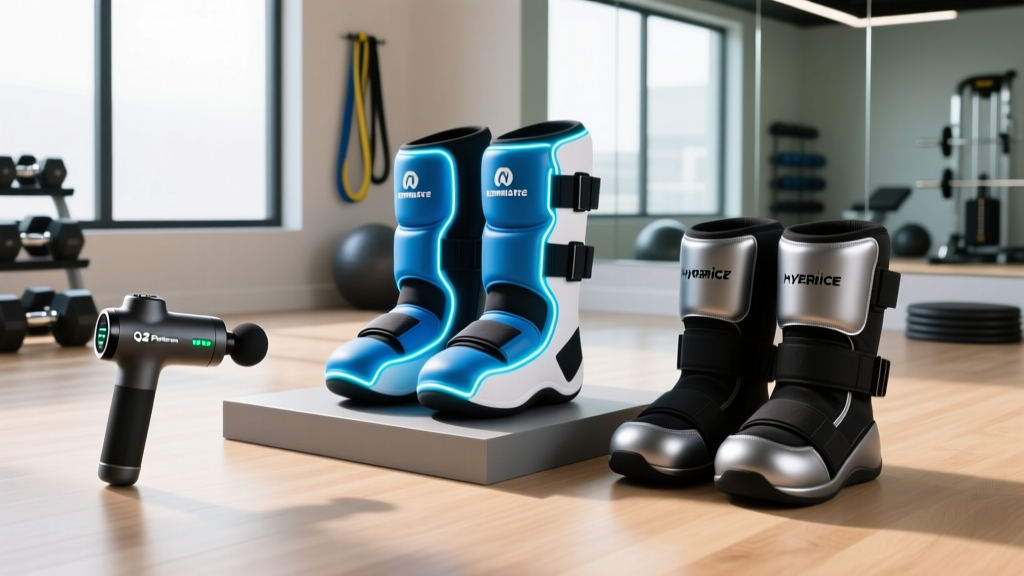
Normatec vs Hyperice Boots & Bob and Brad Q2 Pro Mini Massage Gun Setup

HD Mini 3 Massage Gun vs Theragun Mini: 2026 Comparison
