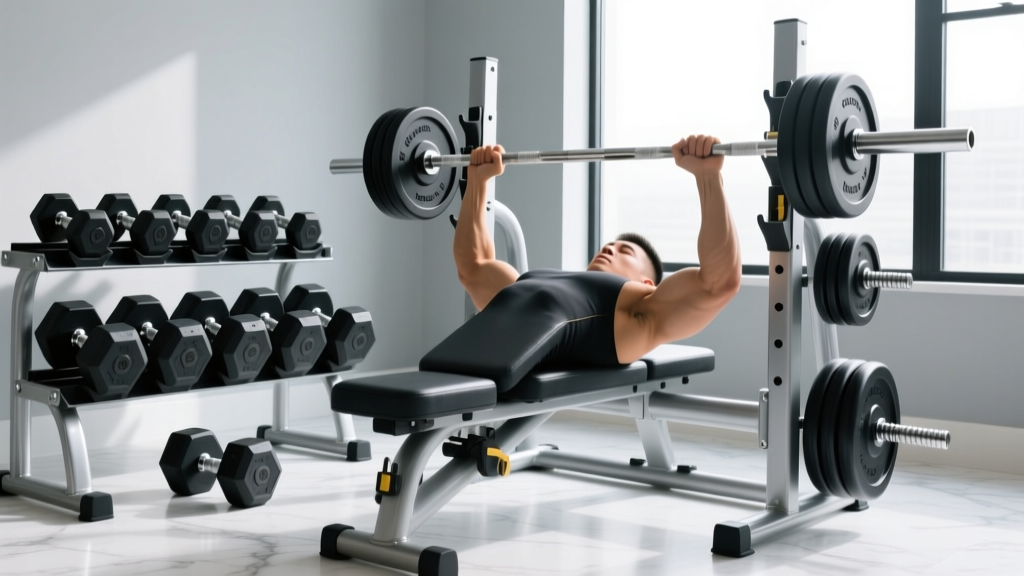
Chest Workout with Dumbbells and Bench: Loadable Dumbbell Care
Master loadable dumbbell maintenance to ensure safety and longevity during your heavy chest workout with dumbbells and bench. Expert care tips inside.

The Hidden Risks in Your Chest Workout with Dumbbells and Bench
Loadable dumbbells with interchangeable plates—such as the Ironmaster Quick-Lock V2 ($399), Rogue Loadable Dumbbell Handles ($110/pair), or Titan Fitness Olympic Handles ($80/pair)—are the backbone of the modern space-efficient home gym. They deliver the tactile, balanced feel of traditional cast iron without requiring the massive footprint of a full 5-to-100 lb commercial rack. However, this modular convenience introduces mechanical failure points that fixed dumbbells simply do not have.
When you are executing an intense chest workout with dumbbells and bench, the equipment is subjected to extreme dynamic forces. Heavy incline presses, deep flat bench flyes, and slow-negative eccentrics place immense rotational torque on the handles and collars. If a collar slips or a thread strips mid-rep, the consequences are severe. Proper maintenance is not just about preserving the aesthetic of your gear; it is a critical safety protocol.
⚠️ Critical Safety Warning: During a heavy chest workout with dumbbells and bench, the weights are suspended directly over your face, throat, and thoracic spine. Unlike a leg exercise where a dropped weight risks a bruised foot, a catastrophic collar failure during an incline press can result in life-threatening crush injuries. Never skip pre-lift equipment checks.Loadable Dumbbell Anatomy: Where Failure Happens
To maintain your equipment, you must understand its failure modes. Loadable dumbbells generally fall into two categories: spinlock (threaded shafts with screw-on nuts) and lever-lock (mechanical pins engaging notched shafts). Each has distinct vulnerabilities.
Spinlock Thread Degradation and Cross-Threading
Spinlock handles rely on precision-cut steel threads. The primary enemy here is a mixture of sweat (saline) and gym chalk (magnesium carbonate). This combination creates a highly abrasive, corrosive paste that lodges deep in the threads. Over time, this buildup forces the user to apply excessive torque to screw the nut on, leading to cross-threading. Cross-threading strips the protective zinc or chrome coating, exposing bare steel to oxidation. Once the threads are compromised, the nut can literally blow off under the dynamic load of a heavy negative rep.
Lever-Lock Pin Shearing and Notch Wear
Lever-lock systems, popularized by Ironmaster, use a threaded locking screw that pushes a steel pin into a notched shaft. While incredibly secure, the locking screw itself can stretch or warp if over-tightened with a wrench rather than hand-tightened. Furthermore, if the notch on the shaft becomes packed with hardened chalk, the pin will not fully seat, creating a false sense of security that can fail when the dumbbell is tilted during a chest press.
'The leading cause of spinlock failure is not metal fatigue; it is galvanic corrosion accelerated by sweat and magnesium carbonate chalk trapped in the threads, leading to microscopic pitting and eventual thread stripping.' — Equipment Metallurgy Analysis, Garage Gym Reviews
The 2026 Maintenance Matrix for Interchangeable Plates
Consistency is the key to longevity. Implement this structured maintenance schedule to ensure your loadable dumbbells remain safe and functional for decades. This matrix is specifically calibrated for home gym environments where equipment is used 3-5 times per week.
| Frequency | Maintenance Task | Tools Required | Time |
|---|---|---|---|
| Daily | Wipe down shafts; clear loose chalk from threads and notches. | Microfiber cloth, stiff nylon brush | 2 mins |
| Weekly | Lubricate threads, sleeves, and locking screws. | 3-IN-ONE oil or white lithium grease | 5 mins |
| Monthly | Deep clean knurling and inspect O-rings/pins for micro-fractures. | Brass wire brush, mild degreaser, calipers | 15 mins |
| Bi-Annually | Full disassembly, rust neutralization, and protective oil curing. | Evapo-Rust, 3-IN-ONE, shop towels | 45 mins |
Step-by-Step: Deep Cleaning the Knurling and Threads
When your monthly deep clean arrives, follow this precise methodology to restore your handles without damaging the factory finishes. According to the Rogue Fitness Barbell Care Guide, using the wrong brush material is the most common mistake home gym owners make.
- Complete Disassembly: Remove all plates, collars, and nuts. For lever-lock systems, unscrew the locking mechanism entirely to expose the internal pin spring.
- Apply Targeted Degreaser: Spray a mild, non-corrosive degreaser (like Simple Green Pro HD) onto the knurling and threads. Avoid harsh automotive brake cleaners, which can strip zinc coatings and dry out internal O-rings.
- The Brass Brush Rule: Scrub the knurling and threads vigorously with a brass wire brush. Brass has a Mohs hardness of roughly 3-4, which is softer than the steel handle (Mohs ~4-5) and its zinc/chrome plating. Never use a stainless steel brush, as it will scratch the protective coating, creating micro-fissures where rust will rapidly take hold.
- Thread Flossing: Wrap a shop towel around a flathead screwdriver, apply a drop of rubbing alcohol, and run it through the threads to dissolve impacted chalk paste.
- Lubrication and Distribution: Apply 3 to 4 drops of 3-IN-ONE multi-purpose oil directly onto the threads. Screw the nut on and off 5-6 times to distribute the oil evenly and flush out remaining microscopic debris. Wipe away excess oil to prevent dust attraction.
Plate Care: Preventing Rust on Interchangeable Weights
The handles are only half the equation; the interchangeable plates themselves require specific care depending on their finish. In 2026, home gym owners typically choose between cast iron, machined steel, and urethane-coated plates.
- Bare Cast Iron & Machined Steel: These are highly susceptible to flash rust in environments with humidity fluctuations. Store them indoors with a dehumidifier set to 45-50% relative humidity. Wipe them down monthly with a light coat of mineral oil. If surface rust appears, use a brass brush and a rust dissolver like Evapo-Rust; do not sand them, as this alters the calibrated weight and ruins the finish.
- Urethane-Coated Plates: Premium urethane (like Rogue Urethane Grip Plates) is virtually maintenance-free and impervious to sweat. However, urethane degrades under prolonged UV exposure. Never store these plates in direct sunlight or in a garage with uninsulated, sun-facing windows, as the material will become brittle and crack over time.
- Rubber Plates: Cheap rubber plates off-gas and dry-rot. Keep them away from ozone generators and harsh chemical cleaners, which accelerate the breakdown of the vulcanization process.
Optimizing Safety for Heavy Pressing
When setting up for a demanding chest workout with dumbbells and bench, your pre-lift protocol must be as rigorous as your warm-up. Before you even sit on the bench, perform the following checks:
The 'Drop and Torque' Test
Assemble your dumbbells to the target weight. Hold them at waist height over a thick rubber drop mat and give them a firm, controlled drop. Listen to the sound. A solid, unified 'thud' indicates the plates are seated flush against the sleeve shoulder and the collar is tight. A rattling or 'clacking' sound means the plates are loose, which will cause the collar to back off during the rotational forces of a dumbbell chest press. Re-torque immediately.
Lever-Lock Flush Check
If using a lever-lock system, visually inspect the locking screw after hand-tightening. The screw head should sit perfectly flush with or slightly below the outer edge of the locking knob. If it protrudes significantly, the pin is not fully engaged in the shaft notch, likely due to chalk buildup in the notch. Clean the notch before proceeding with your chest workout.
Frequently Asked Questions
Can I use WD-40 to clean my loadable dumbbell threads?
No. Standard WD-40 is a solvent and water-displacer, not a long-term lubricant. It will strip away existing protective oils and leave the bare steel threads highly vulnerable to flash rust. Always use a dedicated machine oil like 3-IN-ONE, white lithium grease, or a specialized barbell oil.
How often should I replace the O-rings on my spinlock dumbbells?
O-rings act as shock absorbers between the cast-iron nut and the steel plate. Inspect them monthly for flat spots, cracking, or dry rot. In a heavily used home gym, expect to replace them every 12 to 18 months. Replacement O-rings cost less than $5 and prevent the metal-on-metal grinding that eventually warps the nut.
Is it safe to use a wrench to tighten spinlock nuts for heavy lifts?
Absolutely not. Using a wrench applies torque far beyond what the threads are engineered to handle, leading to immediate cross-threading and permanent deformation. A properly maintained, well-lubricated spinlock nut should be tightened firmly by hand. If you require a wrench to secure it, your threads are damaged or dirty and require immediate maintenance.
More gear to consider
All reviews
Loadable Dumbbells for Dumbbell Squats for Quads: Budget Breakdown

Mastering Delt Flys with Dumbbells: A Beginner's Home Guide

Olympic Bar Setup: Knurling and the Dumbbell Straight Arm Pullback

2026 Market Shift: Loadable Dumbbells vs Curling 50 lb Dumbbells

Bumper vs Iron Plate Trends & Dumbbell Exercises for Seniors PDF
