
Cast Iron vs Competition Kettlebells and Triceps Dumbbell Extensions
Analyze the 2026 budget breakdown of cast iron vs competition kettlebells, plus the true value of dumbbells for triceps dumbbell extensions.

The 2026 Home Gym Economy: Navigating the Free Weights Market
Building a functional, hypertrophy-focused home gym in 2026 requires a ruthless approach to budget allocation. With global steel manufacturing costs stabilizing but freight logistics remaining volatile, the price gap between entry-level cast iron equipment and premium competition-grade gear has never been more pronounced. For the budget-conscious lifter, understanding the exact cost-per-use and biomechanical ROI of your equipment is critical.
This guide breaks down the financial and practical differences between cast iron and competition kettlebells. Furthermore, we will address a common budget dilemma: whether to invest in heavier kettlebells for overhead work or allocate funds toward dedicated dumbbells for isolation movements like triceps dumbbell extensions. By the end of this analysis, you will have a precise framework for maximizing your equipment budget without sacrificing training quality.
Cast Iron Kettlebells: The Budget-Friendly Workhorse
Cast iron kettlebells are the undisputed champions of value for general strength and conditioning. Manufactured via a single-piece gravity casting process, these bells are dense, durable, and significantly cheaper to produce than their hollow-steel counterparts.
Pricing and Value Metrics
In the current 2026 market, cast iron kettlebells generally range from $1.50 to $2.50 per pound, depending on the brand, finish, and shipping origin. For example, a standard 24kg (52.8 lbs) cast iron bell from a reputable brand like Rep Fitness or Titan Fitness will typically cost between $80 and $110.
- Finish Types: Powder-coated cast iron (e.g., Rogue Fitness) offers superior rust resistance and chalk retention but commands a 15-20% price premium over standard enamel-painted bells.
- Handle Dimensions: Handle thickness scales with the bell's weight. A 16kg bell might feature a 33mm handle, while a 32kg bell jumps to 35mm or thicker.
- Horn Clearance: The window between the horns widens as the bell gets heavier, accommodating two-handed swings but altering the rack position for cleans.
Competition Kettlebells: The Premium Investment
Competition kettlebells are engineered to a strict international standard. Whether you are lifting an 8kg or a 48kg bell, the physical dimensions remain identical: a 210mm height, 210mm width, and a strict 35mm handle diameter. They are constructed from a hollow steel shell, often with an internal filler to achieve the precise target weight.
The Cost of Standardization
This manufacturing complexity drives the price up significantly. Expect to pay between $3.50 and $5.50 per pound for competition-grade steel. A single 24kg (Green) competition bell from industry leaders like Kettlebell Kings or Onnit will routinely cost between $160 and $190.
Where the Premium Pays Off
- Motor Pattern Consistency: Because the bell size never changes, your clean, snatch, and rack mechanics remain identical regardless of the load. You never have to adjust your wrist insertion or elbow tuck.
- Handle Geometry: The 35mm handle is specifically designed with a slight rectangular squaring at the top of the arc, providing a secure shelf for the wrist during overhead lockouts and jerks.
- Color Coding: Instant visual weight identification (Yellow for 16kg, Green for 24kg, Red for 32kg) streamlines complex circuits and EMOM programming.
Cost-Per-Use Matrix: Cast Iron vs. Competition
To visualize the budget breakdown, let us compare the approximate 2026 retail costs for the three most common kettlebell weights used in home programming.
| Weight (kg / lbs) | Cast Iron Price (Avg) | Competition Price (Avg) | Price Delta |
|---|---|---|---|
| 16kg (35.2 lbs) | $55 - $75 | $120 - $145 | +$70 |
| 24kg (52.8 lbs) | $85 - $115 | $165 - $195 | +$80 |
| 32kg (70.4 lbs) | $120 - $160 | $220 - $260 | +$100 |
Expert Takeaway: Buying a full set of three competition kettlebells will cost roughly $250 more than a cast iron set. That $250 delta is exactly the budget required to solve the isolation movement gap in your home gym.
Accessory Allocation: Kettlebell Presses vs. Triceps Dumbbell Extensions
When programming upper-body isolation, lifters frequently ask if they can substitute overhead kettlebell presses or kettlebell French presses for dedicated triceps dumbbell extensions to save money and rack space. From a strict budget and biomechanical perspective, this is a false economy that will limit your hypertrophy gains.
The Biomechanics of the Grip and Wrist
The triceps brachii crosses both the elbow and the shoulder joint. To fully isolate the long head of the triceps, you must perform overhead extensions with the shoulder in flexion. Here is where the equipment choice dictates the stimulus:
- The Kettlebell Limitation: Holding a kettlebell by the horns or by the thick 35mm handle for an overhead extension forces the wrists into slight ulnar deviation and requires immense grip stabilization. During high-rep sets (12-15 reps), your forearm flexors and grip strength will fail before your triceps reach mechanical failure. The center of mass is also offset, creating unwanted rotational torque on the elbow joint.
- The Dumbbell Advantage: Executing triceps dumbbell extensions with a pair of hex dumbbells allows for a true, comfortable neutral grip. The handle diameter (typically 28mm to 32mm) is optimized for grip endurance, and the balanced center of mass ensures the load is directed entirely through the elbow hinge.
The Budget ROI of Dedicated Dumbbells
According to the American Council on Exercise (ACE), optimal triceps hypertrophy requires controlled eccentrics and full range-of-motion lockouts without grip interference. To achieve this at home, you do not need an expensive adjustable dumbbell set.
A dedicated pair of 25lb or 30lb rubber hex dumbbells costs approximately $70 to $90 total in 2026. By allocating the $80 you saved by choosing cast iron kettlebells over competition bells, you can purchase this dedicated dumbbell pair. This yields a vastly superior stimulus for triceps dumbbell extensions, lateral raises, and skull crushers than attempting to jury-rig a heavy, awkwardly shaped kettlebell.
Hypertrophy Rule of Thumb: Never let grip fatigue dictate the failure point of an isolation movement. Save your heavy steel for compound grinds; use balanced dumbbells for single-joint extensions.The Final Budget Framework: Where to Spend and Where to Save
To build a comprehensive free-weights arsenal on a strict $400 budget, follow this exact 2026 allocation strategy:
Step 1: Secure the Heavy Compound Mover ($110)
Purchase a single 24kg Cast Iron Kettlebell (Powder-coated). Use this for heavy goblet squats, single-arm rows, and high-tension swings. The variable dimensions do not matter for these foundational lifts.
Step 2: Secure the Technical Skill Bell ($130)
Purchase a single 16kg Competition Kettlebell. Use this strictly for high-rep snatches, cleans, and jerks where the standardized 35mm handle and uniform bell dimensions protect your wrists and allow for seamless motor pattern groove.
Step 3: Secure the Isolation Arsenal ($90)
Purchase a pair of 25lb Rubber Hex Dumbbells. Use these exclusively for triceps dumbbell extensions, bicep hammer curls, and rear delt flyes. The neutral grip and balanced load ensure maximum muscle fiber recruitment without grip bottlenecking.
Step 4: Storage and Maintenance ($40)
Allocate the remaining funds to a basic vertical kettlebell/dumbbell tree or heavy-duty floor mats to protect your subfloor from dropped cast iron.
Summary: Value is Dictated by the Movement
The debate between cast iron and competition kettlebells is not about which is universally 'better,' but rather which provides the highest return on investment for your specific training goals. Cast iron wins on pure cost-per-pound for heavy loading, while competition steel is mandatory for technical, high-rep ballistic mastery. However, neither is the right tool for precise arm isolation. By understanding the biomechanical limitations of thick-handled bells, smart lifters will carve out room in their budget for dedicated dumbbells, ensuring their triceps dumbbell extensions are limited only by muscle fatigue, never by grip failure.
For further reading on equipment specifications and current steel pricing trends, you can review the manufacturing specs on the Rogue Fitness Kettlebell lineup or consult the National Strength and Conditioning Association (NSCA) guidelines on resistance training equipment selection.
More gear to consider
All reviews
Master Dumbbell Romanian Deadlift Form With Neoprene Weights

Train Lower Back With Dumbbells: 2026 Adjustable Set Comparison
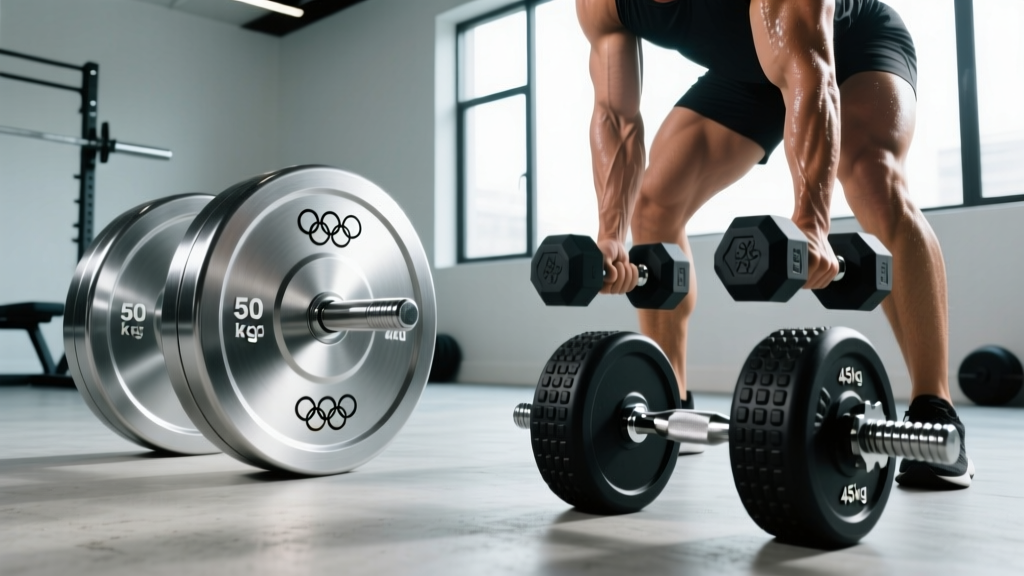
Olympic vs Standard Plates for the CrossFit Dumbbell Push Press

Bumper vs Iron Plates: Rack Setups for the Isolated Dumbbell Curl

Troubleshooting the Reverse Dumbbell Press with Neoprene Dumbbells
