
Cast Iron vs Competition Kettlebells: Value & Rear Flyes Dumbbells
Compare cast iron vs competition kettlebells with our 2026 budget breakdown. Plus, learn how to allocate funds for the best rear flyes dumbbells.

The Core Dilemma: Cast Iron vs. Competition Kettlebells
Building a comprehensive free-weight arsenal in 2026 requires navigating a labyrinth of metallurgical choices, shipping surcharges, and biomechanical limitations. When allocating your home gym budget, the kettlebell category presents an immediate fork in the road: traditional cast iron versus standardized competition bells. While both serve the fundamental purpose of offsetting gravity, their value propositions, manufacturing processes, and ideal use cases diverge sharply. Furthermore, no kettlebell-centric setup is complete without addressing the isolation gaps in your programming—specifically, the necessity of budgeting for dedicated rear flyes dumbbells to protect your shoulder ecology.
According to the strength standards and technical guidelines outlined by Rogue Fitness, the primary differentiator between these two kettlebell styles lies in their dimensional consistency and handle geometry. Understanding these nuances is the first step in preventing buyer's remorse and optimizing your cost-per-pound ratio.
Dimensional and Metallurgical Differences
Cast Iron Kettlebells are typically gravity-cast as a single piece of iron. As the weight increases, the physical dimensions of the bell and the width of the horn (the handle) scale proportionally. A 12kg cast iron bell will feature a noticeably thinner handle and a narrower horn width compared to a 32kg bell. This makes cast iron highly ergonomic for two-handed ballistic movements like heavy swings and goblet squats, as the wider horn on heavier bells accommodates two hands comfortably.
Competition Kettlebells, conversely, are engineered for uniformity. Whether you are lifting an 8kg or a 48kg bell, the exterior dimensions remain identical (typically 210mm x 280mm). The handle diameter is strictly standardized at 35mm, and the bell is constructed from a steel shell filled with a lead or steel shot filler to achieve the target weight. This uniformity is critical for competitive kettlebell sport (Girevoy Sport), where athletes perform high-repetition snatches and jerks, requiring the bell to rack in the exact same position on the forearm every single rep.
⚠️ The Shipping Cost Trap: When budgeting for cast iron, novices often overlook freight surcharges. Because cast iron bells are incredibly dense and lack the uniform stacking geometry of competition bells, shipping a 24kg+ cast iron bell can sometimes incur dimensional weight penalties from carriers like FedEx or UPS. Always calculate the 'landed cost' (product price + shipping + taxes) before comparing brands.Budget Breakdown Matrix: Cost vs. Utility
To visualize the financial commitment required for both styles, we have compiled a 2026 market analysis based on premium-tier manufacturers. Prices reflect average landed costs for single-bell purchases.
| Feature / Metric | Premium Cast Iron (e.g., Rogue, REP) | Competition Steel (e.g., Kettlebell Kings) |
|---|---|---|
| Average Cost per KG | $4.50 - $5.50 / kg | $7.00 - $9.00 / kg |
| Handle Diameter | Variable (30mm - 38mm) | Fixed (35mm) |
| Horn Width | Scales with weight | Fixed (Window optimized for 1-hand) |
| Finish Durability | Powder Coat (High durability) | Paint / E-Coat (Prone to chipping) |
| Best Value Weight | 16kg - 24kg ($75 - $120) | 12kg - 16kg ($95 - $130) |
Value Verdict: If your training revolves around hardstyle kettlebell swings, Turkish get-ups, and goblet squats, cast iron offers a 35% better cost-per-pound value. If you are training for endurance, high-rep snatches, or require precise racking mechanics, the premium for competition bells is a mandatory investment.
The Biomechanical Gap: Sourcing Rear Flyes Dumbbells
While kettlebells are unparalleled for posterior chain ballistics and offset-loaded core work, they are fundamentally flawed for strict, isolated posterior deltoid work. This is where your budget must pivot to accommodate a highly specific tool: rear flyes dumbbells.
The posterior deltoid is a relatively small muscle group that responds best to strict, controlled tension rather than momentum. According to biomechanical leverage data referenced by ExRx.net, the rear lateral raise (or rear flye) requires a specific resistance curve that kettlebells simply cannot provide due to their bulky bell dimensions interfering with the torso when performed bent-over or chest-supported.
Why You Need Specific Rear Flyes Dumbbells
You cannot effectively execute chest-supported rear flyes on a 45-degree incline bench using round dumbbells or kettlebells. Round weights will roll off the bench pads, creating a safety hazard and disrupting your set. Therefore, when we discuss 'rear flyes dumbbells' in a budget context, we are specifically referring to Urethane Hex Dumbbells in the 5lb to 25lb micro-loading range.
- Micro-Increments: The rear delts fatigue rapidly. Jumping from 15lbs to 20lbs is a 33% load increase, which will force you to recruit the trapezius and rhomboids, ruining the isolation. You need 2.5lb or 5lb increments.
- Hexagonal Heads: Urethane hex heads prevent rolling when placed on the floor between sets or when resting them on the edge of an incline bench pad during chest-supported variations.
- Knurling Depth: For isolation work, aggressive barbell-style knurling is unnecessary and tears up the hands during high-rep drop sets. A medium, 'coin-pattern' knurl is optimal.
Failure Modes: What Degrades First?
When analyzing the long-term value of your free weights, you must account for how these tools fail over a 5-to-10-year lifecycle. The National Strength and Conditioning Association (NSCA) frequently highlights equipment maintenance as a critical, yet overlooked, component of facility management—a principle that applies equally to home gyms.
Kettlebell Handle Smoothing and Chalk Buildup
Cast iron kettlebells rely on a powder-coat finish to provide grip. Over time, the accumulation of magnesium carbonate (chalk) and skin oils will fill the microscopic pores of the powder coat, turning a secure grip into a slippery hazard. Edge Case Fix: You must budget for a stiff nylon brush and a wire brush to aggressively clean the handle horns every six months. Competition bells, painted with an e-coat, do not hold chalk well and require wiping down with a damp microfiber cloth post-workout to prevent rust spots where the paint chips.
Dumbbell Head Delamination
If you opt for budget-tier 'rubber' hex dumbbells for your rear flyes station, the primary failure mode is delamination. The metal core separates from the rubber shell due to the thermal expansion and contraction caused by dropping the weights on cold garage floors. Urethane, being a thermoset polymer, bonds at a molecular level to the steel core during the molding process, virtually eliminating delamination as a failure mode.
The $1,200 Value Allocation Framework
How do you balance the heavy, expensive nature of kettlebells with the necessity of lighter, precision isolation tools? Here is a battle-tested budget framework for a $1,200 free-weight allocation in 2026, designed to maximize both ballistic power and hypertrophic isolation.
Step 1: The Kettlebell Core ($450)
Skip the massive sets. Buy three premium cast iron kettlebells to cover the essential movement patterns:
- 16kg (35lb): $75 - Ideal for strict presses, tactical lunges, and high-rep snatches.
- 24kg (53lb): $115 - The gold standard for two-handed swings and goblet squats.
- 32kg (70lb): $160 - Heavy swings, single-arm rows, and advanced get-ups.
- Subtotal: $350 + $100 estimated shipping = $450
Step 2: The Rear Flyes Dumbbell Micro-Set ($400)
Allocate funds specifically for posterior shoulder health and upper-back isolation. Purchase matched pairs of urethane hex dumbbells:
- 10lb, 12.5lb, 15lb, 17.5lb, 20lb, 22.5lb, and 25lb pairs.
- Total weight: 245 lbs.
- At an average commercial rate of $1.65/lb = $404.
- Subtotal: $400 (often cheaper when bought as a pre-packaged rack set from commercial suppliers).
Step 3: Storage and Maintenance ($350)
Free weights left on the floor degrade faster and pose tripping hazards.
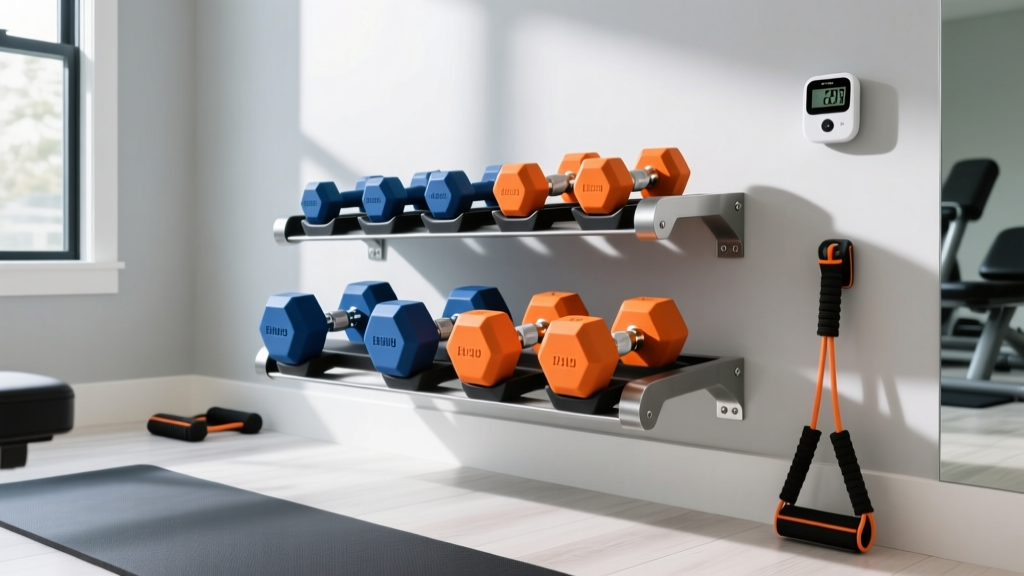
- 3-Tier Urethane Dumbbell Rack: $220 (Ensures your rear flyes dumbbells are organized and protected from concrete moisture).
- Kettlebell Cradle / Horn Rack: $80.
- Maintenance Kit: $50 (Nylon brushes, 3-in-1 oil for dumbbell handles, microfiber towels).
Final Thoughts on Equipment Synergy
The debate between cast iron and competition kettlebells ultimately resolves when you define your primary training modality. For the vast majority of home gym owners focused on general strength and conditioning, cast iron offers superior ergonomics and a better financial return. However, true functional fitness requires acknowledging the blind spots of any single implement. By deliberately carving out a portion of your budget for specialized rear flyes dumbbells, you ensure that your posterior chain development is balanced, your shoulder joints remain healthy, and your equipment investment yields dividends for decades to come.
More gear to consider
All reviews
Olympic Barbell Guide: Knurling vs. Chest Muscle Dumbbell Exercises

Barbell Collar Types & Dumbbell Bulgarian Split Squat Setup Fixes
Smart Storage for Your 20 Minute Dumbbell Strength Workout

EZ Curl Bar vs Straight Bar Care & Dumbbell Raises Chest Tips

Front Dumbbell Press Troubleshooting & Adjustable Dumbbell Reviews
