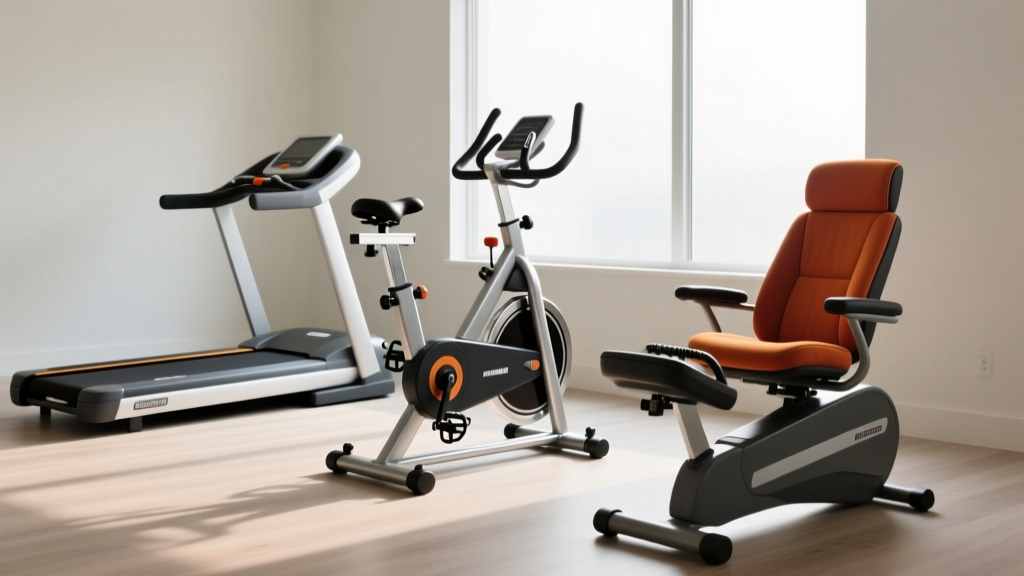
Care for Stationary Bikes & Light Weight Treadmill for Home
Master maintenance for upright, recumbent, and spin bikes, plus your light weight treadmill for home. Extend equipment life with our expert care guide.

Building a comprehensive home gym in 2026 often means balancing heavy-duty cardio equipment with space-saving alternatives. While fitness enthusiasts frequently research the best workouts, the mechanical longevity of these machines is entirely dependent on targeted, type-specific maintenance. Whether you are managing a fleet of stationary bike types—upright, recumbent, and spin—or performing upkeep on a light weight treadmill for home use, a one-size-fits-all cleaning approach will lead to premature component failure.
In this guide, we break down the exact mechanical failure modes of the three primary stationary bike categories and contrast them with the unique maintenance requirements of lightweight, foldable treadmills. By understanding the distinct drive systems, tension requirements, and electronic vulnerabilities of each machine type, you can add years to your equipment's lifespan and protect your investment.
Understanding Your Fleet: Upright, Recumbent, and Spin Bikes
Stationary bikes are not created equal. The mechanical stress placed on a recumbent bike's poly-V belt is vastly different from the friction pad wear on a traditional spin bike. According to comprehensive testing by Wirecutter's exercise bike experts, the longevity of indoor cycling equipment is directly tied to how well the user manages sweat corrosion and drive-train tension.
Drive System Identification:- Spin Bikes: Typically use a heavy flywheel (30-50 lbs) connected via a chain or Kevlar belt, with friction or magnetic resistance.
- Upright Bikes: Generally feature a lighter, enclosed flywheel with electromagnetic or eddy-current magnetic resistance.
- Recumbent Bikes: Utilize a step-through frame with a front-mounted drive system, almost exclusively relying on poly-V ribbed belts and magnetic braking.
The Stationary Bike Maintenance Matrix
To streamline your weekly and monthly chores, use the following maintenance matrix. This schedule is calibrated for high-use home environments (4+ sessions per week).
| Task | Spin Bike (e.g., Schwinn IC4) | Upright (e.g., NordicTrack VR21) | Recumbent (e.g., Nautilus R618) |
|---|---|---|---|
| Post-Workout Wipe | Seat post, handlebars, flywheel guard | Console screen, handlebar pulse sensors | Seat mesh, adjustment rails |
| Monthly Inspection | Pedal threading, crank arm bolts | Battery compartment corrosion | Seat rail lubrication, belt deflection |
| Bi-Annual Service | Bottom bracket bearing check, belt tension | Reed switch/cadence sensor alignment | Poly-V belt replacement, motor dusting |
Spin Bikes: Battling Sweat and Friction
Human sweat has an average pH ranging from 4.0 to 6.0, making it highly acidic and corrosive to untreated steel and aluminum. The number one killer of spin bikes like the Peloton Bike+ or Keiser M3i is sweat dripping down the seat post and pooling into the bottom bracket assembly.
Actionable Fix: Never use standard household glass cleaners on your spin bike. The ammonia in these cleaners strips protective factory coatings. Instead, use a microfiber cloth lightly dampened with a 50/50 mix of distilled water and white vinegar, followed by a dry wipe. For the seat post, apply a thin layer of silicone-based lubricant monthly to prevent the micro-adjustment collar from seizing.
Recumbent Bikes: Belt Tension and Rail Care
Recumbent bikes place the flywheel at the front of the machine, connected to the rear pedals via a long poly-V belt. Over time, this belt stretches. If the belt becomes too loose, it will slip during high-cadence intervals, causing a jerky pedal stroke and eventual belt shredding.
"A properly tensioned poly-V belt on a recumbent bike should have exactly 1/2 inch of vertical deflection when pressed midway between the motor pulley and the flywheel. Any more, and it will slip; any less, and you will destroy the drive motor bearings." — Home Fitness Equipment Technician Guidelines
Additionally, the seat adjustment rails on recumbents accumulate dust and skin cells. Wipe the steel rails weekly and apply a dry PTFE (Teflon) spray lubricant to ensure the seat glide mechanism does not bind or scratch the metal finish.
Upright Bikes: Sensor Alignment and Electronics
Upright bikes often rely on reed switches or optical sensors to measure cadence. If your upright bike's console is displaying erratic RPM readings or dropping out entirely, the issue is rarely the console itself. It is almost always a misalignment of the cadence sensor located near the crank arm.
Diagnostic Step: Remove the plastic side cover (usually held by 4 to 6 Phillips-head screws). Locate the small magnetic sensor near the flywheel. The gap between the sensor and the flywheel magnet must be exactly 2mm to 3mm. If the sensor has been bumped out of place, loosen the mounting bracket, adjust the gap using a feeler gauge, and retighten.
Contrasting Care: The Light Weight Treadmill for Home
While stationary bikes require mechanical tensioning and sweat management, a light weight treadmill for home use—such as the WalkingPad R2 or the Sunny Health SF-T723016—presents an entirely different set of engineering challenges. These machines typically feature compact, 1.25 HP to 2.0 HP DC motors and ultra-thin folding decks.
⚠️ CRITICAL WARNING: Motor Board BurnoutThe most common cause of death for lightweight treadmills is user-induced motor board failure. When a walking belt feels sluggish, users instinctively tighten the rear roller bolts. On a lightweight treadmill, over-tightening the belt increases the amp draw on the 1.25 HP motor. If the amp draw spikes above 6.0 Amps continuously, the lower control board will overheat and fry within weeks. Always lubricate before you tension.
According to the Treadmill Doctor's maintenance guidelines, proper lubrication is the single most important factor in treadmill longevity. However, lightweight treadmills require specific care:
- Use 100% Silicone: Never use PTFE, Teflon, or WD-40. These petroleum distillates will melt the urethane coating on the lightweight MDF decks used in folding treadmills.
- Frequency: Because lightweight treadmills have smaller deck surface areas and less airflow under the hood, friction builds up faster. Lubricate every 30 miles or every 3 months, whichever comes first.
- The Belt Tracking Test: After lubricating, run the treadmill at 2.0 MPH unoccupied. Watch the rear roller. The belt should track perfectly centered. If it drifts, adjust the rear roller bolt on the drifting side by exactly one-quarter (1/4) turn clockwise. Wait 30 seconds for the belt to center before making further adjustments.
Environmental Controls and Floor Matting
The ambient environment of your home gym dictates the lifespan of your cardio fleet. High humidity accelerates sweat corrosion on spin bikes, while static electricity from carpets can destroy the logic boards of upright bikes and lightweight treadmills.
- Humidity Thresholds: Maintain your gym space between 40% and 50% relative humidity. Above 60%, the internal magnetic resistance mechanisms on upright bikes can develop surface rust, leading to grinding noises.
- Anti-Static Matting: A lightweight treadmill for home use must sit on a high-density EVA foam or rubber equipment mat. This is not just for floor protection; it grounds the machine and prevents static shocks from traveling up the user's legs and shorting out the console's capacitive touch screen.
- Airflow: Position a dedicated oscillating fan to blow directly on the user, not the machine. Blowing air directly onto the console of an upright bike or the motor hood of a treadmill forces dust and pet hair deep into the internal electronics.
Expert Troubleshooting FAQ
Why is my spin bike making a rhythmic clicking sound from the flywheel?
A rhythmic clicking that scales with your cadence is usually caused by a loose crank arm or a failing bottom bracket bearing. First, use a 14mm socket or an 8mm Allen key (depending on the model) to torque the crank arm bolts to 35-40 Nm. If the click persists, the bottom bracket cartridge bearings are compromised by sweat ingress and the entire bottom bracket assembly must be replaced.
My recumbent bike's resistance won't change, but the console registers the button presses. What is wrong?
This indicates a failure in the servo motor or the magnetic brake assembly. Recumbent bikes use a small servo motor to physically move a magnet closer to or further from the flywheel. Check the wiring harness connecting the console to the servo motor under the shroud. If the wires are intact, the servo motor itself has likely burned out and requires a direct OEM replacement.
How do I calibrate the incline on my lightweight folding treadmill?
Most lightweight, under-desk, or folding treadmills do not feature an automated incline motor. If your specific model does have a manual incline pin, ensure the locking pins are fully seated into the metal detents. Operating a lightweight treadmill with a partially engaged incline pin will warp the steel uprights and void the manufacturer's warranty. For automated models, consult the manufacturer's support hub for the specific calibration mode button sequence, which usually involves holding the 'Speed Up' and 'Incline Down' buttons simultaneously for 5 seconds.
More gear to consider
All reviews
Treadmill in Garage: Cardio Machine Noise Comparison

Curved vs Motorized Treadmill Setup: How Long is 10,000 Steps?

LifeSmart TM6500 Treadmill Setup & Motor Horsepower Guide

NordicTrack X9i Incline Treadmill vs Walking Pads: Full Setup Guide

Under Desk Treadmill Review: Value & Treadmill Extension Cord Guide
