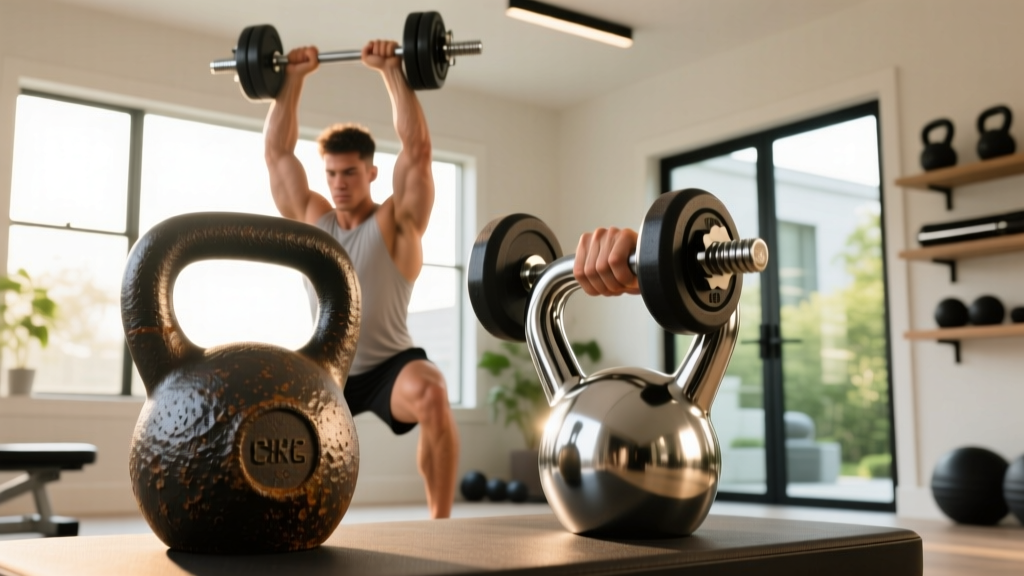
Bumper vs Iron Plates & Best Glute Exercise with Dumbbells
Discover our expert bumper plate vs iron plate comparison for 2026, plus a step-by-step guide to the best glute exercise with dumbbells for hypertrophy.

The Foundation of Your Home Gym: Weight Selection in 2026
Building a functional, long-lasting home gym requires making critical decisions about the iron and rubber you bring onto your floor. As of 2026, freight stabilization has made premium weight plates more accessible than ever, but the debate between bumper plates and cast iron plates remains a central dilemma for lifters. Your choice dictates not only the noise level and floor impact of your heavy barbell lifts but also how you approach accessory work. While your plate selection governs your heavy squats and deadlifts, true lower-body hypertrophy requires targeted, unilateral accessory work. This is where your dumbbell arsenal becomes vital. In this comprehensive guide, we break down the exact material differences, pricing, and failure modes of bumpers versus iron, and then transition to the single most effective glute exercise with dumbbells to maximize your lower-body development.
Bumper Plate vs Iron Plate: The Ultimate Comparison
The choice between rubber bumpers and cast iron is not just about aesthetics; it is about physics, flooring preservation, and training style. Bumper plates, constructed from virgin or crumb rubber, are designed to be dropped from overhead without shattering your concrete slab or bending your barbell sleeves. Cast iron plates, on the other hand, offer superior weight density, allowing you to load heavier weights on the bar without the plates colliding.
Expert Quick-Pick Framework
- Buy Virgin Rubber Bumpers If: You perform Olympic lifts (cleans, snatches), drop weights frequently, or have standard home flooring with minimal rubber matting.
- Buy Cast Iron Plates If: You are a powerlifter or bodybuilder focused on heavy, controlled squats, bench presses, and deadlifts, and you want to maximize sleeve space for 500+ lb loads.
To understand the market leaders, we tested the Rogue HG 2.0 Bumper Plates against the REP Fitness Deep Dish Cast Iron Plates. The Rogue HG 2.0 utilizes high-quality virgin rubber with a dead bounce, featuring a durometer rating of 88 SHORE A for the 10lb and 15lb plates, and 85 SHORE A for the heavier 25lb to 45lb plates. According to Rogue Fitness official specs, this specific durometer variance ensures the thinner plates do not snap upon impact while maintaining a rigid feel on the heavier plates. Conversely, the REP Deep Dish iron plates feature a machine-ground finish and baked enamel coating, providing a classic, rust-resistant aesthetic that costs significantly less per pound.
| Feature | Virgin Rubber Bumper (Rogue HG 2.0) | Cast Iron (REP Deep Dish) |
|---|---|---|
| Price Per Pound (2026 Avg) | $3.95 - $4.20 / lb | $2.00 - $2.40 / lb |
| Thickness (45lb Plate) | 3.25 inches | 1.35 inches |
| Drop Noise Level | Low / Muffled Thud | High / Metallic Crash |
| Sleeve Space Efficiency | Low (Max ~405 lbs on standard sleeve) | High (Max 600+ lbs on standard sleeve) |
| Primary Failure Mode | Rubber oxidation / Warping if left on bar | Enamel chipping / Surface rust in humidity |
For a deeper dive into long-term durability, Garage Gym Reviews notes that while virgin rubber bumpers hold up exceptionally well indoors, leaving them outside in direct UV light will cause the rubber to oxidize, turning chalky and eventually cracking. Iron plates, meanwhile, require occasional maintenance; wiping them down with a 3-in-1 oil or a silicone-based protectant every six months will prevent the baked enamel from degrading in humid garage environments.
Bridging the Gap: Why Dumbbells Are Essential for Glute Hypertrophy
You have selected your plates for heavy, bilateral barbell movements like the conventional deadlift and back squat. However, relying solely on the barbell leaves a massive gap in your lower-body development. Heavy barbell squats are highly quad-dominant, and while conventional deadlifts engage the posterior chain, they heavily tax the central nervous system and lower back erectors. To isolate the gluteus maximus without accumulating debilitating spinal fatigue, you must incorporate unilateral dumbbell work.
If you are searching for the most effective glute exercise with dumbbells, the undisputed king of isolation and hypertrophy is the Dumbbell B-Stance Hip Thrust. This movement removes the lower back from the equation, places the glutes in their fully shortened position, and allows for massive mechanical tension using just a single heavy dumbbell.
Step-by-Step Execution: Dumbbell B-Stance Hip Thrust
To execute this properly, you will need a 12-to-14-inch plyo box or a sturdy bench, and an adjustable dumbbell capable of reaching 50 to 80 pounds (such as the Nuobell 80 or PowerBlock Pro EXP).
- The Setup: Sit on the floor with your upper back (just below the shoulder blades) resting against the edge of the box. Roll a heavy dumbbell over your legs and rest it securely in your hip crease. Use a thick foam pad or folded yoga mat to prevent the dumbbell handle from bruising your pelvis.
- The Stance: Plant your primary working foot flat on the floor, about shoulder-width apart, with your shin completely vertical at the top of the movement. Take your non-working leg and extend it slightly, resting only the toe on the ground (the "B-Stance" or kickstand position). This provides balance without allowing the secondary leg to assist the lift.
- The Drive: Tuck your chin to your chest and brace your core. Drive through the heel of your working foot, thrusting your hips upward until your torso and working thigh form a straight, horizontal line.
- The Squeeze: At the apex, forcefully contract the glute of the working leg for a full 1.5 seconds. Do not hyperextend your lumbar spine; the movement should come entirely from hip extension.
- The Eccentric: Lower your hips under control for a 3-second negative, stopping just an inch above the floor before initiating the next rep.
Biomechanical Insight: According to research published in the National Center for Biotechnology Information (NCBI), the hip thrust elicits significantly higher electromyography (EMG) activation in the gluteus maximus compared to the back squat, particularly in the shortened, fully extended position. By utilizing a B-Stance with dumbbells, you correct left-to-right strength imbalances that a barbell inherently masks.
Programming for Maximum Glute Growth
Integrate this glute exercise with dumbbells at the end of your heavy lower-body days. Because the B-Stance Hip Thrust is highly taxing on the localized muscle tissue but low on systemic fatigue, you can push it close to failure safely.
- Sets: 3 to 4 per leg.
- Reps: 8 to 12 (heavy) or 15 to 20 (metabolic burnout).
- Rest: 90 seconds between legs.
- Tempo: 1-second concentric (up), 1.5-second isometric hold (top), 3-second eccentric (down).
Protecting Your Investment: Flooring & Storage Synergy
Whether you chose bumpers or iron, and whether you are dropping adjustable dumbbells after your B-Stance Hip Thrusts, your flooring and storage dictate the lifespan of your gear. For home gyms, 3/4-inch thick vulcanized horse stall mats remain the gold standard. If you are using cast iron plates, you must layer an additional 1/2-inch crash pad over the mats in your drop zone to prevent concrete cracking. Conversely, virgin rubber bumpers can be dropped directly onto standard stall mats without issue.
For dumbbell storage, avoid leaving heavy adjustable dumbbells on the floor where they can be kicked or stepped on. Invest in a 3-tier A-frame dumbbell rack with a rubber-lined cradle to protect the urethane or rubber coatings on your dumbbell handles from chipping.
Expert Verdict: Building Your 2026 Weight Arsenal
The bumper plate vs iron plate debate ultimately comes down to your training methodology. If your programming involves high-rep Olympic lifting, CrossFit-style metcons, or you share a living space where noise mitigation is paramount, invest the premium capital into virgin rubber bumpers like the Rogue HG 2.0. If you are a strict powerlifter or bodybuilder who values sleeve space, budget efficiency, and traditional aesthetics, cast iron plates from REP Fitness are the undisputed champions.
However, no home gym is complete without a strategy for targeted hypertrophy. By pairing your heavy plate work with the Dumbbell B-Stance Hip Thrust—the ultimate glute exercise with dumbbells—you ensure that your posterior chain development is balanced, joint-friendly, and maximally stimulated. Equip your gym intelligently, respect the biomechanics, and let the data drive your training in 2026 and beyond.
More gear to consider
All reviewsThe Compression Checklist: A Field-Tested Protocol for Industrial Equipment Weight Management
Loadable Dumbbells for Rear Dumbbell Flys: Value Breakdown

Bumper vs Iron Plates: Best Gear for Trapezius Dumbbell Shrugs
Power Rack vs Squat Rack vs Stand: Dumbbell Goblet Split Squat Guide
Cast Iron vs Competition Kettlebells & Bowflex Dumbbell Bench Care