Bumper vs Iron Plates: Cost & Dumbbell Reverse Fly Alternative
Compare bumper vs iron plates with a 2026 budget breakdown. Discover cost differences, durability, and the best plate-based dumbbell reverse fly alternative.

Building a budget-conscious home gym in 2026 forces lifters into a familiar crossroads: do you invest in traditional cast iron weight plates, or pay the premium for vulcanized rubber bumper plates? While the barbell community often debates this based purely on noise reduction or Olympic lifting requirements, the financial and functional implications run much deeper. When you are allocating a strict equipment budget, skipping a full dumbbell rack to afford a high-quality barbell and plate set is a common strategy. But this leaves a gap in your accessory work—specifically for posterior chain and shoulder isolation. In this comprehensive budget breakdown, we will analyze the true cost of ownership for bumpers versus iron, examine real-world failure modes, and reveal how your chosen plates can serve as a highly effective dumbbell reverse fly alternative when dumbbells aren't in the budget.
The 2026 Financial Matrix: Bumper vs. Iron
Global steel markets and rubber supply chains have stabilized heading into 2026, but the price gap between cast iron and bumper plates remains significant. To understand the value proposition, we must look beyond the initial purchase price and evaluate the cost per pound, lifespan, and functional utility.
| Feature | Cast Iron Plates (e.g., Rep Fitness / Titan) | Rubber Bumper Plates (e.g., Rogue HG 2.0 / Fringe Sport) |
|---|---|---|
| Average Cost Per Pound | $1.30 - $1.60 / lb | $2.40 - $3.20 / lb |
| 260lb Set Total Cost | $338 - $416 | $624 - $832 |
| Diameter (45lb Plate) | ~14.5 inches (Varies by brand) | 17.7 inches (450mm IWF Standard) |
| Drop Tolerance | Low (Damages floors/barbells) | High (85-90 Shore A Durometer) |
| Weight Calibration | +/- 2% to 3% variance (Budget brands) | +/- 1% variance (Premium brands) |
From a purely financial perspective, cast iron is the undisputed king of budget loading. A 260lb iron set leaves you with nearly $400 in surplus budget compared to a mid-tier bumper set. However, this surplus must be weighed against the cost of gym flooring reinforcement and the functional limitations of iron when performing dynamic movements.
Metallurgy vs. Vulcanization: Real-World Failure Modes
When analyzing long-term value, you must account for how these plates fail. Cheap equipment is expensive in the long run. Here is what actually goes wrong in a garage gym environment over a 5-to-10-year lifespan.
⚠️ Critical Failure Modes to Watch
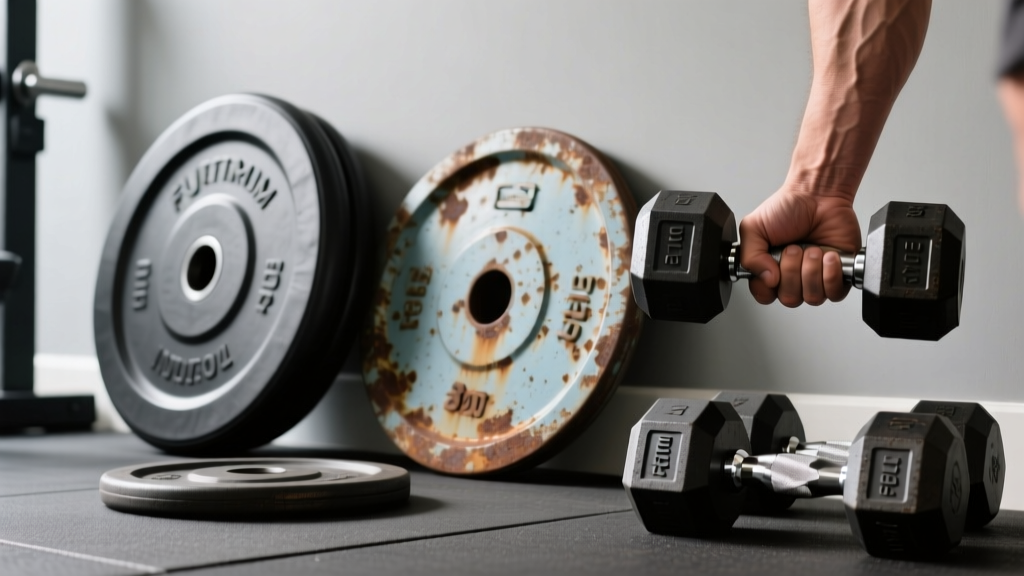
Cast Iron: The primary failure mode isn't structural breaking; it's calibration drift and cosmetic degradation. Budget iron plates are cast in sand molds that warp over time. A '45lb' plate from a big-box store can easily weigh 42lbs or 48lbs. Furthermore, without proper humidity control, the iron oxide (rust) will pit the surface, degrading the knurling on your barbell sleeves as microscopic rust particles act like sandpaper during plate changes.
Bumper Plates: The Achilles heel of bumper plates is hub separation and rubber hooking. If the steel center hub isn't properly bonded to the vulcanized rubber, repeated drops from overhead will cause the rubber to tear away from the metal insert. Additionally, softer rubbers (below 85 Shore A) tend to 'hook' or grab the barbell sleeve during a drop, causing the bar to violently bounce sideways—a major safety hazard during heavy cleans.
The Biomechanics Hack: Your Dumbbell Reverse Fly Alternative
When you allocate your budget to a barbell and plates instead of a pair of 15lb or 20lb dumbbells, you lose the ability to perform traditional rear deltoid isolation work. According to ExRx.net's biomechanical breakdown of the rear lateral raise, the posterior deltoid requires horizontal abduction with a neutral or pronated grip to achieve peak contraction. Fortunately, your new weight plates can serve as an exceptional dumbbell reverse fly alternative, but the execution changes drastically depending on whether you bought iron or bumpers.
The Iron Plate Rim-Grip Fly
If you purchased cast iron plates, you have a distinct advantage for isolation work. A standard 5lb or 10lb cast iron plate features a thin profile and a raised outer rim. By gripping the outer rim of two 10lb iron plates (palms facing each other), you can perform a 'Rim-Grip Rear Delt Fly'. Because your fingers can wrap securely around the thin iron edge, grip fatigue is minimized. This allows the posterior deltoid to reach mechanical failure before your hand flexors give out, perfectly mimicking the stimulus of a dumbbell reverse fly.
The Bumper Plate Pinch-Grip Challenge
If you opted for bumper plates, a 10lb bumper is notoriously thick (often over 1.5 inches) and lacks a raised rim. Attempting a reverse fly with 10lb bumpers forces you into a 'pinch grip' on the smooth rubber edge. While this builds immense grip strength, it shifts the bottleneck of the exercise away from the rear delts and onto your thumb adductors and forearm flexors. For pure hypertrophy of the rear delts, 10lb bumpers are suboptimal for flies. Instead, use them for Plate Halos or Weighted Pull-Aparts, where the thick rubber provides a comfortable, secure grip against the palms.
'The rear deltoid is a small, stubborn muscle group that demands strict isolation. When using plates as a dumbbell reverse fly alternative, the thickness of the plate dictates your grip mechanics. Thin iron plates allow for true rear-delt failure; thick rubber bumpers turn the movement into a grip endurance test.' — FitGearPulse Biomechanics Analysis, 2026
Strategic Purchasing: The Hybrid Home Gym Approach
You do not have to choose just one. The smartest budget allocation in 2026 is the Hybrid Plate Strategy. By mixing iron and bumpers, you maximize your budget while covering all training modalities.
- Buy Bumpers for the 'Working' Weights: Purchase a pair of 45lb and 25lb bumper plates. These are the weights you will drop from overhead during snatches, cleans, or high-rep deadlifts. The 450mm diameter ensures the barbell is at the correct starting height off the floor.
- Buy Iron for the 'Fractional' and 'Accessory' Weights: Purchase 10lb, 5lb, and 2.5lb cast iron plates. You never drop these weights from overhead, so the rubber is unnecessary. More importantly, the thin profile of the 10lb and 5lb iron plates makes them vastly superior for accessory movements, including our dumbbell reverse fly alternative, plate pinches, and goblet-style front raises.
This hybrid approach typically saves lifters between $150 and $200 compared to buying a full set of bumpers, while actually improving the ergonomics of accessory lifts. For further reading on accessory exercise variations, the Bodybuilding.com exercise database offers extensive visual guides on rear deltoid angles that can be adapted for plate-loaded variations.
Frequently Asked Questions
Can I drop cast iron plates on rubber horse stall mats?
While 3/4-inch vulcanized horse stall mats will protect your concrete subfloor from cracking, dropping cast iron plates will still transfer massive kinetic energy back into the barbell. This 'shock rebound' can bend Olympic barbell sleeves over time and shatter the iron plate itself if it lands on an uneven edge. Bumpers are required for any dropping from above the knee.
Why do 10lb bumper plates bend on the barbell?
To maintain the 450mm IWF standard diameter, a 10lb bumper plate must be very thin and wide. When loaded alone on a barbell and dropped, the leverage applied to the narrow rubber cross-section causes the plate to fold or 'taco'. Premium brands like Rogue Fitness mitigate this by adding a steel webbing insert inside the 10lb and 15lb bumpers, but they are still not meant to be dropped solo.
Is the dumbbell reverse fly alternative with plates safe for the rotator cuff?
Yes, provided you control the eccentric phase. When holding plates by the rim or edge, the center of mass sits slightly further from your wrist joint compared to a dumbbell. This increases the lever arm, meaning you will need to use lighter weight (e.g., 5lb or 10lb plates instead of 15lb dumbbells) to achieve the same rotator cuff and rear deltoid stimulus without risking impingement.
More gear to consider
All reviews
Top Dumbbell Racks for Circuit Training With Dumbbells in 2026
Beyond a Full Body Dumbbell Workout Beginner Routine: Barbell Setup
Dumbbell Racks for Weighted Sit Ups: 2026 Storage Market Trends

Best Adjustable Dumbbells for Dumbbell Rows in 2026

Collar vs Clamp: Securing Bars for the One Dumbbell Tricep Extension