
Bumper vs Iron Plates: Budgeting for Dumbbell Chest Press Variations
Discover the true cost of bumper vs iron plates in 2026. Learn how saving on Olympic plates funds premium gear for dumbbell chest press variations.

The 2026 Home Gym Budget Dilemma
Building a comprehensive home gym in 2026 requires ruthless financial prioritization. Every dollar spent on one piece of equipment is a dollar diverted from another. For lifters outfitting their garage or basement gyms, the bumper plate vs iron plate comparison is often the first major financial crossroads. While premium Olympic bumper plates look professional and protect your flooring, they carry a massive price premium. This budget breakdown will demonstrate how choosing traditional cast iron plates can free up enough capital to invest in high-end adjustable dumbbells—gear that is absolutely essential for executing a wide array of dumbbell chest press variations safely and effectively.
Bumper Plate vs Iron Plate Comparison: The Hard Numbers
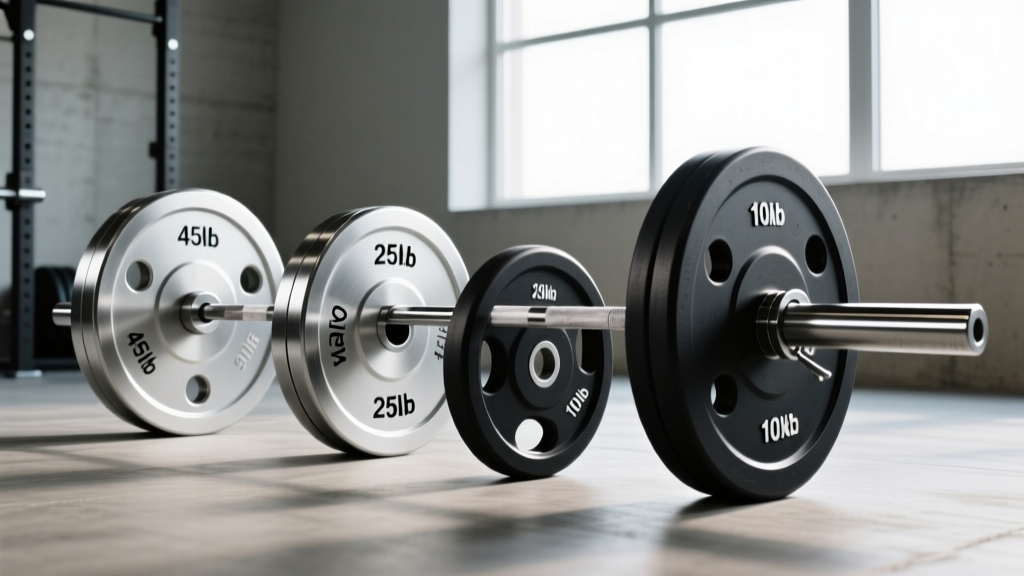
To understand the value proposition, we must look at the current market pricing for standard 260-pound plate sets (two 45s, two 25s, two 10s, two 5s). According to comprehensive equipment testing by Garage Gym Reviews, the price gap between virgin rubber bumpers and machined cast iron remains stark, even with recent supply chain stabilizations.
| Feature | Standard Cast Iron Plates | Virgin Rubber Bumper Plates |
|---|---|---|
| Average Cost (260 lb set) | $240 - $280 | $550 - $650 |
| Cost Per Pound | ~$0.95 - $1.07 / lb | ~$2.11 - $2.50 / lb |
| 45lb Plate Thickness | 1.3 - 1.5 inches | 3.2 - 3.5 inches |
| Drop Rating | Low (Will crack/damage floors) | High (10,000+ drops) |
| Maintenance | Occasional rust prevention | UV protection, off-gassing management |
As the table illustrates, opting for a premium bumper set like the Rogue Echo Bumpers or comparable Rep Fitness models will cost you roughly $300 to $370 more than a standard deep-dish cast iron set. For a lifter on a strict $1,500 total gym build budget, that $350 delta represents a massive 23% of their total purchasing power.
The Hidden Cost: Barbell Sleeve Capacity
Beyond the upfront financial cost, there is a spatial cost. Because a 45-pound bumper plate is more than twice as thick as a 45-pound iron plate, you will run out of barbell sleeve space much faster. If you plan on loading past 400 pounds, thick bumpers will physically prevent you from adding more weight to a standard Olympic barbell with 16.3-inch loadable sleeves. Iron plates allow for significantly higher maximal loads, providing better long-term value for powerlifters and strongman trainees.
Reallocating Capital: Funding Dumbbell Chest Press Variations
So, what do you do with the $350 you save by buying cast iron? You reinvest it into unilateral training. While the barbell bench press is a staple, it lacks the biomechanical freedom required for optimal hypertrophy and joint health. This is where dumbbell chest press variations become critical, and they require a high-quality set of adjustable dumbbells.
A premium adjustable dumbbell set, such as the Nuobell 80lb system or the PowerBlock Pro EXP, retails between $350 and $450 in 2026. By choosing iron plates for your barbell, the exact savings you generate effectively pays for your adjustable dumbbells. This transforms a one-dimensional barbell station into a complete upper-body development hub.
Top Variations That Require Adjustable Dumbbells
According to exercise guidelines outlined by the American Council on Exercise (ACE), dumbbells allow for a greater range of motion and independent limb stabilization. Here is how your reallocated budget pays dividends in your training:
- Incline Dumbbell Press (30-45 degrees): Targets the clavicular head of the pectoralis major. Adjustable dumbbells allow you to micro-adjust the weight in 5lb increments, which is crucial for incline movements where anterior deltoid fatigue limits absolute strength.
- Neutral-Grip Dumbbell Press: By turning the palms inward, you shift mechanical tension to the triceps and inner chest while reducing shoulder impingement risks. This variation is impossible to replicate safely with a barbell.
- Dumbbell Floor Press: An excellent variation for building lockout strength and protecting the rotator cuff by limiting the range of motion. Iron plates on the floor might get scuffed, but using dumbbells on a mat eliminates this concern entirely.
- Alternating Eccentric Press: Lowering one dumbbell at a time while holding the other in the locked-out position increases time-under-tension and challenges core anti-rotation stability.
Long-Term Value: Depreciation and Maintenance
When conducting a value analysis, we must factor in the 5-year lifespan of the equipment. Cast iron is virtually indestructible. If it rusts, a wire brush and a coat of Rust-Oleum restore it to factory condition for under $15. Bumper plates, however, are susceptible to environmental degradation.
Recycled rubber bumpers can dry rot, crack, and emit a persistent sulfur odor if kept in unventilated or sun-exposed garages. Even virgin rubber bumpers will eventually develop a 'dead bounce' or warp if stored vertically on their edges for long periods. From a pure depreciation standpoint, iron plates hold their resale value remarkably well on the secondary market, often selling for just 10-15% below retail, whereas used bumper plates can lose 40% of their value due to cosmetic scuffing and rubber wear.
The Hybrid Purchasing Framework
If you absolutely need to drop weights from overhead (e.g., you practice Olympic weightlifting or CrossFit), a pure iron setup won't work. Instead, utilize the Hybrid Purchasing Framework to protect your budget and your floors without sacrificing your dumbbell fund:
- Buy One Pair of Bumpers: Purchase a single pair of 10lb or 15lb competition-style bumper plates. These are thin, durable, and allow you to safely drop an empty or lightly loaded barbell during dynamic movements.
- Fill the Rest with Iron: Buy all your 25lb and 45lb plates in cast iron. Since you rarely drop a barbell loaded with heavy 45s from overhead, the iron will serve you perfectly for heavy squats, deadlifts, and floor-based presses.
- Invest in Horse Stall Mats: Take $60 of your iron savings and buy two 3/4-inch thick horse stall mats. This provides the drop-protection of bumpers for a fraction of the cost, allowing you to deadlift heavy iron safely.
Final Verdict
The bumper plate vs iron plate comparison ultimately comes down to your specific training modalities. If you are a pure powerlifter, bodybuilder, or general fitness enthusiast focused on hypertrophy, cast iron plates are the undisputed champions of value. By avoiding the 'bumper tax,' you unlock the budget required to purchase premium adjustable dumbbells. This strategic reallocation ensures you have the precise tools needed to master dumbbell chest press variations, leading to better muscle symmetry, healthier shoulder joints, and a far more versatile home gym in 2026.
More gear to consider
All reviews
Neoprene Dumbbell Rotator Cuff Rehab: 2026 Home Buying Guide

Seated Dumbbell Shrugs Muscles Worked: Neoprene Home Gym Setup
Adjustable Dumbbells vs BalanceFrom Rubber Encased Hex Dumbbells Setup
Olympic vs Standard Plates: Beyond the Dumbbell Curl GIF
Cast Iron vs Competition Kettlebells: Hamstring Curl Dumbbell Shift
