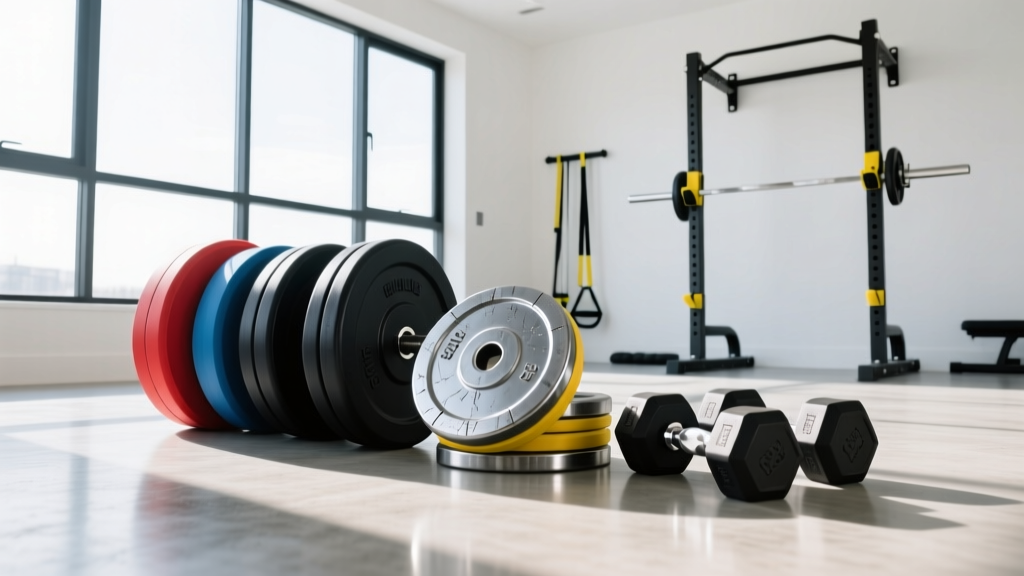
Bumper vs Iron Plates Cost & Back Workout with Dumbbells Chart
Compare bumper vs iron plates with our 2026 cost-per-pound breakdown, plus a bonus back workout with dumbbells chart for accessory training.

The True Cost Per Pound: 2026 Market Breakdown
Building a home gym in 2026 requires ruthless budget optimization, especially when it comes to free weights. The debate between bumper plates and cast iron plates is rarely just about aesthetics; it is a complex calculation involving floor protection, noise reduction, kinetic energy absorption, and long-term durability. Whether you are outfitting a garage gym for heavy Olympic lifts or setting up a quiet basement space for hypertrophy, understanding the exact cost-per-pound and failure modes of each plate type is critical.
Quick Verdict: Cast iron remains the undisputed king of budget-friendly hypertrophy training (averaging $1.20/lb), but requires heavy investment in flooring. Bumper plates (averaging $2.00 to $4.50/lb) are mandatory for Olympic lifting and dynamic drops, but cheaper crumb rubber variants suffer from severe off-gassing and degradation over time.Cast Iron Plates: The Traditionalist's Budget Pick
Cast iron plates are the backbone of traditional strength training. In the current market, high-quality machined cast iron plates, such as the Rogue Deep Dish Plates, typically range from $1.50 to $1.80 per pound. Budget import brands or basic enamel-coated plates from big-box retailers can drop as low as $0.90 to $1.10 per pound, though they often suffer from calibration variances of up to 5%.
Hidden Costs and Edge Cases
The primary advantage of iron is its density. A 45-pound iron plate is significantly thinner than a 45-pound bumper plate, allowing you to load heavier weights onto the barbell sleeve before running out of real estate. However, the budget breakdown must include the 'hidden cost' of floor protection.
- Flooring Requirements: Dropping cast iron onto standard concrete will cause spalling and structural damage. You must invest in 3/4-inch thick horse stall mats (approx. $60 each) or build a DIY plywood platform ($150-$200 in lumber).
- Acoustic Impact: Iron-on-iron clatter generates noise levels exceeding 90 decibels during heavy deadlift resets, making it unsuitable for shared-wall living spaces.
- Failure Mode: Enamel-coated budget plates are prone to chipping and rusting if stored in non-climate-controlled garages. Machined bare steel requires periodic maintenance with 3-in-One oil or WD-40 Specialist to prevent oxidation.
Bumper Plates: When Rubber Meets the Road (and Floor)
Bumper plates are engineered to be dropped. Governed by the International Weightlifting Federation (IWF) standard of a 450mm (17.7-inch) diameter across all weights, bumpers ensure the barbell is always elevated off the floor. However, the material composition drastically alters the price point and performance.
| Material Type | Shore A Durometer | 2026 Avg Cost/Lb | Best Use Case |
|---|---|---|---|
| Crumb Rubber | 75 - 80 (Soft) | $1.60 - $2.20 | CrossFit, high-rep drops |
| Virgin Rubber | 85 - 90 (Medium) | $2.80 - $4.00 | Olympic lifting, home gyms |
| Urethane | 90+ (Hard) | $5.50 - $8.00+ | Commercial facilities |
The 'Taco' Effect and Structural Failures
When evaluating bumper plates on a budget, many lifters opt for crumb rubber models like the Rogue Echo Bumpers. While excellent for absorbing shock, crumb rubber has a distinct failure mode: the 'taco' effect. This occurs most frequently with 10lb and 15lb bumper plates. If a lifter drops a barbell loaded only with 10lb bumpers, the plates lack the structural mass to absorb the kinetic energy, causing the rubber to fold inward like a taco and eventually snap the internal steel hub.
Expert Tip: Never drop a barbell loaded exclusively with lightweight bumper plates. Always pair 10lb or 15lb bumpers with a heavier 45lb plate on the outside to distribute the impact force across a wider, denser surface area.
Bonus Programming: Back Workout with Dumbbells Chart
When budget constraints limit your initial barbell plate purchase, or when your home gym floor simply cannot handle repeated heavy deadlift drops, dumbbells become the ultimate fallback for posterior chain and back development. According to the American Council on Exercise (ACE), unilateral dumbbell training is highly effective for correcting muscular imbalances and increasing core stabilization, which directly translates to a stronger barbell pull.
Below is a comprehensive back workout with dumbbells chart designed for hypertrophy and mid-back thickness. This routine requires only an adjustable bench and a pair of moderate-to-heavy dumbbells, bypassing the need for expensive bumper plates or heavy-duty flooring.
| Exercise | Sets | Reps | Tempo | Rest |
|---|---|---|---|---|
| 1. Single-Arm DB Row Target: Lats, Rhomboids |
4 | 8-10 | 2-1-2 | 90s |
| 2. DB Chest-Supported Pullover Target: Lats, Serratus |
3 | 12-15 | 3-0-1 | 60s |
| 3. Bent-Over Reverse Fly Target: Rear Delts, Traps |
3 | 15-20 | 1-1-1 | 60s |
| 4. DB Romanian Deadlift (RDL) Target: Erectors, Lumbars |
4 | 10-12 | 3-1-1 | 120s |
| 5. DB Shrugs (Seated) Target: Upper Traps |
3 | 15-20 | 1-2-1 | 45s |
Final Value Verdict: Which Should You Buy?
If your training revolves around powerlifting, bodybuilding, and controlled eccentrics, cast iron plates offer the highest ROI. Allocate the $150 you save on plates toward a high-quality horse stall mat to protect your concrete subfloor. The thinner profile also allows for heavier loading on standard Olympic bars.
Conversely, if your programming includes snatches, cleans, or high-volume CrossFit-style metcons where dropping the barbell from overhead is mandatory, bumper plates are non-negotiable. For most home gym owners in 2026, a hybrid approach yields the best budget breakdown: purchase a pair of 45lb and 25lb virgin rubber bumpers for drops, and fill out the rest of your weight tree with cheaper cast iron fractional plates (10s, 5s, 2.5s) to keep your overall cost-per-pound under control.
More gear to consider
All reviews
Lying Dumbbell Tricep Extensions vs EZ and Straight Bars

Dumbbell Skull Crusher Alternative: Barbell Weight & Knurl Guide

Barbell Collar Comparison: Golden Dumbbell Weight to Olympic Loads

EZ Curl Bar vs Straight Bar & the 40kg Dumbbell 2026 Trends
Beyond the Lats Dumbbell Workout: EZ Bar vs Straight Bar Trends
