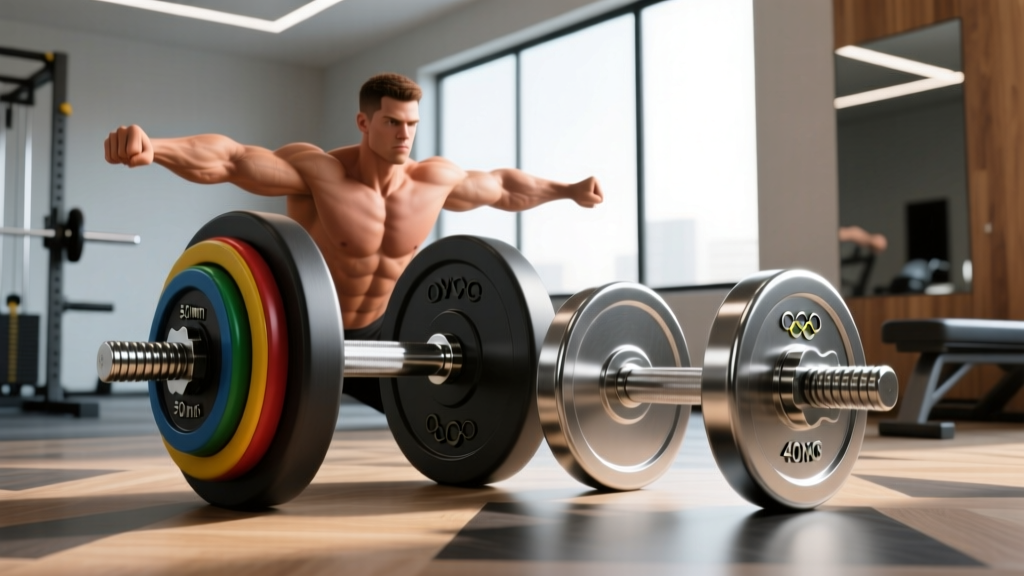
Barbell Collar Setup for a Safe Dumbbell Workout Program
Master barbell collar installation and clamp types to secure your racks, ensuring a safe footprint for your high-volume dumbbell workout program.

The Micro-Mechanics of Free Weight Safety
When building a comprehensive home or commercial gym, lifters often obsess over the major investments: the power rack, the Olympic barbell, and the calibrated plates. However, the structural integrity of your lifting environment relies heavily on the micro-components. Before you unroll the mats and initiate your first dumbbell workout program, the barbell station must be meticulously secured. A shifting 45-pound bumper plate on an uncollared or poorly clamped barbell can cause catastrophic rack imbalance, turning a controlled environment into a severe hazard zone.
This complete setup and installation walkthrough focuses on the critical, often overlooked step of barbell collar selection and application. By understanding the lateral holding forces of modern clamps, you not only protect your barbell sleeves but also preserve the spatial safety required for adjacent floor work. Whether you are transitioning from heavy squats to a high-rep dumbbell workout program, securing your racked weights is the foundational step of gym safety.
The Physics of Lateral Shift and Equipment Failure
During dynamic barbell movements like hip thrusts or uneven rack pulls, plates experience immense lateral kinetic energy. According to BarBend's expert testing methodology on lateral holding forces, an unsecured 45-pound plate can generate over 100 pounds of outward shear force during a vigorous barbell drop. If the collar fails, the plate slides off the 50mm Olympic sleeve, instantly shifting the barbell's center of gravity. This asymmetrical weight distribution can bend the barbell, damage the J-cups, or cause the bar to flip out of the rack entirely.
Furthermore, if your dumbbell workout program utilizes the floor space directly in front of the squat rack, a falling plate poses a critical strike hazard. Securing the plates flush against the inner sleeve hub ensures that the barbell remains a static, safe anchor in your gym layout.
Barbell Collar and Clamp Types: 2026 Technical Matrix
The market has evolved significantly past the traditional wire spring clips. Below is a technical comparison of the primary collar types available in 2026, evaluated on clamping force, material science, and specific use cases.
| Collar Type | Reference Model | Material Composition | Lateral Holding Force | Price Range (Pair) | Primary Failure Mode |
|---|---|---|---|---|---|
| Traditional Spring | Generic Chrome Spring | Tempered Steel | ~40 lbs | $10 - $15 | Spring fatigue after 500+ cycles |
| Lever-Lock | Lock-Jaw Pro | Glass-Filled Nylon | ~85 lbs | $25 - $30 | Hinge snap in sub-50°F environments |
| Screw-Down Competition | Rogue Aluminum Collars | 6061 Aircraft Aluminum | 120+ lbs | $15 - $20 | Inner O-ring degradation |
| Spin-Lock Clamp | Eleiko Competition | Hardened Steel / Resin | 200+ lbs | $80 - $95 | Thread stripping under cross-load |
Step-by-Step Installation and Loading Walkthrough
Proper installation is just as critical as the hardware itself. A $90 competition clamp will fail if installed on a dirty sleeve. Follow this precise setup protocol to ensure maximum holding force.
- Sleeve Preparation: Wipe down the 50mm barbell sleeves with isopropyl alcohol and a microfiber cloth. Chalk dust, sweat, and degraded rubber residue from bumper plates create a lubricating layer that reduces collar friction by up to 40%.
- Inner Hub Seating: Load your plates tightly together. For rubber bumper plates, ensure the convex inner hubs are interlocking or seated perfectly flush. Any gap between plates allows for kinetic shifting, which will eventually push the collar outward.
- Collar Application: Slide the collar onto the sleeve. For aluminum screw-down collars, push the collar firmly against the outer edge of the last plate before tightening the screw. Never tighten the collar while it is hovering a half-inch away from the plate.
- The Shake Test: Grip the barbell and vigorously shake it laterally. The plates should not produce a metallic clinking sound. If you hear shifting, loosen the collar, push it tighter against the plate stack, and re-secure.
Spatial Setup: Integrating Your Dumbbell Workout Program
Why does barbell collar security matter for dumbbell training? The answer lies in spatial geometry and gym flow. When designing a high-volume dumbbell workout program, you need a dedicated, unobstructed drop zone—typically an 8x8 foot footprint directly in front of the power rack or squat stand.
Managing the Transition Zone
If you are performing a superset that transitions from racked barbell bench presses to standing dumbbell lateral raises, the barbell often remains on the J-cups. If the plates are uncollared, the asymmetrical loading of taking dumbbells off the rack or bumping the barbell during re-racking can cause a plate to slide. By utilizing high-tolerance lever-lock or aluminum collars, you effectively 'lock' the barbell station, allowing you to execute your dumbbell workout program in the immediate vicinity without the cognitive load of monitoring the barbell's structural integrity.
'A well-designed home gym treats the barbell rack and the dumbbell floor space as a single, integrated ecosystem. Securing the heavy iron on the rack is the prerequisite for safe, dynamic movement on the floor.' — National Strength and Conditioning Association (NSCA) facility guidelines.
Failure Modes, Edge Cases, and Maintenance
Even the best equipment degrades. To maintain a safe environment for both barbell and dumbbell training, monitor your collars for the following specific failure modes:
- O-Ring Compression Set: Aluminum collars rely on a rubber O-ring to bite into the steel sleeve. Over 12 to 18 months of heavy use, this O-ring flattens out (compression set). When the collar can be spun freely by hand even when tightened, replace the O-ring or the collar.
- Thermal Brittleness in Nylon: If your garage gym drops below 50°F in the winter, glass-filled nylon lever collars become brittle. The hinge mechanism is prone to snapping under the torque of a heavy deadlift. Switch to steel or aluminum clamps in unheated environments.
- Sleeve Tolerance Variations: Not all 50mm sleeves are exactly 50.0mm. Some budget barbells measure 49.2mm, while competition bars measure exactly 50.0mm. Spring collars will fail on undersized sleeves. Always use screw-down or adjustable cam collars if you mix and match barbell brands.
Expert FAQ: Collars and Gym Flow
Do I need collars for my dumbbells?
Modern adjustable dumbbells (like Nuobell or PowerBlock) utilize internal locking mechanisms and do not require external collars. However, if your dumbbell workout program utilizes traditional loadable dumbbell handles, you must use specialized 1-inch or 2-inch spin-lock collars to prevent the plates from sliding off during unilateral movements like lunges or step-ups.
Can I leave the collars on the barbell permanently?
Yes, but with a caveat. Leaving heavy competition clamps on the barbell adds 5 to 10 pounds to the total system weight, which skews your progressive overload tracking. Furthermore, leaving lever-lock collars under constant tension on the sleeve can warp the nylon over time. It is best practice to remove them after your session, which also serves as a mandatory visual inspection point for sleeve wear and tear.
How do collars impact USA Weightlifting standards?
According to the USA Weightlifting technical rules regarding sleeve security, competition collars must weigh exactly 2.5kg each and are mandatory for all sanctioned lifts to prevent plate dispersal during the violent second pull of a clean or snatch. While home gym lifters do not need 2.5kg clamps, adopting the habit of always collaring the bar builds the strict safety discipline required for advanced lifting.
More gear to consider
All reviews
The Best Dumbbell Only Back Workout & Top Adjustable Dumbbell Picks

Olympic vs Standard Plates: Setup & Workouts with Dumbbells for Arms
Kettlebell Maintenance: Cast Iron vs Competition for Dumbbell Pec Exercises No Bench

Troubleshooting Dumbbell 21s: Adjustable Dumbbell Comparison & Form Mistakes
Cast Iron vs Competition Kettlebells: Beyond the Single Dumbbell RDL