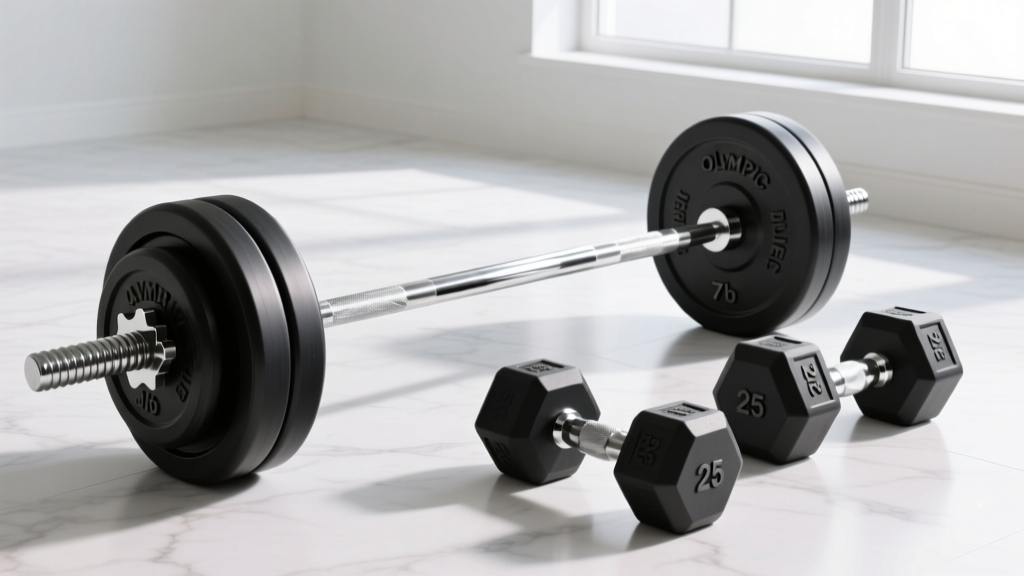
Bumper vs Iron Plates: Maintaining Your 60 lb Dumbbell Pair
Learn how to maintain a 60 lb dumbbell pair built with loadable handles. We compare bumper vs iron plate longevity, rust prevention, and rubber care.

When outfitting a home or commercial gym in 2026, assembling a heavy 60 lb dumbbell pair using loadable handles is one of the most cost-effective strategies available. A fixed 60 lb urethane dumbbell pair from premium brands currently retails between $220 and $280. In contrast, utilizing loadable dumbbell handles paired with standard plates can cut that cost in half. However, this modular approach introduces a critical maintenance dilemma: should you load your handles with cast iron plates or bumper plates?
The choice between iron and rubber drastically alters your maintenance routine, the lifespan of your dumbbell sleeves, and the structural integrity of the plates themselves. According to facility maintenance guidelines from the National Strength and Conditioning Association (NSCA), proactive equipment care reduces replacement costs by up to 40% over a five-year period. In this guide, we break down the exact failure modes, chemical vulnerabilities, and step-by-step care protocols for maintaining a 60 lb dumbbell pair built with either iron or bumper plates.
The Anatomy of a Loadable 60 lb Dumbbell Pair
To achieve a 60 lb dumbbell, you typically start with a loadable handle weighing between 10 and 15 lbs (such as the Rogue Loadable Dumbbell Handles at 10 lbs or Titan Fitness equivalents at 12.5 lbs). This means you must load 45 to 50 lbs of plates onto each sleeve. Because dumbbell sleeves are shorter than barbell sleeves—often maxing out at 35 lbs of plate capacity per side depending on the brand—plate thickness becomes a major factor. You are usually stacking a combination of 25 lb, 10 lb, and 5 lb plates to hit your target weight.
Pro Tip: Always use a pair of calibrated collars (like the Rogue HG 2.0 or standard spring collars) to secure the plates. Loose plates on a dumbbell handle create lateral shear forces that can permanently warp the sleeve threading or snap the retention ring.Cast Iron Plates: Oxidation, Knurling, and Sleeve Wear
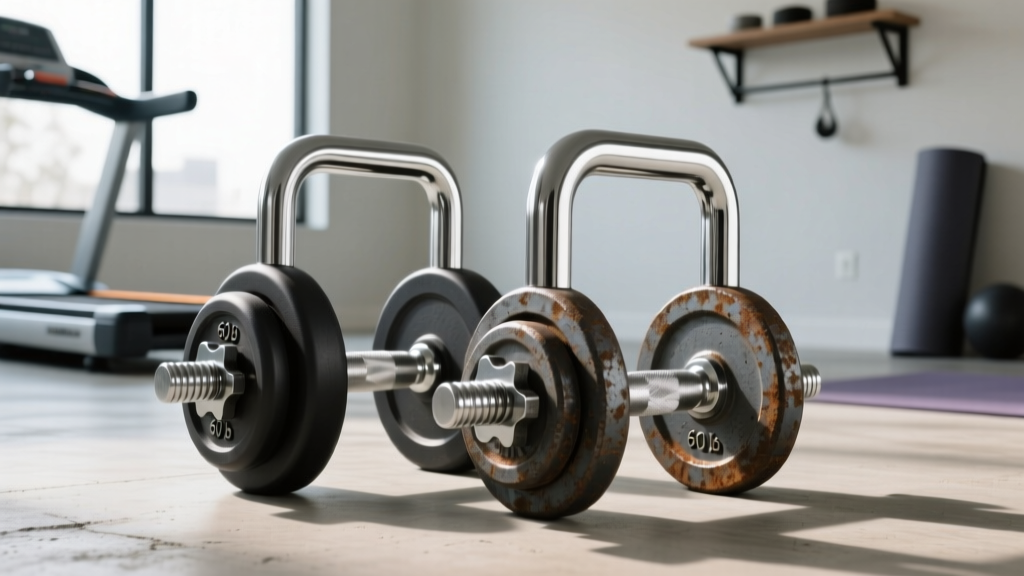
Cast iron plates are the gold standard for durability, provided they are kept dry. They are thin, allowing for easy stacking on shorter dumbbell sleeves, and they will not deform under heavy loads. However, they are highly susceptible to environmental degradation.
The Chemistry of Rust and Sweat
Human sweat has a pH ranging from 4.5 to 7.0, making it mildly acidic. When you perform heavy goblet squats or lunges with your 60 lb dumbbell pair, sweat transfers from your hands to the dumbbell handle and eventually to the inner diameter of the iron plates. This acidic moisture accelerates iron oxidation (rust). Standard WD-40 is a solvent and water displacer, not a long-term protectant. Instead, equipment specialists recommend using Boeshield T-9 or 3-IN-ONE Professional Silicone Spray. These leave a microscopic wax or silicone film that repels moisture without attracting dust.
Edge Chipping and Floor Damage
Unlike barbells, dumbbells are frequently set down on the floor at an angle. Cast iron plates lack a protective outer lip. Repeatedly dropping a 60 lb iron-loaded dumbbell will chip the paint, expose raw iron to humidity, and eventually crack concrete or rubber gym flooring. If you use iron plates, you must invest in a 3/4-inch thick horse stall mat or dedicated drop pads to absorb the kinetic energy.
Bumper Plates: Hub Loosening and Rubber Degradation
Bumper plates (made of virgin or crumb rubber) solve the floor-damage problem and resist rust entirely. However, using bumpers on dumbbell handles introduces unique mechanical failure modes that barbell users rarely encounter.
The 'Hub Walk' Failure Mode
The most common point of failure for bumper plates is the metal center insert (the hub). When a barbell is dropped, the force is distributed evenly across a wide axle. When a dumbbell is dropped or set down heavily during a walking lunge, the force is applied at an extreme lateral angle. Equipment stress tests documented by Garage Gym Reviews highlight that this lateral shear causes the metal hub to slowly push through the rubber matrix—a phenomenon known as 'hub walk' or 'insert blowout'. Once the hub shifts even 2 millimeters, the plate will no longer sit flush on the dumbbell sleeve, causing violent rattling and accelerated sleeve wear.
UV and Ozone Cracking
Rubber is highly porous and reactive to ultraviolet (UV) light and ozone. If your gym is in a garage with an open door or near a window, UV exposure will cause the bumper plates to dry rot, crack at the edges, and shed black dust. To maintain rubber bumpers, you must clean them monthly with a mild dish soap solution and apply a UV protectant like 303 Aerospace Protectant. Never use bleach or ammonia-based cleaners, as these break down the sulfur bonds in the vulcanized rubber.
The Hidden Killer: Chalk Dust and Bronze Bushings
Whether you use iron or bumper plates, the dumbbell handle itself requires meticulous care. Most premium loadable handles utilize bronze bushings inside the sleeve to allow the outer sleeve to spin independently of the inner shaft. This reduces rotational inertia during exercises like dumbbell snatches.
Warning: Gym chalk (magnesium carbonate) is a severe abrasive. When chalk dust mixes with sweat and works its way into the gap between the dumbbell sleeve and the shaft, it forms a grinding paste. This paste will destroy bronze bushings in a matter of months, resulting in a seized, non-spinning sleeve.To prevent this, you must regularly blow out the sleeve gaps with compressed air and apply a few drops of lightweight machine oil (like 3-IN-ONE) to the bushing seams. Avoid thick greases, which will only trap more chalk dust.
Comparison Matrix: Iron vs. Bumper for Dumbbell Longevity
Use the following data table to determine which plate type aligns with your maintenance capabilities and training environment.
| Metric | Cast Iron Plates | Bumper Plates |
|---|---|---|
| Rust Risk | High (Requires monthly oiling) | None (Rubber is immune) |
| Hub/Insert Failure | Very Low (Solid cast) | High (Prone to lateral hub walk) |
| Sleeve Thickness | Thin (Easier to stack to 60 lbs) | Thick (May max out sleeve capacity) |
| Drop Tolerance | Low (Chips paint, damages floors) | High (Absorbs kinetic energy) |
| Maintenance Focus | Oxidation prevention, humidity control | UV protection, insert gluing |
Step-by-Step Monthly Maintenance Protocol
Manufacturers like Rogue Fitness explicitly note that warranty claims are voided if equipment failure is traced back to negligence or improper chemical cleaners. Follow this 4-step protocol on the first weekend of every month to maximize the lifespan of your 60 lb dumbbell pair.
- The Compressed Air Purge: Use a canned air duster to blow out the knurling of the dumbbell handle and the gap between the sleeve and the shaft. This removes abrasive chalk and skin cells.
- The Solvent Wipe: Dampen a microfiber cloth with mineral spirits or isopropyl alcohol. Wipe down the dumbbell sleeves and the inner metal rings of your plates to remove dried sweat and sebum (skin oils).
- The Lubrication Phase: Apply two drops of 3-IN-ONE oil to the bronze bushing seams on the handle. Spin the sleeve manually for 10 seconds to distribute the oil. Wipe away any excess to prevent dust attraction.
- The Protective Coating: If using iron plates, spray a light coat of Boeshield T-9 onto a rag and wipe the plates. If using bumper plates, spray 303 Aerospace Protectant onto a rag and wipe the rubber surfaces to restore UV inhibitors.
Expert Verdict: Which Lasts Longer?
When maintaining a 60 lb dumbbell pair built on loadable handles, cast iron plates ultimately offer superior longevity, provided you control the humidity in your gym space. Iron plates do not suffer from hub walk, they do not dry-rot from UV exposure, and their thin profile ensures you can easily reach the 60 lb mark without overloading the dumbbell sleeve's physical length limits.
"Bumper plates are engineered for the vertical drop of a barbell. The lateral, asymmetric forces applied to a dumbbell during unilateral movements will inevitably compromise the rubber-to-metal bond of a bumper plate long before a cast iron plate will fail."
However, if you train in a garage gym with sensitive flooring, or if you frequently perform high-rep drop sets where setting the weights down gently is not an option, bumper plates are a necessary sacrifice. In that case, invest in high-density virgin rubber bumpers with reinforced steel hubs, and strictly adhere to the monthly UV and insert-inspection protocol outlined above. By matching your plate material to your maintenance willingness, your modular dumbbell setup will easily survive a decade of heavy training.
More gear to consider
All reviews
Seated Dumbbell Calf Raise Setup & Barbell Collar Comparison

Dumbbell Thrusters Squat to Press: A Beginner's Neoprene Guide
Barbell Knurling & Forearm Workouts with Dumbbells: Rogue vs Eleiko
Bumper Plate vs Iron Plate: Dumbbell Rubber Coating Compared

Decline Chest Workout with Dumbbells: 2026 Adjustable Guide