Bumper Plate vs Iron Plate: Designing Dumbbell Plots for Small Gyms
Master your home gym layout by comparing bumper plate vs iron plate dimensions. Learn how to optimize dumbbell plots and storage zones for maximum space efficiency.

The Architecture of Free Weight Zones
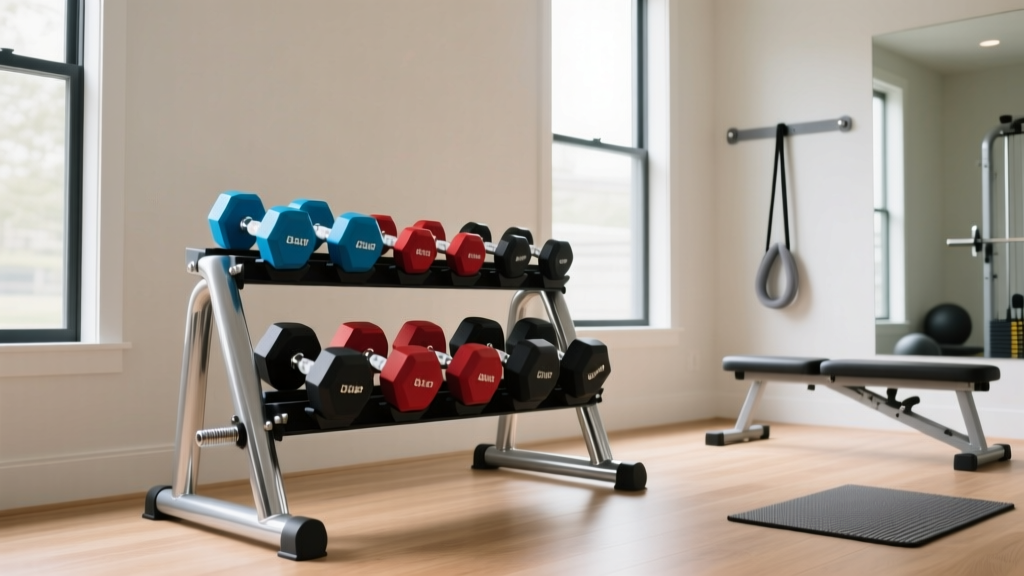
When mapping out a high-performance home gym, spatial optimization is just as critical as the equipment itself. In modern gym spatial design, a dumbbell plot refers to the mapped floor polygon that encompasses the physical dumbbell rack, the user's loading and unloading stance, and the lateral clearance required to lift safely without colliding with adjacent equipment. While most lifters obsess over the footprint of their power rack, the true spatial bottleneck often lies in how your weight plate storage interacts with these designated dumbbell plots.
As we navigate home gym design in 2026, the debate of bumper plate vs iron plate is no longer just about noise reduction or Olympic lifting compatibility. It is fundamentally a question of spatial geometry. The diameter, thickness, and storage requirements of your plates will directly dictate how closely you can position your barbell storage trees to your dumbbell zones, ultimately expanding or suffocating your usable floor space.
Key Spatial Insight
Choosing iron plates over bumpers can reduce your plate storage depth by up to 60%, allowing you to push weight trees closer to walls and reclaim up to 8 square feet of floor space to expand your dumbbell plots for complex movements like dumbbell snatches or walking lunges.
Defining Your Dumbbell Plots and Clearance Zones
Before comparing plate materials, we must establish the baseline spatial requirements for dumbbell training. According to ergonomic guidelines for fitness facilities, a functional dumbbell plot requires more than just the footprint of the rack. A standard 3-tier dumbbell rack holding pairs from 5 to 50 lbs measures approximately 45 inches wide and 22 inches deep. However, the functional plot must include:
- The Approach Vector: 24 inches of clearance in front of the rack for bending and lifting.
- The Lateral Swing Zone: 36 inches on either side to accommodate exercises like dumbbell flyes or lateral raises without striking adjacent plate trees.
- The Drop Margin: If using heavy hex dumbbells, a 12-inch buffer zone for safe lowering.
When your barbell plate storage encroaches on these lateral swing zones, the dumbbell plot becomes compromised. This is where the physical dimensions of your 45-pound plates become the deciding factor in your gym's layout.
Bumper Plate vs Iron Plate: The Dimensional Data
To understand the spatial impact, we must look at the exact manufacturing specifications of standard 45 lb (20 kg) plates. The data below highlights the stark contrast in volumetric footprint between premium bumpers and machined iron.
| Feature | Rogue Echo Bumper (45 lb) | Rogue Machined Iron (45 lb) |
|---|---|---|
| Diameter | 17.72 inches (450 mm) | 14.5 inches (368 mm) |
| Thickness per Plate | 3.25 inches | 1.3 inches |
| Stack of Six (270 lbs) Depth | 19.5 inches | 7.8 inches |
| Storage Tree Peg Requirement | 24-inch minimum peg length | 12-inch peg length sufficient |
| Average 2026 Market Cost | ~$140 / pair | ~$110 / pair |
As demonstrated in the table, a standard working set of six 45 lb bumper plates requires nearly 20 inches of horizontal storage depth on a weight tree or rack shelf. In contrast, the exact same weight in machined iron requires less than 8 inches. For a detailed breakdown of material longevity and manufacturing variances, the Garage Gym Reviews plate comparison guide offers an excellent deep dive into how these materials age over time.
How Plate Thickness Dictates Storage Footprints
The most common layout failure in garage gyms is placing a vertical weight tree directly adjacent to a dumbbell rack. When you load a barbell on the floor or a nearby rack, the sleeves extend outward.
The Sleeve Overlap Problem
Consider a standard 7-foot Olympic barbell. The sleeves are 16.3 inches long. If you are using bumper plates and load three 45s per side, the plates will consume roughly 10 inches of the sleeve, leaving 6 inches of overhang. However, because the bumper plates are 17.72 inches in diameter, their massive vertical profile creates a 'visual and physical wall' that extends outward. If your weight tree is positioned parallel to your dumbbell plots, the user must step around the protruding bumper plates to access the dumbbells, effectively adding 18 inches of dead space to your layout.
Iron plates, with their 14.5-inch diameter and razor-thin profile, allow for ultra-compact vertical storage. You can mount a flat-wall plate hanger (like the Rogue Wall Mount Plate Storage) that protrudes only 10 inches from the wall. This allows you to push your barbell storage flush against the perimeter, leaving the center of the room entirely open for expansive dumbbell plots.
The 'Drop Zone' Multiplier in Spatial Design
Space optimization is not just about where equipment sits; it is about how equipment is used dynamically. Bumper plates are engineered to be dropped. This necessitates a dedicated 'drop zone'—an area reinforced with high-density rubber flooring and clear of any fragile structures or adjacent equipment.
'If your gym layout requires you to deadlift or perform Olympic variations near your dumbbell storage, bumper plates introduce a severe collision risk. The bounce radius of a dropped 45lb bumper plate can easily shift a lightweight dumbbell rack or send loose kettlebells rolling into your primary walking paths.'
— Home Gym Layout & Safety Standards, Garage Gym Reviews
By opting for iron plates, you enforce a strict 'no-drop' policy. While this requires more controlled lowering during deadlifts, it entirely eliminates the need for a padded drop-zone buffer. This allows you to abut your barbell deadlift platform directly against your dumbbell plots, separated only by a simple visual floor tape line, saving up to 12 square feet of shock-absorption buffer space.
Cost vs. Space Trade-offs (2026 Market Realities)
In 2026, the pricing gap between premium virgin rubber bumpers and precision-cast iron has narrowed, but the spatial value proposition remains distinct. Let us apply a practical decision framework based on your available square footage:
- The Sub-200 Sq Ft Micro-Gym: Iron plates are mandatory. The spatial premium is too high. Utilizing machined iron plates allows for shallow 12-inch storage shelves mounted directly above dumbbell racks, creating a unified, high-density free weight wall. You can source quality cast iron from Rogue Fitness or local foundries to minimize shipping costs.
- The 200-400 Sq Ft Garage Gym: A hybrid approach works best. Maintain a pair of 45lb and 25lb bumpers for occasional dynamic barbell work, but rely on iron for the bulk of your 10s, 5s, and 2.5s. Store the bumpers on a vertical A-frame in the corner, keeping the primary linear wall space reserved for expanding your dumbbell plots.
- The Dedicated CrossFit / Olympic Space (400+ Sq Ft): Spatial constraints are minimal. Bumper plates take precedence for their acoustic dampening and drop-safety, allowing you to design massive, multi-user dumbbell plots without fear of equipment damage from dropped barbells.
Step-by-Step Framework: Taping Out Your Plots
Before purchasing your next set of plates, physically map your space using painter's tape. Follow this sequence to ensure your dumbbell plots are fully optimized:
- Mark the Rack Footprint: Tape the exact dimensions of your dumbbell rack (e.g., 45' x 22').
- Draw the Approach Vector: Extend a 24-inch box directly in front of the rack. This is your loading zone.
- Map the Lateral Swings: Stand in the center of the approach vector holding a tape measure at 36 inches. Swing it laterally. If your swing intersects with where you plan to store your bumper plates, you must either switch to iron plates or relocate the storage to a perpendicular wall.
- Calculate the Buffer: If storing bumpers on a horizontal tree, add a 20-inch depth polygon to your tape layout to represent the protruding plates. Evaluate if this polygon chokes the room's primary walkway.
Final Verdict on Spatial Efficiency
When designing a home gym, the choice between bumper plate vs iron plate extends far beyond the barbell. It is a foundational layout decision that dictates the viability and safety of your surrounding free weight zones. Iron plates offer unmatched volumetric efficiency, allowing for ultra-compact wall storage that maximizes the usable square footage of your dumbbell plots. Bumper plates, while essential for specific training modalities, demand a spatial tax in both storage depth and drop-zone buffers. By understanding the exact dimensional data and mapping your floor polygons before buying, you can engineer a seamless, high-functioning training environment that respects every inch of your available space.
More gear to consider
All reviews
Hexagon Shaped Dumbbells: 2026 Rubber vs Urethane Market Trends

Bumper vs Iron Plate Care & Dumbbell 5 kg Maintenance
Power Rack vs Squat Stand: Setup for Dumbbell Workout Squats

Power Rack vs Squat Rack: Space for Standing Dumbbell Lat Raises

Shoulder Exercises with Dumbbells: Neoprene Guide (2026)