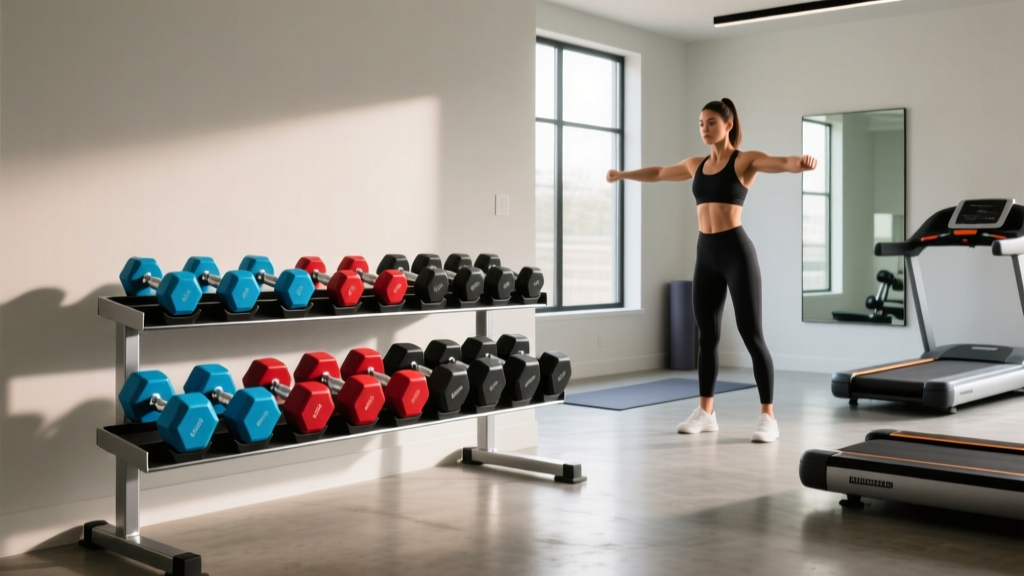
Budget Dumbbell Racks to Upgrade Your Fly Exercise with Dumbbells
Analyze dumbbell rack budgets and storage solutions to optimize your home gym. Discover the best setups to perfect your fly exercise with dumbbells.

The Biomechanical Need for Organized Storage
When performing a fly exercise with dumbbells, the biomechanical demand on the pectoralis major requires strict control, a slight bend in the elbows, and a deep eccentric stretch. According to biomechanical databases like ExRx.net, the sternal chest fly relies heavily on horizontal adduction. Because this movement isolates the chest without triceps assistance, lifters frequently utilize mechanical drop sets to push past muscular failure. If your dumbbell storage is a disorganized pile on the floor, the rest interval between dropping a 40 lb pair and grabbing a 30 lb pair extends from 5 seconds to 20 seconds. This extended rest kills your metabolic stress, cools down the target muscle, and ruins the efficacy of the set.
Upgrading your storage isn't just about aesthetics; it is a functional necessity for high-intensity hypertrophy training. In this 2026 budget breakdown, we analyze the true cost of dumbbell racks, evaluate steel gauges, and provide a concrete decision framework for building a dedicated fly-workout station.
Budget Breakdown: Rack Tiers and True Costs
The fitness equipment market has bifurcated into budget import brands and premium domestic manufacturers. To make an informed decision, you must look beyond the sticker price and evaluate the cost per square foot of gym space, as well as the long-term durability of the steel and welding.
| Rack Category | Avg. Price Range | Steel Gauge | Footprint | Best Application |
|---|---|---|---|---|
| Vertical Hex Rack | $110 - $160 | 14-Gauge | ~3.5 sq ft | Small spaces, hex rubber dumbbells only |
| 3-Tier A-Frame | $220 - $350 | 11-Gauge | ~5.5 sq ft | Standard home gyms, mixed dumbbell types |
| Commercial Tiered | $450 - $800+ | 7 to 11-Gauge | ~8.0 sq ft | Urethane dumbbells, heavy drop-set stations |
Entry-Level: Vertical Hex Racks ($110 - $160)
Vertical racks, such as the Titan Fitness 10-Sided Vertical Hex Dumbbell Rack (typically priced around $129.99), are engineered exclusively for hex-shaped rubber dumbbells. They utilize a central steel post with welded protruding shelves. The Value Proposition: You save roughly 60% compared to a 3-tier rack and reclaim valuable floor space. The Catch: You cannot use round dumbbells or urethane models with contoured handles. Furthermore, 14-gauge steel is prone to micro-bending if you frequently slam 50 lb dumbbells onto the top tier. For a fly exercise with dumbbells, where you might be fatigued and dropping weights hastily, vertical racks can become a safety hazard if the welds fatigue.
Mid-Tier: 3-Tier A-Frame Racks ($220 - $350)
The 3-tier A-frame is the undisputed king of the home gym. Models like the Rep Fitness 3-Tier Dumbbell Rack (approx. $249) feature 11-gauge steel uprights and a 2.5" x 2.5" base profile. The Value Proposition: This tier offers the perfect intersection of structural rigidity and price. The angled shelves allow you to read the weight markings from a standing position, and the horizontal rails accommodate both hex and round dumbbells. The Catch: Most mid-tier racks ship without protective UHMW (Ultra-High Molecular Weight) plastic liners on the rails. You will need to budget an extra $30 for aftermarket adhesive liners to prevent your dumbbell handles from scratching and the steel from chipping your rubber coatings.
Premium: Commercial Urethane Cradles ($450 - $800+)
Premium options, such as the Rogue Fitness 3-Tier Dumbbell Rack (starting around $395 for the 5-50lb tier, scaling up to $795 for heavier capacities), utilize massive 3" x 3" 11-gauge or 7-gauge steel tubing. The Value Proposition: These racks feature welded steel saddles with bolt-in UHMW plastic cradles. The cradles perfectly contour to round urethane dumbbells, eliminating the "metal-on-metal" clack and securing the weights during aggressive pick-ups. As noted by equipment reviewers at Garage Gym Reviews, the structural integrity of premium racks ensures zero wobble, even when loaded with 500+ lbs of total weight.
Calculating the "Fly Setup" Drop-Set Budget
To properly execute a drop set on a fly exercise with dumbbells, you need three consecutive pairs of dumbbells (e.g., 45 lbs, 35 lbs, and 25 lbs) stored within arm's reach. Let us break down the actual financial investment required to build this specific station in 2026.
Sample Budget: The 3-Pair Fly Station
- Dumbbell Rack: Rep Fitness 3-Tier (Holds 5-50 lbs) = $249.00
- Weight Cost (Urethane): 6 total dumbbells (210 lbs total). At an average 2026 market rate of $2.80 per pound for premium urethane = $588.00
- UHMW Protective Liners: Aftermarket adhesive strips = $35.00
- Total Station Investment: $872.00
Expert Insight: If you opt for standard rubber-coated hex dumbbells instead of urethane, the weight cost drops to approximately $1.60 per pound ($336.00), bringing your total station cost down to $620.00. However, rubber degrades, chips, and off-gasses over time, whereas urethane is virtually indestructible and odorless.
Real-World Failure Modes in Budget Racks
When evaluating budget storage solutions, buyers often focus solely on weight capacity ratings. However, manufacturer weight capacities are static. They do not account for dynamic loading—the force generated when you drop a 50 lb dumbbell onto a rail from a height of three feet. Here are the most common failure modes we see in budget racks:
- Gusset Weld Shearing: Budget racks often use spot-welding rather than continuous MIG welding at the shelf gussets. Repeated dynamic drops on the top tier (where leverage is highest) will cause micro-fractures in the weld, eventually leading to shelf collapse.
- Rail Deflection: Racks built with 14-gauge or 16-gauge steel rails will physically bow in the center when fully loaded with 10 lb to 50 lb pairs. This deflection causes round dumbbells to roll toward the center of the rack, creating a dangerous cluster that can trap your fingers when you reach for a pair to begin your fly exercise with dumbbells.
- Rubber Tearing from Bare Metal: If a rack lacks UHMW liners, the knurled edges of bare steel rails will act like a cheese grater against the handles and rubber heads of your dumbbells. Over a year of daily use, you will find black rubber shavings on your gym floor, and the aesthetic and structural integrity of your weights will be compromised.
Step-by-Step: Configuring Your Station for Fly Workouts
Having the right rack is only half the battle; spatial configuration dictates the safety and flow of your workout. Follow this framework to set up your dumbbell station specifically for chest isolation movements.
1. The 24-Inch Clearance Rule
When lying on a flat or incline bench for a fly exercise with dumbbells, your arms will extend wide, and you will need to safely dump the weights or reach for the next drop-set pair. Position your bench exactly 24 inches away from the face of the dumbbell rack. This provides enough room to sit up, hinge forward, and grab the next set of weights without twisting your lumbar spine under load.
2. Tier Placement Strategy
Organize your rack based on the biomechanical sequence of your workout.
- Top Tier: Place your heaviest working weights (e.g., 40-50 lbs) here. When you are fresh, reaching slightly upward and outward to grab heavy dumbbells is safe and engages the lats for stabilization.
- Middle Tier: Place your warm-up and moderate drop-set weights (e.g., 25-35 lbs) at waist height. This is the ergonomic sweet spot for picking up weights when fatigued.
- Bottom Tier: Reserve this for light isolation weights, rehabilitation bands, or ankle weights. Never place your heavy drop-set pairs on the bottom tier; bending over to pick up 40 lb dumbbells while your chest is pumped and your core is fatigued is a primary mechanism for lumbar herniations.
3. Anchor the Rack
A fully loaded 3-tier rack can weigh upwards of 600 lbs. While it is unlikely to tip forward, the dynamic force of racking heavy dumbbells can cause the unit to "walk" across rubber flooring over time. If your rack features base plates with pre-drilled holes, use 3/8" lag bolts to anchor it directly into your concrete subfloor or wooden joists. If you are on a floating rubber mat setup, use heavy-duty furniture anchor straps tied to the wall studs to eliminate any forward momentum.
Final Verdict: Where to Allocate Your Budget
If your primary goal is hypertrophy through precise isolation movements like the fly exercise with dumbbells, do not bottleneck your training with a subpar storage solution. Skip the ultra-cheap vertical racks unless you are strictly limited by a 3-square-foot footprint. The mid-tier 11-gauge 3-Tier A-Frame racks represent the highest ROI in 2026. Allocate the money you save by choosing a mid-tier rack over a premium commercial rack toward purchasing high-quality urethane dumbbells and an adjustable FID (Flat/Incline/Decline) bench. Your pectorals will benefit far more from premium weights and proper bench angles than they will from a $800 storage rack with a fancy logo.
More gear to consider
All reviews
Barbell Collar Comparison & Dumbbell Silicone Coatings

Power Rack vs Squat Stand: Beyond Dumbbell Exercises to Lose Belly Fat

What's a Good Dumbbell Shoulder Press Weight? Hex vs Urethane Value

EZ Curl Bar vs Straight Bar & Incline Chest Press Smith Machine Guide

Upgrading From Dumbbell Workouts for Arms: Barbell Collar Guide
