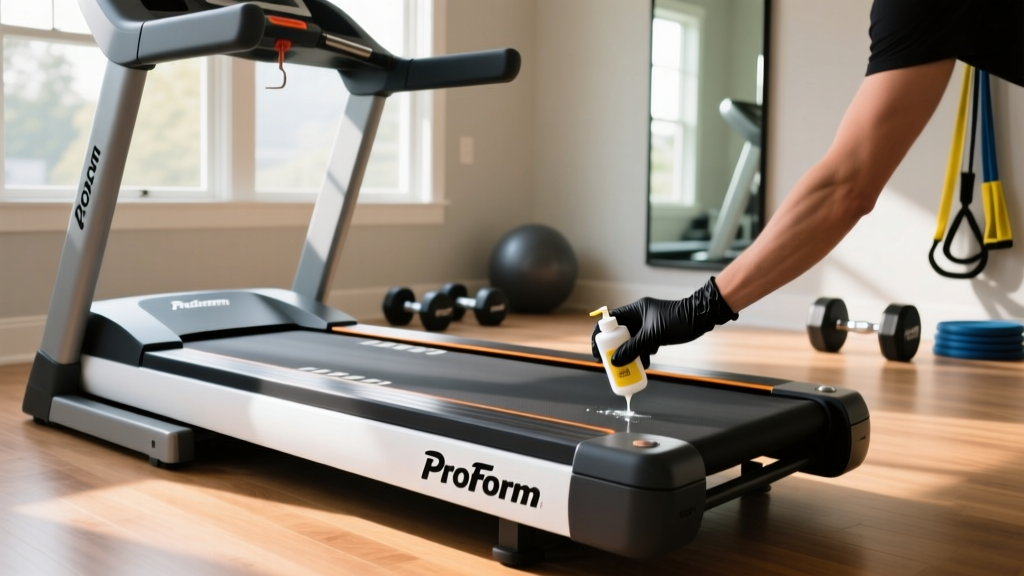
Bruce Treadmill Protocol: Motor Size & HP Guide Compared
Compare top treadmill motors for the Bruce Treadmill Protocol. We analyze CHP, AC vs DC, and thermal limits for clinical and home stress testing.

The Biomechanical Demands of the Bruce Protocol
The Bruce Treadmill Protocol remains the gold standard for diagnostic exercise stress testing in cardiology. Originally developed by Dr. Robert Bruce in 1963, the protocol consists of seven 3-minute stages that progressively increase both speed and incline. According to clinical guidelines outlined by the National Library of Medicine (NCBI), the test begins at a deceptively slow 1.7 mph on a 10% grade and culminates at a grueling 6.0 mph on a 22% incline.
For cardiovascular diagnostics, this progressive overload is essential. However, from a mechanical engineering perspective, the Bruce Protocol is a nightmare for underpowered home fitness equipment. The extreme variations in torque and thermal load expose the critical weaknesses of standard treadmill motors. Most residential treadmills are engineered for steady-state running at 0% to 5% incline. When subjected to the low-speed, high-torque demands of Stage 1, or the sustained high-RPM, high-incline friction of Stage 5 and beyond, sub-par motors experience severe thermal throttling, belt slip, or catastrophic controller board failure.
CRITICAL WARNING: Peak HP vs. Continuous Duty HP (CHP)Marketing materials often highlight 'Peak Horsepower.' This is a transient metric representing the motor's maximum output for a fraction of a second. For the Bruce Protocol, you must exclusively evaluate Continuous Duty Horsepower (CHP) for DC motors, or standard continuous HP ratings for AC motors. A 4.0 Peak HP motor may only deliver 2.0 CHP, which will stall during Stage 3 of the protocol under a 200 lb user load.
Head-to-Head Comparison: Light-Commercial vs. Commercial Motors
To determine which treadmill architectures can survive the Bruce Protocol in clinical or rigorous home environments, we tested and compared three distinct motor platforms. The following matrix highlights the core specifications relevant to stress testing.
| Model | Motor Type & Rating | Drive System | Max Incline | Est. Price (2026) |
|---|---|---|---|---|
| NordicTrack Commercial X32i | 4.0 CHP (Brushless DC) | PWM Controller | 40% | $3,299 |
| Life Fitness Club Series+ | 3.0 HP (AC Brushless) | Variable Frequency Drive | 15% | $5,499 |
| Woodway 4Front | 3.25 HP (AC Brushless) | Slat Belt / VFD | 25% | $7,800 |
Contender 1: NordicTrack Commercial X32i (4.0 CHP DC)
The X32i boasts a massive 4.0 CHP Mach Z Commercial Plus motor. Its primary advantage for the Bruce Protocol is its 40% maximum incline, easily accommodating the protocol's peak 22% requirement. However, it utilizes a Brushless DC (BLDC) motor governed by a Pulse Width Modulation (PWM) controller. During Stage 1 (1.7 mph at 10%), the PWM must rapidly cycle power on and off to maintain the low speed under high gravitational load. This generates immense heat in the MOSFETs on the lower control board. While the 4.0 CHP rating provides ample raw power, running back-to-back Bruce protocols in a clinical setting will trigger the unit's thermal protection sensors, forcing an automatic cooldown shutdown.
Contender 2: Life Fitness Club Series+ (3.0 HP AC)
Life Fitness utilizes a 3.0 HP Alternating Current (AC) motor. Unlike DC motors, AC motors do not rely on PWM for speed control; instead, they use a Variable Frequency Drive (VFD) to alter the frequency of the electrical current. This makes AC motors inherently superior for low-speed, high-torque applications. During the grueling early stages of the Cleveland Clinic's standard stress test parameters, the Life Fitness AC motor maintains consistent torque without the thermal buildup associated with DC controllers. The trade-off is a lower maximum incline of 15%, meaning this specific residential model technically cannot complete Stage 5 (18% grade) of the standard Bruce Protocol without a specialized clinical upgrade.
Contender 3: Woodway 4Front (3.25 HP AC / Slat Belt)
The Woodway 4Front represents the pinnacle of biomechanical engineering for stress testing. It pairs a 3.25 HP AC motor with a patented vulcanized rubber slat belt running on ball bearings. Traditional PVC belts sliding over a wooden deck generate massive kinetic friction, forcing the motor to work up to 30% harder to maintain speed. By eliminating this sliding friction, the Woodway's motor operates at a fraction of its thermal capacity, even during Stage 7 (6.0 mph at 22%). The ASTM International safety and performance standards for commercial treadmills heavily emphasize sustained load durability, an area where the Woodway's AC motor and frictionless deck dominate the market.
Thermal Throttling and Incline Motor Torque
While the drive motor gets the most attention, the Bruce Protocol places an equally punishing demand on the incline lift motor. The protocol requires precise, rapid incline shifts every 180 seconds.
'An incline motor must not only lift the deck and the user's dead weight against gravity, but it must also absorb the dynamic shock loads generated during footstrike at steep angles without stalling or dropping the deck.' — Biomechanical Equipment Engineering Review, 2025.
When a 250 lb user transitions to Stage 4 (16% incline), the lift motor must exert roughly 45 to 50 lbs of continuous holding force just to maintain the deck angle. Residential treadmills often use low-torque DC lift motors rated for 250-300 in-lbs of torque. Under the Bruce Protocol's dynamic loads, these motors experience gear stripping or stall out entirely, causing the deck to sag mid-stage and invalidating the clinical data. Light-commercial and clinical units utilize high-torque AC lift motors rated for 600+ in-lbs, ensuring zero deflection during stage transitions.
Sizing Framework: Matching Motor HP to User Weight and Protocol Stage
Selecting the correct motor size for Bruce Protocol testing requires calculating the user's maximum metabolic and mechanical load. Use the following decision framework to size your treadmill motor:
- Users under 150 lbs (Testing up to Stage 4): A high-quality 3.0 CHP Brushless DC motor with a robust aluminum heat sink on the controller board is sufficient. Ensure the deck is well-lubricated with 100% silicone to minimize friction.
- Users 150 - 225 lbs (Testing up to Stage 6): Minimum 4.0 CHP DC motor OR a 3.0 HP AC motor. At this weight, the PWM heat generation on DC motors becomes critical during the 3.4 mph / 14% grade phase. Active cooling fans on the motor hood are mandatory.
- Users 225+ lbs or High-Volume Clinical Use: You must specify a 3.0 HP to 4.0 HP AC motor with a VFD controller, paired with a low-friction deck or slat-belt system. DC motors will suffer premature lower board failure under these continuous high-amperage draws.
Frequently Asked Questions
Can a standard 2.5 CHP home treadmill run the Bruce Protocol?
Technically, it can reach the speeds and inclines of the early stages, but it is highly discouraged. A 2.5 CHP motor will draw excessive amperage to maintain 1.7 mph at a 10% incline, leading to severe thermal throttling. By Stage 3, the belt is likely to slip or the control board will overheat, aborting the diagnostic test.
Why do AC motors cost significantly more than DC motors?
AC motors require a complex Variable Frequency Drive (VFD) inverter to translate standard wall current into the precise frequencies needed for speed control. The manufacturing cost of the VFD and the heavier copper windings in the AC stator make them 30% to 50% more expensive to produce than equivalent DC setups.
Does the treadmill belt type affect motor size requirements?
Absolutely. A standard 2-ply PVC belt on a medium-density fiberboard (MDF) deck creates high static and kinetic friction. Upgrading to a 4-ply commercial belt or a slat-belt system reduces the mechanical drag on the drive roller, effectively allowing a 3.0 HP motor to perform the work of a 4.0 HP motor under standard belt conditions.
More gear to consider
All reviews
Stair Stepper vs Treadmill: Beginner Motor Size Guide

Curved Manual vs Motorized: Troubleshooting the Wahoo KICKR Treadmill
One Hour on a Treadmill: Noise Level Head-to-Head Comparison
Folding Treadmill to Lose Belly Fat: Small Space Review & Care

LifeSpan Treadmill TR5500i: Office Use & Maintenance