Best Adjustable Dumbbells for Rear Deltoid Dumbbell Exercises (2026)
Master rear deltoid dumbbell exercises with our beginner guide. Compare 2026's top adjustable dumbbells for grip, micro-loading, and isolation.

Why Your Adjustable Dumbbell Choice Dictates Rear Delt Success
The posterior deltoid is a notoriously stubborn muscle group. Unlike the chest or lats, the rear delts are relatively small and highly susceptible to being overpowered by larger surrounding muscles like the rhomboids and lats. For beginners, mastering rear deltoid dumbbell exercises requires strict isolation, controlled tempos, and, crucially, the right equipment.
While adjustable dumbbells are the undisputed kings of home gym space-saving, not all models are created equal when it comes to shoulder isolation. The handle length, weight increment precision, and physical footprint of the dumbbell head can make or break your rear delt activation. A bulky dumbbell might clank against its counterpart during a chest-supported fly, while a restrictive cage design might limit the natural wrist rotation needed for a neutral-grip row.
In this step-by-step beginner's guide, we will break down the exact biomechanics of three foundational rear delt movements and review the top adjustable dumbbells of 2026 to see which models actually support proper rear deltoid development.
Step-by-Step: 3 Beginner-Friendly Rear Deltoid Dumbbell Exercises
Before diving into the gear, you must master the movements. The American Council on Exercise (ACE) emphasizes that rear delt isolation relies on minimizing scapular retraction (squeezing the shoulder blades together) to prevent the mid-traps from taking over the lift.
1. Chest-Supported Rear Delt Fly
This is the gold standard for beginners because the incline bench removes momentum and lower-back strain from the equation.
- Setup: Set an adjustable bench to a 30-to-45-degree incline. Grab a light pair of adjustable dumbbells (start with 5 to 10 lbs).
- Positioning: Lie face down with your chest firmly pressed against the pad. Let your arms hang straight down with a slight bend in the elbows, palms facing each other.
- Execution: Initiate the movement by raising the dumbbells out to the sides in a wide arc. Imagine you are trying to touch the walls on either side of you.
- The Squeeze: Stop when your arms are parallel to the floor. Hold for one second. Do not pinch your shoulder blades together.
- Return: Lower the weight slowly over 3 seconds back to the starting position.
2. Bent-Over Neutral Grip Row (Elbows Flared)
While rows are typically a back exercise, flaring the elbows shifts the mechanical tension directly onto the rear delts.
- Setup: Stand with feet shoulder-width apart, holding your dumbbells in a neutral grip (palms facing your thighs).
- Hinge: Push your hips back and hinge forward until your torso is nearly parallel to the floor. Keep a flat back.
- Execution: Instead of pulling the dumbbells to your hips (which targets the lats), pull them straight up toward the ceiling, driving your elbows out at a 75-degree angle from your torso.
- Return: Lower the dumbbells under control, feeling the stretch in the back of your shoulders.
3. Seated Leaning Lateral-Rear Raise
This unilateral movement is excellent for fixing muscle imbalances and requires a dumbbell with a comfortable, non-slip grip.
- Setup: Sit on the edge of a flat bench with a single dumbbell in your right hand.
- Lean: Lean your torso to the left, resting your left forearm on your left thigh for support. Your right arm should hang straight down.
- Execution: Raise the dumbbell out to the side, leading with your elbow, until your arm is parallel to the floor.
- Return: Lower slowly and repeat for 12-15 reps before switching sides.
2026 Adjustable Dumbbell Comparison Matrix
How do the market leaders stack up specifically for rear delt isolation? We evaluated them based on grip ergonomics, micro-loading capabilities, and physical footprint.
| Model | Weight Range | Increments | Handle / Grip Style | Rear Delt Suitability | 2026 Price |
|---|---|---|---|---|---|
| Nuobell 80lb | 5 - 80 lbs | 5 lbs | Standard 5.9" Knurled | Excellent (Flyes) | $449 |
| PowerBlock Elite USA | 5 - 50 lbs | 2.5 lbs (w/ add-ons) | Caged / Urethane | Good (Rows) | $369 |
| Bowflex SelectTech 552 | 5 - 52.5 lbs | 2.5 lbs (up to 25 lbs) | Long 14.5" Contoured | Fair (Bench Interference) | $399 |
In-Depth Reviews: Top Picks for Rear Delt Training
Nuobell 80lb: Best for Natural Grip & Flyes
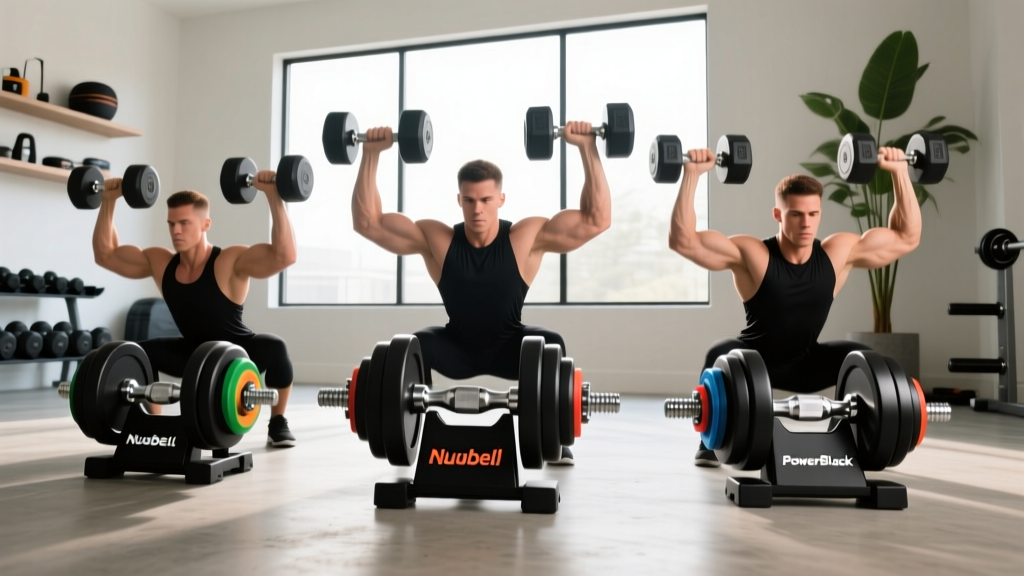
When performing chest-supported rear delt flyes, the physical dimensions of your dumbbell matter immensely. The Nuobell 80lb utilizes a twisting handle mechanism that mimics the exact feel, length (5.9 inches), and knurling of a traditional commercial hex dumbbell.
The Rear Delt Advantage: Because the handle is short and the weight plates stack tightly against the center, you will not experience the annoying "clanking" sound or physical interference that occurs when using longer adjustable dumbbells at the bottom of a flye movement. The 5lb increments are slightly large for absolute beginners doing rear delt work (where 7.5 lbs might be the sweet spot), but Nuobell's recent 2025/2026 add-on kits allow for 2.5lb micro-loading, solving this issue entirely.
Edge Case / Failure Mode: The twisting dial mechanism relies on internal plastic gears. Dropping a Nuobell dumbbell from shoulder height after a fatiguing set of bent-over rows can shear these internal teeth, permanently jamming the weight selection. Always place them gently on the rack.
PowerBlock Elite USA: Best for Durability & Compact Rows
The PowerBlock Elite series features a unique rectangular cage design. While it looks unconventional, it is virtually indestructible and offers the most compact footprint on the market.
The Rear Delt Advantage: For bent-over neutral grip rows with flared elbows, the PowerBlock shines. The caged handle allows your wrist to sit securely inside the block, providing immense stability when pulling heavy loads (relative to rear delt standards, e.g., 25-35 lbs). The urethane coating also means you can safely rest them on your thighs during seated leaning raises without tearing your skin or the dumbbell grip.
Edge Case / Failure Mode: The cage restricts full wrist supination. If you attempt to transition from a neutral grip to a pronated (palms down) grip mid-set for a rear delt fly, the steel bars of the cage will dig into your forearms, making it a poor choice for traditional flye variations.
Bowflex SelectTech 552: Best Budget Micro-Loading
The Bowflex 552 remains a staple in home gyms due to its accessible dial system and excellent micro-loading capabilities at the lower weight tiers.
The Rear Delt Advantage: Beginners often struggle to find the right weight for rear delts, needing jumps as small as 2.5 lbs. The Bowflex allows 2.5 lb increments from 5 lbs all the way up to 25 lbs. This granular control is phenomenal for progressive overload on isolation movements like the seated leaning raise.
Edge Case / Failure Mode: The SelectTech 552 has an overall length of 14.5 inches, and this length does not change as you lower the weight. During chest-supported flyes, the long plastic ends of the dumbbells will frequently collide with each other at the bottom of the movement, preventing a full stretch of the rear deltoid and potentially cracking the plastic weight trays if forced together.
Warning: Never drop adjustable dumbbells. Unlike solid cast-iron hex dumbbells, the internal selector pins, dials, and plastic housings of adjustable models are highly susceptible to impact fractures. A dropped dumbbell mid-row can result in a weight plate disengaging and falling on your foot.Common Beginner Mistakes & Equipment Limitations
- Overloading the Ego: The rear deltoid is a small, pennate muscle. Using 30 lb adjustable dumbbells for flyes will almost certainly result in the rhomboids and traps hijacking the movement. Stick to the 5 to 15 lb range and focus on the mind-muscle connection.
- Ignoring the Bench Angle: If your incline bench is set too high (above 45 degrees), the mechanical tension shifts away from the rear delts and onto the upper traps. Keep the bench low.
- Gripping Too Tightly: Squeezing the knurled handle of your Nuobell or PowerBlock with a death grip activates the forearm flexors and biceps, leading to premature arm fatigue before the rear delts are fully stimulated. Use a "hook grip" or lift straps for high-rep sets.
Frequently Asked Questions
Can I build big rear delts using only adjustable dumbbells?
Yes. Muscle hypertrophy is driven by mechanical tension, metabolic stress, and muscle damage, not the specific type of equipment used. Adjustable dumbbells provide ample resistance (up to 80 lbs on models like the Nuobell) to stimulate rear delt growth for the vast majority of natural lifters. The key is utilizing strict form and taking sets close to muscular failure.
Why do my rear delts only get sore from cables and not dumbbells?
Cables provide constant tension throughout the entire range of motion, whereas dumbbells rely on gravity, meaning there is zero tension on the rear delt at the very bottom of a standing bent-over fly. To mimic cable tension with dumbbells, utilize the chest-supported incline fly or seated leaning raise, which alters the gravity vector to keep tension on the muscle for a longer portion of the arc.
What is the best adjustable dumbbell increment for rear delt training?
For beginners, 2.5 lb increments are ideal. The rear delts fatigue quickly, and a 5 lb jump (e.g., moving from 10 lbs to 15 lbs) represents a massive 50% increase in load, which will likely break down your form. If your adjustable dumbbells only offer 5 lb jumps, utilize half-reps or slower eccentric tempos (4-second negatives) to increase difficulty without adding weight.
More gear to consider
All reviews
How Heavy Are The Dumbbells You Lift TV Show? Kettlebell Value Guide

Chest Supported Row with Dumbbells: Neoprene Grip Mistakes & Fixes

Overhead Dumbbell Hold Errors: Adjustable Dumbbell Fixes

Olympic Barbell Knurling Guide & Dumbbell Lateral Shoulder Raise Tips

Budget Breakdown: Is a Loadable Dumbbell the Best Weighted Pull Ups Dumbbell?