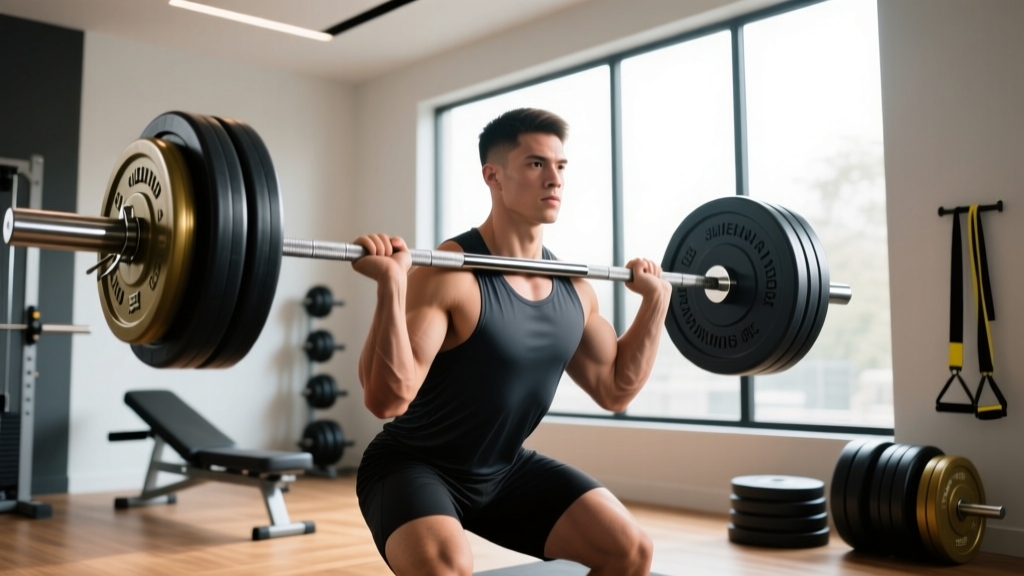
Beyond Dumbbells for Flabby Arms: Olympic Barbell Weight & Knurling Guide
Transitioning from dumbbells for flabby arms? Compare top Olympic barbells based on weight, shaft diameter, and knurling to maximize arm hypertrophy.

The Progressive Overload Problem with Light Dumbbells
If you have spent the last few months searching for the best dumbbells for flabby arms, you have likely accumulated a collection of 5lb, 8lb, and perhaps 10lb neoprene hex dumbbells. While these are excellent for neuromuscular activation and initial endurance building, they fundamentally fail to address the biomechanical requirement for long-term arm toning and hypertrophy: progressive overload. The triceps brachii and biceps brachii are powerful muscle groups that quickly adapt to low-resistance, high-repetition stimuli.
According to a comprehensive dose-response meta-analysis published in the National Center for Biotechnology Information (NCBI), maximizing muscle hypertrophy requires pushing muscles close to failure with progressively heavier loads over time. To truly transform arm composition, you must graduate from light dumbbells to the unmatched loading capacity of an Olympic barbell. Exercises like the close-grip bench press, barbell skull crushers, and strict barbell curls allow you to load the arms with 45 to 95+ pounds, triggering the mechanical tension required for deep tissue remodeling.
However, not all Olympic barbells are created equal. When your primary focus shifts to arm isolation and heavy pressing, the weight tolerance, shaft diameter, and knurling pattern of the bar become critical variables. In this 2026 head-to-head buying guide, we are comparing two of the most popular multipurpose Olympic barbells on the market—the Rogue Ohio Bar and the Rep Fitness Colorado Bar—to determine which is the ultimate weapon for your arm-day arsenal.
Expert Insight: The Grip Fatigue Factor
When performing heavy barbell curls or skull crushers, your forearm flexors and wrist stabilizers often fail before your biceps or triceps do. The diameter of the barbell shaft and the aggressiveness of the knurling directly dictate how much grip fatigue you will experience. Choosing the wrong bar can severely limit your arm hypertrophy potential.
Head-to-Head Contender Profiles
Before we dissect the metallurgy and knurl geometry, let us establish the baseline specifications of our two contenders. Both bars are priced competitively in the 2026 market, hovering between $299 and $345, and both boast a 190,000 PSI tensile strength rating. Yet, their physical geometries yield vastly different experiences during arm isolation work.
| Specification | Rogue Ohio Bar (Cerakote) | Rep Fitness Colorado Bar |
|---|---|---|
| Shaft Diameter | 28.5mm | 28.0mm |
| Tensile Strength | 190,000 PSI | 190,000 PSI |
| Knurling Type | Volcano (Medium-Aggressive) | Mild / Shallow (Smooth) |
| Bushing Material | Composite | Copper |
| Center Knurl | No | No |
| Approx. 2026 Price | $345.00 | $299.00 |
Shaft Diameter & Weight Tolerance: The 28mm vs. 28.5mm Debate
When evaluating an Olympic barbell buying guide, weight capacity and tensile strength are usually the first metrics discussed. Both the Rogue Ohio and Rep Colorado bars feature a 190,000 PSI tensile strength. This means the steel can withstand immense downward force (well over 700 lbs of loaded plates) before suffering permanent deformation or 'bending.' For arm exercises, where total loaded weight rarely exceeds 135 lbs, both bars offer virtually infinite weight tolerance and zero structural whip.
However, the true differentiator for arm training is the shaft diameter. The Rogue Ohio Bar utilizes the industry-standard 28.5mm shaft. This thickness is ideal for powerlifting and general fitness, providing a robust feel in the hand. The Rep Fitness Colorado Bar, conversely, features a 28.0mm shaft.
Why 28mm Wins for Arm Isolation
For lifters transitioning from dumbbells for flabby arms to heavy barbell work, a 28.0mm shaft is a biomechanical game-changer. During strict barbell curls, a thicker 28.5mm shaft forces the wrist into greater extension and demands higher grip strength to prevent the bar from rolling down the fingers. A 28.0mm shaft reduces the moment arm on the wrist joint, allowing you to maintain a neutral, stacked wrist position. This ensures that the biceps brachii reach muscular failure before the forearm flexors give out. Similarly, on skull crushers, the slightly thinner shaft reduces tricep tendon strain at the elbow insertion point when the bar is at the bottom of the movement.
Knurling Analysis: Volcano vs. Mild Patterns
Knurling is the cross-hatched pattern machined into the steel shaft to provide friction. According to the BarBend Olympic Barbell Buying Guide, knurl depth and geometry dictate how 'aggressive' the bar feels. This is arguably the most overlooked variable when buying a barbell for hypertrophy-focused arm training.
Rogue's Volcano Knurl: The Grip King
Rogue utilizes a 'Volcano' knurl pattern on the Ohio Bar. Instead of sharp, pointed peaks (which tear calluses), the machine cuts a crater into the top of the peak. This provides immense surface area and friction without acting like a cheese grater on your hands. For heavy close-grip bench presses targeting the triceps, this aggressive grip ensures the bar will not slip, even when sweat accumulates during high-volume supersets.
Rep's Mild Knurl: The High-Rep Savior
The Colorado Bar features a much milder, shallower knurl. While this might be a detriment for heavy 1-rep max deadlifts, it is a massive advantage for high-rep arm isolation. When performing sets of 12-15 barbell curls, the bar naturally shifts and rolls within the palm of your hand. An aggressive knurl will rip the skin on your palms by rep 10. The Rep mild knurl provides 'just enough' grip to secure the bar, while allowing the micro-adjustments necessary to protect your skin during high-volume arm pumps.
The Center Knurl Rule: Notice that neither of these bars features a center knurl. If you are buying a barbell specifically for arm and upper-body isolation, avoid powerlifting bars with aggressive center knurls. Resting a coarse center knurl against your sternum during close-grip bench presses or front raises will cause severe skin abrasion and discomfort over time.
Sleeve Construction & Spin: Protecting the Elbow Joint
The sleeves of an Olympic barbell (the 16.3-inch ends where the weight plates load) dictate how the bar rotates. This rotation is managed by bushings or bearings. Both the Ohio and Colorado bars use bushings, which is correct for arm work—bearings are too fast and can cause instability during slow, controlled eccentric curls.
- Rogue Ohio Bar (Composite Bushings): Composite (often UHMW plastic) bushings are incredibly durable, quiet, and require zero maintenance. They offer a slightly stiffer spin, which provides a stable, predictable feel during heavy tricep extensions.
- Rep Colorado Bar (Copper Bushings): Copper or sintered bronze bushings offer a smoother, more fluid rotation. During barbell curls, as your wrists naturally supinate and pronate through the range of motion, the copper bushings allow the sleeve to spin independently of the shaft, reducing rotational torque on the medial epicondyle (the inner elbow). This is crucial for lifters prone to golfer's elbow or tendonitis.
Cost vs. Value Breakdown in 2026
At $345, the Rogue Ohio Bar remains the gold standard for durability and warranty backing. The Cerakote finish ensures the shaft will not rust, even in a humid garage gym where sweat is prevalent during grueling arm circuits. However, you are paying a premium for the brand name and the 28.5mm shaft, which is less than ideal for pure arm isolation.
The Rep Fitness Colorado Bar, at $299, offers a superior geometric profile for arm training. The 28.0mm shaft, combined with the skin-friendly mild knurl and copper bushings, makes it a specialized tool disguised as a multipurpose bar. For the lifter specifically aiming to overhaul their arm composition and move past the limitations of light dumbbells, the Colorado Bar delivers higher functional value for the specific biomechanics of curls and extensions.
Final Verdict: Upgrading Your Arm-Day Arsenal
If your fitness journey began with a search for dumbbells for flabby arms, congratulations on reaching the stage where progressive overload with an Olympic barbell is necessary. The transition from 10lb hex dumbbells to a 45lb Olympic barbell will shock your triceps and biceps into new growth, provided you select the right tool.
For the generalist who wants one barbell to handle heavy squats, deadlifts, and occasional arm work, the Rogue Ohio Bar is an indestructible, lifetime investment. But if your primary 2026 goal is maximizing arm hypertrophy, minimizing wrist strain, and performing high-volume isolation work without tearing your hands, the Rep Fitness Colorado Bar is the undisputed champion. Its 28mm shaft and mild knurling are precisely what the biomechanics of heavy arm training demand.
More gear to consider
All reviews
Rubber Hex vs Urethane Dumbbells for Your Beginner Dumbbell Workout Plan PDF
Power Rack vs Squat Rack vs Stand: Dumbbell Scaption Setup
Neutral Grip Dumbbell Overhead Press vs Kettlebells: 2026 Market Data
Loadable Dumbbell Care for Your Female Arm Workout With Dumbbells

Loadable Dumbbell Maintenance for a Perfect Static Dumbbell Hold
