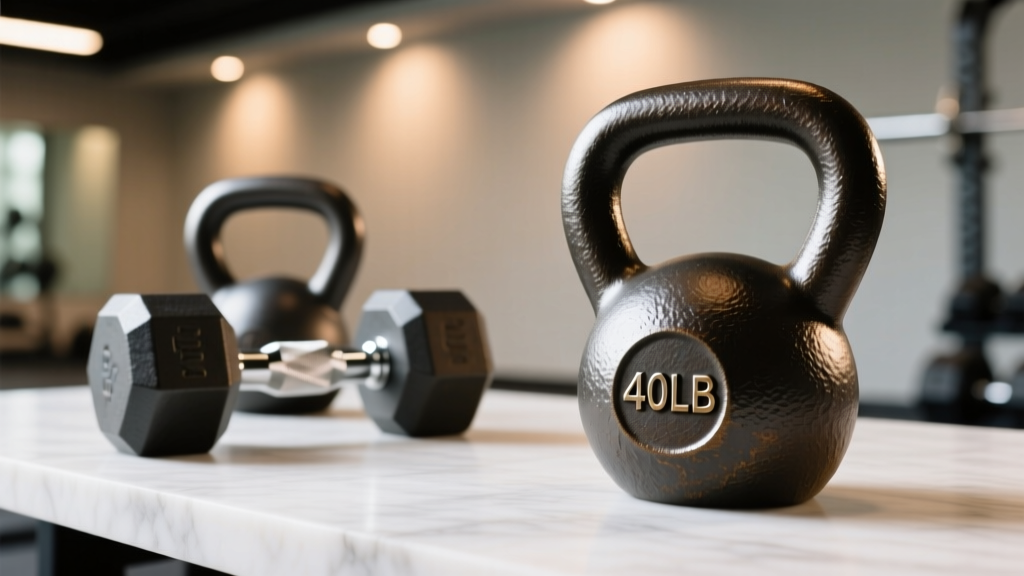
Cast Iron vs Competition Kettlebells: Upper Chest Workout Dumbbell?
Expert 2026 review comparing cast iron vs competition kettlebells, plus biomechanics on pairing them with an upper chest workout dumbbell routine.

The 2026 Home Gym Dilemma: Metallurgy Meets Biomechanics
Building a comprehensive free-weight arsenal in 2026 requires navigating a maze of manufacturing standards, material costs, and biomechanical realities. For kettlebell purists and hybrid athletes alike, the foundational debate remains unchanged: cast iron vs. competition steel. However, modern lifters are increasingly asking how these traditional ballistic tools integrate into hypertrophy-focused bodybuilding splits. Specifically, can a kettlebell effectively replace or supplement your go-to upper chest workout dumbbell routine?
In this expert hands-on review, we dissect the exact dimensional tolerances, coating durability, and pricing shifts of today's top kettlebells. Furthermore, we bridge the gap between functional fitness and aesthetic bodybuilding by analyzing clavicular (upper chest) muscle recruitment when swapping traditional dumbbells for kettlebells. Whether you are outfitting a garage gym or refining your periodization, this guide provides the actionable data you need to spend your equipment budget wisely.
Anatomy of the Bell: Cast Iron vs. Competition Steel
To the untrained eye, a kettlebell is simply a cannonball with a handle. To a strength coach, the millimeter-level differences in handle diameter, horn width, and center of mass dictate the success of your training cycle. According to the educational standards outlined by StrongFirst, the tool must match the intended adaptation.
Cast Iron: The Traditionalist's Choice
Cast iron kettlebells are poured into molds, meaning their physical dimensions scale with their weight. A 12kg bell is significantly smaller than a 32kg bell. This creates a shifting center of mass and varying handle diameters (typically ranging from 33mm to 40mm+ depending on the brand and weight). They are ideal for 'grinds' like heavy presses and Turkish get-ups, where a thicker handle and compact bell profile provide superior stability in the rack position.
Competition Steel: The Standardized Athlete
Competition kettlebells are forged from steel and feature a hollow core filled with steel shot or ball bearings to achieve the target weight. The defining characteristic is uniformity: every competition bell, from 8kg to 48kg, shares the exact same dimensions (roughly 210mm in height and diameter) and a strict 33mm handle diameter. This consistency ensures that your technique and muscle memory remain identical regardless of the load, making them the undisputed king for high-repetition ballistics like snatches and jerks.
⚠️ Expert Warning: Coating Failure ModesWhen buying cast iron in 2026, pay close attention to the finish. E-coat (electrophoretic deposition) penetrates the iron pores, offering superior rust resistance but yielding a smoother, sometimes slippery grip. Powder coating provides excellent chalk retention and grip but is prone to chipping on concrete floors; once the iron is exposed, humidity will cause rapid oxidation. Competition bells typically use bare steel or zinc plating, requiring occasional wiping with a light machine oil to prevent surface corrosion.
Hands-On Review: 2026 Market Leaders
We tested the most prominent models on the market, evaluating knurling aggression, handle clearance, and price-per-pound metrics.
1. Rogue Fitness E-Coat Cast Iron Kettlebells
- Price Range: $1.95 - $2.35 per pound (varies by weight tier)
- Handle Diameter: 33mm (up to 24kg), scaling up to 35mm+ on heavier bells
- The Verdict: Rogue's machined flat bottoms are a standout feature, eliminating the wobble common in cheaper cast bells during renegade rows or pull-throughs. The e-coat finish is virtually bombproof against rust, though lifters with dry hands will need chalk for heavy snatches. The handle clearance (window) is generous enough for a two-handed swing but snug enough to prevent the bell from shifting during single-arm cleans.
2. Kettlebell Kings Competition Series
- Price Range: $4.10 - $5.50 per pound
- Handle Diameter: Strict 33mm across all weights
- The Verdict: As detailed on the Kettlebell Kings official catalog, these are IUKF (International Union of Kettlebell Fitness) spec-compliant. The color-coded bodies (Yellow for 16kg, Green for 24kg, Red for 32kg) make weight selection seamless in a group class or busy garage gym. The 33mm handle is heavily chamfered at the horns, preventing forearm bruising during high-volume clean cycles. However, the premium pricing reflects current steel tariffs and shipping costs, making them a serious investment.
Bridging the Gap: The Upper Chest Workout Dumbbell Alternative
While kettlebells dominate the posterior chain and shoulder stability realms, aesthetic-focused lifters frequently ask if they can replace their traditional upper chest workout dumbbell presses with kettlebell variations. To answer this, we must look at the biomechanics of the clavicular head of the pectoralis major.
According to exercise biomechanics databases like ExRx.net, targeting the upper chest requires shoulder flexion and horizontal adduction on an incline plane (typically 30 to 45 degrees). Here is how the tools compare:
The Kettlebell Squeeze Press (Adduction Focus)
By pressing two kettlebells together (the 'squeeze press') on a flat or slight incline bench, you create continuous inward tension. This maximizes horizontal adduction, leading to intense inner-pectoral contraction. However, the bulky spherical shape of the kettlebell limits the deep stretch at the bottom of the movement, which is a critical driver of mechanical tension and hypertrophy.
The Bottom-Up Kettlebell Press (Stabilizer Focus)
Pressing a kettlebell in the 'bottom-up' position on an incline bench recruits massive amounts of rotator cuff and serratus anterior musculature to stabilize the offset center of mass. While excellent for shoulder health and core integration, the extreme stabilization demand limits the absolute load you can lift, making it suboptimal for pure upper chest muscle growth.
Why the Dumbbell Still Wins for Hypertrophy
When programming a dedicated upper chest workout dumbbell routine, traditional adjustable dumbbells (like the Nuobell 80 or PowerBlock Pro 90) remain superior for three reasons:
- Ergonomic Grip: The neutral, cylindrical handle allows for natural wrist supination and pronation, reducing joint stress during heavy incline presses.
- Deep Stretch: Dumbbells allow you to drop the elbows below the torso, maximizing sarcomere lengthening and muscle damage.
- Micro-loading: Adjustable dumbbells allow for 2.5 lb to 5 lb increments, essential for progressive overload in smaller muscle groups like the upper pecs.
Expert Synthesis: Do not replace your dumbbells; supplement them. Use heavy incline dumbbell presses for primary mechanical tension, and finish the workout with kettlebell incline squeeze presses to drive metabolic stress and adduction fatigue.
Financial Matrix: Cost and Application Breakdown
Equipment budgets in 2026 require strategic allocation. Use the matrix below to determine which style aligns with your training methodology.
| Feature | Cast Iron (Classic) | Competition (Steel) |
|---|---|---|
| Primary Use Case | Grinds, Hypertrophy, General Fitness | Ballistics, Sport-Specific, Endurance |
| Average Cost (24kg) | $115 - $130 | $210 - $240 |
| Handle Consistency | Variable (thicker on heavier bells) | Strict 33mm universally |
| Durability Risk | Coating chips, potential rust | Denting on steel floors |
| Space Efficiency | High (smaller bells take less room) | Low (uniform large footprint) |
Final Expert Recommendations
If your training revolves around Kettlebell Sport, high-rep snatches, or you require strict technical consistency across varying loads, the investment in Competition Steel is non-negotiable. The 33mm handle and uniform window will save your forearms from bruising and allow your nervous system to adapt purely to the load, not the geometry of the tool.
Conversely, if you are a hybrid athlete blending powerlifting, bodybuilding, and functional conditioning, Cast Iron is the superior financial and practical choice. The compact profile of a 32kg or 40kg cast iron bell is vastly easier to maneuver during heavy Turkish get-ups and floor presses than a bulky competition bell of the same weight.
Finally, remember the principle of the right tool for the right job. While kettlebells offer incredible versatility for core stability and explosive power, isolation and targeted hypertrophy—such as an optimized upper chest workout dumbbell protocol—still demand the ergonomic precision and micro-loading capabilities of high-quality adjustable dumbbells. Build your rack with intention, respect the biomechanics, and let the data drive your purchases.
More gear to consider
All reviews
How to Hit Back with Dumbbells & Barbell Collar Guide

Olympic vs Standard Plates for the Single Hand Dumbbell Row

EZ Bar vs Straight Bar: Triceps Workout Dumbbells Only Budget Guide

Olympic vs Standard Plates: Sizing for Your Dumbbell Hip Thrust Belt

Barbell Collars vs. Dumbbell Kettlebell Handle Clamps Compared
