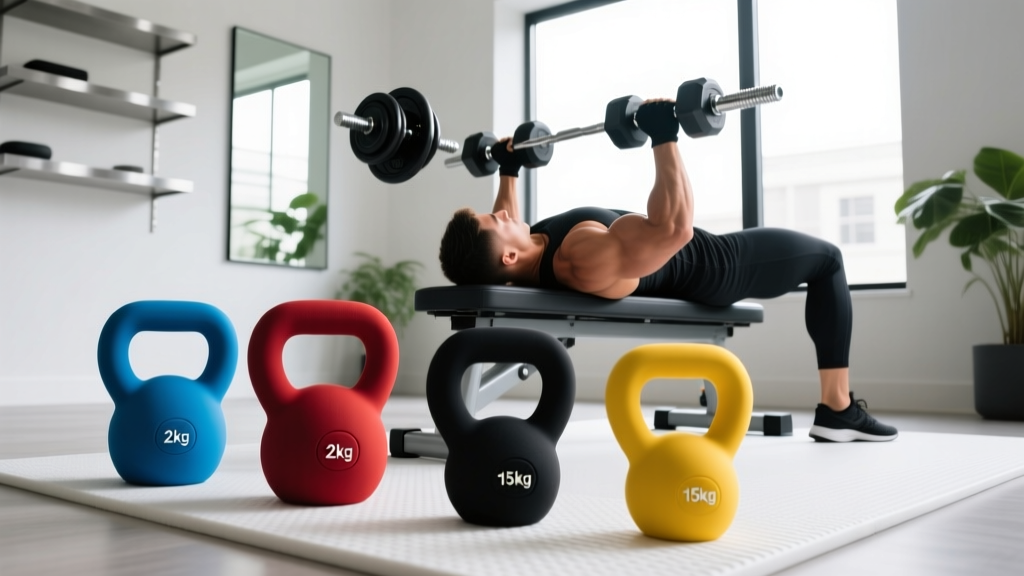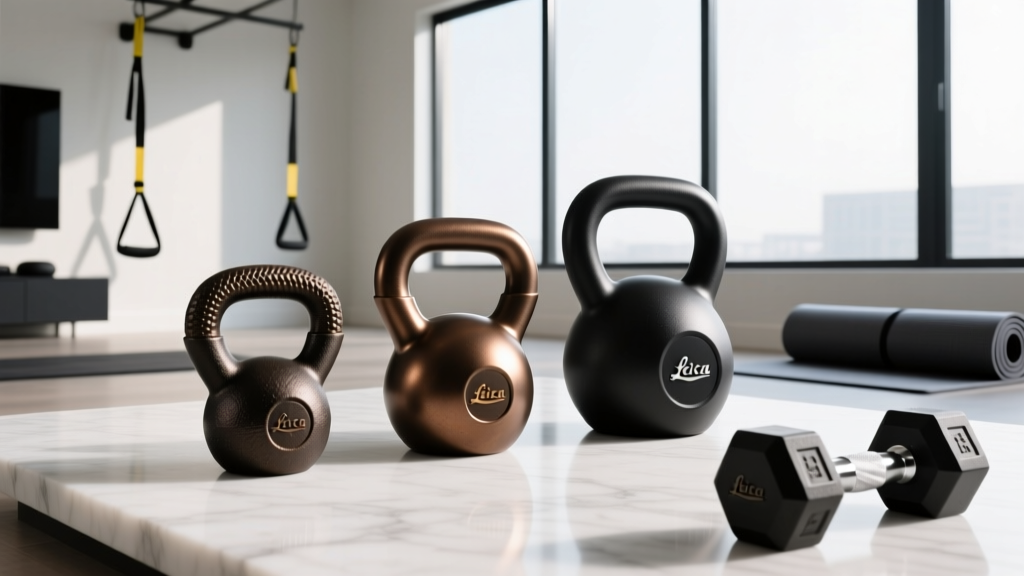
Beyond the Dumbbell Pec Workout: 2026 Kettlebell Market Analysis
Analyze the 2026 shift from the classic dumbbell pec workout to functional training with our deep-dive cast iron vs. competition kettlebell buying guide.

The 2026 Free Weight Paradigm: Isolation vs. Ballistic
The fitness equipment market in 2026 is defined by a fascinating bifurcation in consumer training philosophies. On one side, traditional bodybuilding and isolated hypertrophy routines—anchored by the enduring popularity of the classic dumbbell pec workout—continue to dominate commercial gym floors and social media fitness trends. On the other side, functional, multi-planar, and ballistic training has driven a massive, sustained surge in kettlebell sales. Consumers are no longer choosing one over the other; instead, they are building hybrid home gyms that demand both precision isolation tools and dynamic ballistic implements.
While the adjustable dumbbell market has largely consolidated around magnetic dial systems and urethane hex designs, the kettlebell market remains deeply fragmented. For the hybrid home gym owner looking to complement their dumbbell arsenal, navigating the kettlebell sector requires a clear understanding of the two dominant manufacturing paradigms: Cast Iron and Competition (Steel). This trend report and buying guide deconstructs the 2026 kettlebell market, analyzing pricing, biomechanical applications, and manufacturing failure modes to help you make an evidence-based purchasing decision.
2026 Market Snapshot: Free Weights Sector
- Hypertrophy Segment: Adjustable dumbbells and fixed urethane bells remain the highest-volume sellers, driven by the isolation demands of the modern dumbbell pec workout and split routines.
- Functional/Ballistic Segment: Kettlebell sales have grown by an estimated 14% year-over-year, driven by the mainstreaming of kettlebell sport, CrossFit, and tactical fitness programs.
- Price per Pound Index: Cast iron averages $1.20–$1.80/lb; Competition steel averages $2.50–$4.50/lb.
Deconstructing the Kettlebell Market: Cast Iron vs. Competition
To the uninitiated, a kettlebell is simply a cannonball with a handle. To the informed buyer, the metallurgical composition, dimensional tolerances, and handle geometry dictate the tool's lifespan and utility. According to comprehensive equipment analyses by Garage Gym Reviews, the divergence between cast iron and competition kettlebells represents two entirely different approaches to strength training.
Cast Iron Kettlebells: The Home Gym Workhorse
Cast iron kettlebells are produced by pouring molten iron into a mold. Because they are solid metal, their physical size scales linearly with their weight. An 8kg cast iron bell is significantly smaller than a 32kg bell. This variance in dimensions means that the center of mass, handle thickness, and window size (the gap between the handle and the bell) change as you move up in weight.
Market Leaders & Pricing: In 2026, the Rogue Fitness Powder Coat Kettlebell ($1.50/lb) and the Rep Fitness E-Coat Kettlebell ($1.20/lb) dominate the premium cast iron space. Budget options from big-box retailers often hover around $0.90/lb but suffer from severe quality control issues.
Failure Modes & Edge Cases: The most common failure point in budget cast iron bells is the mold seam. If the manufacturer fails to grind the seam flush where the handle meets the bell, it will tear calluses during high-rep snatches or cleans. Additionally, poorly cured powder coats can chip when bells clash, while cheap painted finishes will flake off entirely within six months of outdoor use.
Competition Kettlebells: The Standardized Elite
Competition kettlebells are engineered for uniformity. Regardless of whether the bell weighs 8kg or 48kg, the external dimensions are strictly standardized (typically 210mm height, 168mm width, and a 33mm handle diameter). To achieve this, lighter weights are manufactured with a hollow steel shell and filled with internal ballast (often steel shot or machined plugs) to reach the target mass.
Market Leaders & Pricing: Kettlebell Kings Competition ($2.80/lb) and Eleiko Sport ($4.50+/lb) represent the gold standard. These are the implements used in IUKL and WKSF sanctioned kettlebell sport events.
Failure Modes & Edge Cases: The primary risk in purchasing lower-tier competition bells is the internal filler. Cheap manufacturers use loose sand or low-grade steel shot that can settle or rattle over time, altering the bell's center of mass and creating a distracting acoustic signature during overhead lockouts. Premium brands use solid steel machined plugs welded into the cavity to prevent this.
Specification & Pricing Matrix (2026 Data)
| Feature | Cast Iron (Standard) | Competition (Steel) |
|---|---|---|
| Material | Solid Cast Iron | Hollow Steel Shell w/ Filler |
| Dimensions | Scales with weight | Uniform (210x168mm) |
| Handle Diameter | Varies (30mm - 35mm+) | Strict 33mm |
| Best For | Grinds, Goblet Squats, General Fitness | Snatches, Jerks, Kettlebell Sport |
| Avg. Cost (2026) | $1.20 - $1.80 / lb | $2.50 - $4.50 / lb |
Biomechanical Overlap: Pressing Mechanics and the Dumbbell Pec Workout
Why does the distinction between cast iron and competition matter to an athlete whose primary upper-body focus is the traditional dumbbell pec workout? The answer lies in grip geometry and pressing biomechanics. As noted in comparative analyses by BarBend, the implement you choose drastically alters muscle recruitment patterns.
The classic dumbbell pec workout (encompassing flat bench presses, incline presses, and flyes) relies on an ergonomically contoured handle that allows the wrist to remain neutral while the elbow tracks naturally, maximizing pectoralis major stretch and isolation. Dumbbells are designed to minimize stabilizer fatigue so the prime movers (the pecs) can be pushed to absolute failure.
Kettlebells, conversely, are anti-isolation tools. When performing a kettlebell floor press or a bottoms-up press, the thick, uniform handle (especially the 33mm competition standard) demands immense grip strength and forearm activation. The offset center of mass forces the rotator cuff and serratus anterior to work overtime to stabilize the joint. Therefore, kettlebell pressing should not replace your dumbbell pec workout if pure chest hypertrophy is the goal. Instead, it serves as a vital complementary stimulus for shoulder health, grip endurance, and core integration.
'Athletes who exclusively rely on the highly stabilized environment of the dumbbell pec workout often develop imbalances in their stabilizing musculature. Introducing offset, thick-handled kettlebell presses bridges the gap between raw power and functional joint resilience.'
— 2026 Functional Strength Coaching Symposium
Strategic Purchasing Framework for 2026
If you are outfitting a home gym and already possess a high-quality set of adjustable dumbbells for your isolation work, how should you allocate your kettlebell budget? Follow this decision matrix:
Scenario A: The Hypertrophy & General Fitness Hybrid
Recommendation: Buy Cast Iron.
If your kettlebell use is limited to goblet squats, Romanian deadlifts, heavy swings, and occasional Turkish get-ups, cast iron is the superior financial choice. The varying handle thicknesses of heavier cast iron bells (often 35mm on a 32kg bell) actually provide a better grip surface for heavy, two-handed grinds than the strict 33mm competition handle. Target Buy: Rep Fitness E-Coat 16kg and 24kg pair (Approx. $85 - $130 total).
Scenario B: The Ballistic & Endurance Athlete
Recommendation: Buy Competition.
If you plan to engage in high-rep snatches, clean and jerks, or kettlebell sport, you must buy competition bells. The uniform dimensions mean your technique, rack position, and overhead lockout do not need to be recalibrated every time you change weights. Furthermore, the smooth, squared-off steel handles of competition bells glide over the skin during high-rep snatches, whereas the rounded, textured handles of cast iron bells will rip your palms to shreds. Target Buy: Kettlebell Kings Competition 16kg, 20kg, 24kg set (Approx. $250 - $300 total).
Final Market Verdict
The 2026 free weights market rewards the educated consumer. While the isolation-focused dumbbell pec workout remains a cornerstone of upper-body hypertrophy, the integration of kettlebells provides the functional, multi-planar stimulus that modern athletes demand. By understanding the metallurgical and dimensional differences between cast iron and competition kettlebells, you can avoid costly purchasing errors and build a truly comprehensive, hybrid training arsenal.
More gear to consider
All reviews
Setup Guide: Biceps Exercises With Dumbbells At Home
Upgrade Your Dumbbell Arm Routine: Barbell Weight & Knurl Guide
Cast Iron vs Competition Kettlebells & Dumbbell Shoulder Press Muscles

Best Loadable Dumbbells CrossFit Athletes Use for Small Spaces

Rack Storage & Care for Your Dumbbell Workout Routine Full Body