
Beyond Dumbbell Kick Backs: Power Rack vs Squat Rack vs Squat Stand
Transitioning from dumbbell kick backs to heavy squats? Compare power racks, squat racks, and squat stands with exact specs, pricing, and safety tips.

The Home Gym Progression: From Isolation to Heavy Compounds
Most home gym owners begin their fitness journey with a pair of adjustable dumbbells and a bench. In those early stages, your programming likely revolves around isolation movements and unilateral work—think goblet squats, Romanian deadlifts, and dumbbell kick backs for triceps hypertrophy. While dumbbells are phenomenal tools for building a foundation, correcting imbalances, and achieving metabolic fatigue, there comes a critical threshold in every lifter's progression where spinal loading and heavy bilateral compound movements become non-negotiable for continued strength gains.
Once you outgrow the maximum weight of your adjustable dumbbells or decide to pursue a 300-pound barbell back squat, you need a safe, stable infrastructure to catch missed reps and rack heavy loads. This is where the great home gym debate begins: should you invest in a full power rack, a half squat rack, or a minimalist squat stand? As of 2026, the market has standardized around 11-gauge steel for premium mid-tier options, but the footprint, safety mechanics, and attachment ecosystems vary wildly between these three categories.
This guide breaks down the exact specifications, spatial requirements, and failure modes of power racks, squat racks, and squat stands to help you make an informed, safety-first purchasing decision.
Defining the Big Three: Cage, Half-Rack, and Stand
Before diving into the metallurgy and pricing, it is vital to understand the structural differences that dictate how each piece of equipment handles kinetic force and spatial constraints.
- Power Rack (Full Cage): A four-upright steel cage that completely encloses the lifter. It features adjustable safety straps or pin-pipe safeties that catch the barbell inside the footprint of the rack.
- Squat Rack (Half Rack): Typically features two main front uprights with a rear stabilizing base and weight storage horns. The safety spotter arms extend outward, meaning the lifter squats outside the main footprint of the rack.
- Squat Stand: Two independent (or lightly cross-braced) uprights designed solely to rack the barbell. Spotter arms extend forward, and the unit requires a significantly smaller footprint but demands strict attention to center-of-gravity physics.
Head-to-Head Comparison Matrix
The following table compares the industry-standard benchmarks for each category, reflecting 2026 pricing and typical specifications from top-tier manufacturers.
| Feature | Power Rack (e.g., Rogue R-3) | Half Rack (e.g., Rogue HR-2) | Squat Stand (e.g., Rogue SML-1) |
|---|---|---|---|
| Upright Profile | 3x3" 11-Gauge Steel | 3x3" 11-Gauge Steel | 2x3" 11-Gauge Steel |
| Standard Height | 90" or 108" | 90" | 90" |
| Footprint (Depth x Width) | 49" x 49" (or 43" x 43") | 43" x 49" | 24" x 49" |
| Average Price Range | $995 - $1,350 | $850 - $1,100 | $350 - $495 |
| Safety Mechanism | Internal Pin Pipes / Straps | External Spotter Arms | External Spotter Arms |
| Floor Anchoring | Highly Recommended | Mandatory for Heavy Use | Absolute Requirement |
Deep Dive: Power Racks (Full Cages)
Specs, Pricing, and the Attachment Ecosystem
A full power rack is the undisputed king of the home gym. Because you perform your lifts inside the cage, the safety bars catch the weight directly beneath the uprights, eliminating the lever-arm tipping hazard present in half racks and stands. In 2026, the gold standard for a power rack is the 3x3-inch 11-gauge steel profile with 5/8-inch hardware. According to equipment analysts at Garage Gym Reviews, this specific profile has become the baseline for serious lifters due to its compatibility with a massive ecosystem of attachments, from lat pulldown towers to monolifts.
When shopping for a power rack, pay close attention to hole spacing. Premium racks feature 'Westside' hole spacing—1-inch gaps in the bench press and squat zones—allowing you to set the safety pins exactly where you need them without leaving a dangerous 3-inch gap where a crushed ribcage could occur.
WARNING: The 14-Gauge Failure ModeBudget power racks found on Amazon often use 14-gauge steel (approx. 0.075 inches thick). If you miss a 400lb squat and drop the bar asymmetrically onto one safety pin, the sheer lateral torque can permanently bend a 14-gauge upright, rendering the rack unsafe. Always verify the steel gauge is 11 or lower (thicker) before purchasing.
Deep Dive: Squat Racks (Half Racks)
Space Efficiency vs. External Spotter Arms
Half racks, such as the Titan T-2 Half Rack or Rogue HR-2, offer a compelling middle ground. They save roughly 12 to 18 inches of depth compared to a full cage because the rear of the rack is used for weight plate storage horns rather than a second set of uprights. This rear weight storage acts as a crucial counterbalance.
However, half racks introduce a specific physics problem: the lifter squats in front of the uprights, and the spotter arms extend outward. If you fail a rep and dump a loaded barbell onto the very tip of the extended spotter arms, you create a massive forward lever. If the rear weight storage horns are not loaded with heavy bumper plates, or if the rack is not bolted to a wooden platform, the entire unit can tip forward onto the lifter. The National Strength and Conditioning Association (NSCA) consistently emphasizes that external spotter arms must be secured with counter-weighting or physical anchoring to mitigate tipping hazards during maximal effort lifts.
Deep Dive: Squat Stands
Minimalism, Mobility, and Severe Safety Constraints
Squat stands are essentially two independent pillars with J-cups. They are incredibly popular for apartment dwellers, garage gyms with severe spatial limitations, or lifters who prioritize Olympic weightlifting (where dropping the bar to the floor is the norm, and safeties are rarely used). A high-end pair like the Rogue SML-1 90" Squat Stand costs around $395 and utilizes robust 2x3" 11-gauge steel.
The primary failure mode of squat stands is user error regarding the spotter arms. Many beginners set the spotter arms too wide or fail to realize that the stands have virtually zero rear counterbalance. If you are doing heavy rack pulls or kipping pull-ups on the crossbar, squat stands can easily slide across rubber matting. Actionable Advice: If you buy squat stands, you must bolt them to a 3/4-inch plywood platform or use specialized stand bases that allow you to load weight plates directly over the feet to pin them to the floor.
The Ceiling Height Conundrum (Spatial Constraints)
One of the most overlooked edge cases in rack purchasing is ceiling height. A standard residential ceiling in the US is 8 feet (96 inches). If you buy a standard 108-inch power rack to ensure you have enough clearance for overhead presses and pull-ups, it simply will not fit in your house.
- For 8-Foot Ceilings (96"): You must purchase an 84-inch or 90-inch rack. Be aware that a 90-inch rack leaves only 6 inches of clearance between the top pull-up bar and your ceiling, which is not enough to perform strict pull-ups without hitting your head. You will need to perform pull-ups on the lower crossbar or outside the rack.
- For 9-Foot Ceilings or Garages: A 108-inch rack is ideal. It allows for full overhead pressing, high pull-ups, and the installation of multi-grip pull-up bars or top-mounted lat pulldown attachments.
Frequently Asked Questions
Can I use a squat stand for dumbbell exercises?
Yes, but indirectly. While you don't need a rack for isolation movements like dumbbell kick backs or lateral raises, having a rack allows you to set up an adjustable bench inside or just outside the footprint for heavy dumbbell chest presses, using the safeties as a catch mechanism if a dumbbell slips from your grip.
Are safety straps better than pin-pipe safeties?
For the home gym, heavy-duty nylon safety straps are generally superior to steel pin-pipes. Straps absorb the kinetic energy of a dropped barbell, reducing the shock load on the rack's uprights and minimizing damage to the barbell's knurling and bearings. Furthermore, straps are significantly easier to adjust between sets than spring-loaded steel pins.
Do I need to bolt my power rack to the floor?
While a fully loaded 108-inch power rack is incredibly heavy and stable, manufacturers like Rogue Fitness still recommend bolting the rack to a concrete slab or wooden platform. This prevents 'walking'—the gradual shifting of the rack across your floor mats caused by the vibration of dropping heavy deadlifts or racking aggressive squats.
More gear to consider
All reviews
EZ vs Straight Bar: Space Layouts & Side Raises with Dumbbells

Best Neoprene Dumbbells for Home Dumbbell Work Outs: 2026 Guide

Bumper vs Iron: Space for Strength Training Exercises with Dumbbells
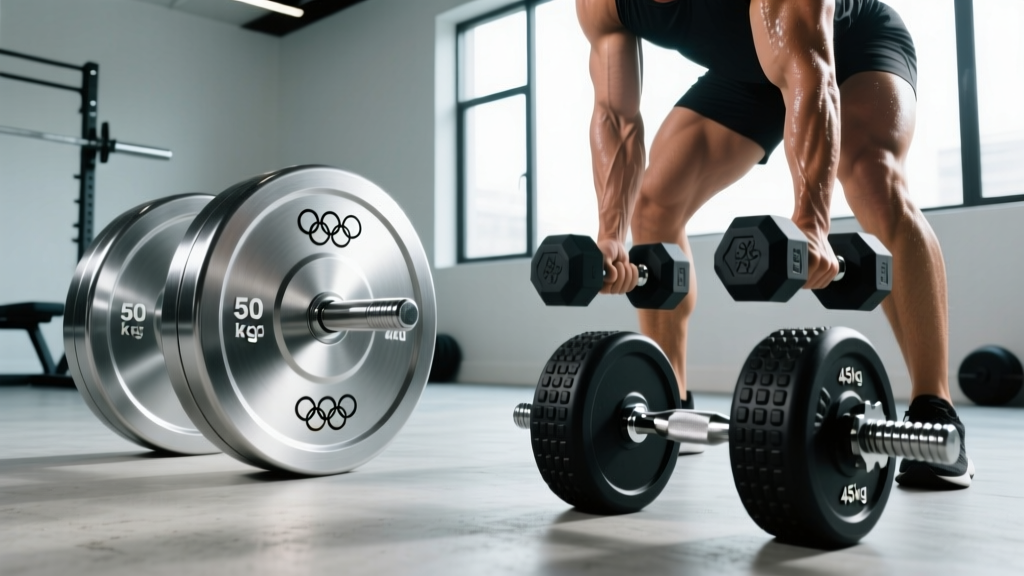
Olympic vs Standard Plates for the CrossFit Dumbbell Push Press

Olympic vs Standard Plates: Guide & Incline Dumbbell Press Form
