Beyond the Biggest Dumbbell Curl: Barbell Knurling Guide
Explore how Olympic barbell weight, tensile strength, and knurling patterns impact heavy arm training and overall lifting performance in 2026.

Beyond the Biggest Dumbbell Curl: Why Barbell Mechanics Matter
When discussing elite arm strength, strength sports forums and strongman circles frequently debate the biggest dumbbell curl ever recorded. From strict 100kg (220lb) feats to legendary cheat-curl exhibitions pushing past 250 pounds, the dumbbell remains a staple for unilateral bicep isolation. However, translating that raw pulling power into a structured, progressive overload program inevitably leads serious lifters back to the Olympic barbell. The barbell allows for absolute bilateral loading, removing the stabilization bottleneck of dumbbells and enabling extreme eccentric overloads.
Yet, not all Olympic barbells are created equal. Using a whippy, poorly knurled weightlifting bar for heavy strict curls or front squats is a fast track to wrist torque and torn skin. As we navigate the fitness equipment landscape in 2026, understanding the nuanced relationship between barbell weight distribution, tensile strength (PSI), and knurling geometry is critical. This guide dissects the exact specifications you need to look for when buying an Olympic barbell optimized for heavy arm training and foundational compound lifts.
Biomechanics Callout: The Wrist Torque Problem
During a heavy barbell curl, the wrists are forced into supination under immense load. If your barbell sleeve utilizes high-speed needle bearings designed for Olympic snatches, the bar will actively try to spin in your hands. This rotational force transfers directly to the distal radioulnar joint, often resulting in severe wrist strain. For heavy arm work and powerlifting, bronze bushings are vastly superior to needle bearings as they provide controlled, low-friction rotation without the aggressive 'spin-out' effect.
Weight, Whip, and Tensile Strength: The Overlooked Variables
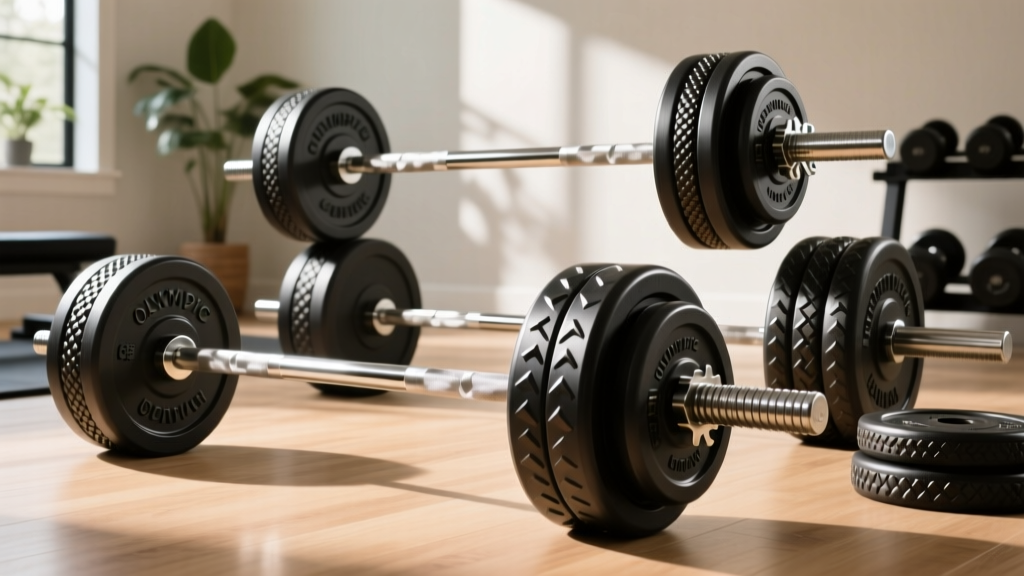
The standard men's Olympic barbell weighs 20kg (44lbs) and measures 2.2 meters in length. However, the internal steel alloy dictates how the bar behaves under load. Tensile strength, measured in Pounds per Square Inch (PSI), determines the bar's yield point—the exact moment the steel bends and fails to return to its perfectly straight state.
The PSI Spectrum
- Under 165,000 PSI: Entry-level bars. These exhibit excessive 'whip' (oscillation). If you attempt a heavy 185lb barbell curl, the eccentric lowering phase will cause the bar to bounce, ruining your time-under-tension and risking bicep tendon strain.
- 190,000 PSI (The Sweet Spot): Multi-purpose bars like the Rogue Ohio Bar sit right here. They offer enough stiffness for heavy curls and bench presses, but retain just enough whip for occasional Olympic lifts.
- 215,000+ PSI: Dedicated power bars. These are essentially steel crowbars. They will not flex during a heavy curl, providing a perfectly stable force curve, but they are entirely unsuited for snatches or cleans.
Decoding Knurling Geometry: Volcano, Mountain, or Hill?
Knurling is the cross-hatched pattern machined into the steel shaft to enhance grip. For lifters chasing massive arm development, grip fatigue is often the limiting factor in heavy hammer curls or reverse-grip barbell curls. The shape and depth of the knurl dictate how the bar locks into the calluses of your palm.
1. Mountain Knurl (Aggressive)
Mountain knurling features sharp, prominent peaks (often 1.5mm deep). It provides an aggressive, almost sandpaper-like bite. While excellent for heavy deadlifts without chalk, using a mountain knurl for high-volume arm work will quickly tear the skin on the inside of your fingers. Kabuki Strength's New Generation Power Bar utilizes a refined mountain knurl that is aggressive but slightly flattened at the tips to mitigate tearing.
2. Volcano Knurl (Optimal for Multi-Purpose)
Volcano knurling is machined to create a 'rim' around a small divot. It grips the skin securely without puncturing it. This is the gold standard for lifters who want a secure hold during heavy barbell curls and bench presses without needing excessive chalk. Depth typically ranges from 1.0mm to 1.2mm.
3. Hill Knurl (Passive)
Found on cheap, budget barbells, hill knurling is shallow and rounded. It offers virtually no grip assistance when hands get sweaty. Avoid these if you are serious about progressive overload.
"Center knurling is a relic of old-school squatting. If you are buying a bar primarily for heavy arm work, pressing, and modern low-bar squats, opt for a bar with a smooth center ring. Resting an aggressively knurled center ring against your sternum during a heavy curl or front rack position will shred your shirt and skin."
— FitGearPulse Engineering Team, 2026 Equipment Report
2026 Olympic Barbell Comparison Matrix
Below is a comparison of three top-tier barbells available in 2026, analyzed specifically for their suitability in heavy upper-body and arm-focused training regimens.
| Barbell Model | Tensile Strength | Knurl Type | Sleeve Rotation | Est. Price (2026) |
|---|---|---|---|---|
| Rogue Ohio Bar (Stainless) | 190,000 PSI | Volcano (Moderate) | Composite Bushings | $395.00 |
| Kabuki New Gen Power Bar | 250,000 PSI | Mountain (Aggressive) | Hardened Bushings | $389.00 |
| Eleiko Olympia WL Bar | 165,000 PSI | Hill/Volcano (Mild) | Needle Bearings | $840.00 |
Analyzing the Data
If your primary goal is to build massive arms and translate that barbell curl strength into heavy bench presses, the Rogue Ohio Bar remains the undisputed king of versatility. Its composite bushings prevent the wrist-torque issue mentioned earlier, and the stainless steel shaft ensures the volcano knurl remains sharp and rust-free for decades, even in humid garage gyms. The Eleiko, while a masterpiece of engineering, is too whippy and its needle bearings are a liability for strict, heavy isolation work.
Shaft Diameter and Grip Fatigue
Another crucial, often ignored variable is shaft diameter. Olympic weightlifting bars feature a 28mm shaft to allow for a 'hook grip' and to maximize whip. Powerlifting bars feature a 29mm or 29.5mm shaft to maximize stiffness. Multi-purpose bars usually sit at 28.5mm.
For heavy reverse-grip curls and hammer variations, a 28.5mm shaft provides the ideal balance. A 29mm power bar can prematurely fatigue the forearms during high-rep bicep work, limiting the actual stimulus reaching the biceps brachii. Conversely, a 28mm shaft might feel slightly too thin when handling loads exceeding 225lbs on strict curls, causing the bar to dig aggressively into the metacarpals.
Edge Cases & Failure Modes: Coating Degradation
In 2026, the market is flooded with Cerakote-finished barbells. While Cerakote offers brilliant colors and high corrosion resistance, it inherently fills in the knurling valleys. A bar with a 1.2mm volcano knurl machined into the steel will effectively become a 0.8mm knurl once coated in Cerakote. If you are buying a Cerakote bar for heavy pulling and curling, you must ensure the manufacturer machines the knurl deeper than standard to compensate for the coating thickness. Bare stainless steel remains the superior choice for preserving exact knurl geometry without the need for oiling or maintenance.
Final Verdict: Building Your Arsenal
Chasing the biggest dumbbell curl is a fun party trick and a great test of unilateral tendon strength. But building a foundational, injury-resistant physique requires the heavy, bilateral overload that only a properly spec'd Olympic barbell can provide. Prioritize a 190,000 PSI tensile strength, bronze or composite bushings, and a stainless steel volcano knurl. By matching your equipment to the specific biomechanical demands of heavy arm and upper-body training, you ensure that your grip never fails before your target muscle does.
More gear to consider
All reviews
EZ Curl Bar vs Straight Bar & Top Weight Plates for Dumbbells
Prostyle Dumbbells & Barbell Collars: Clamp Types Compared

EZ Curl Bar vs Straight Bar: 2026 Trends Beyond All Dumbbell Workouts
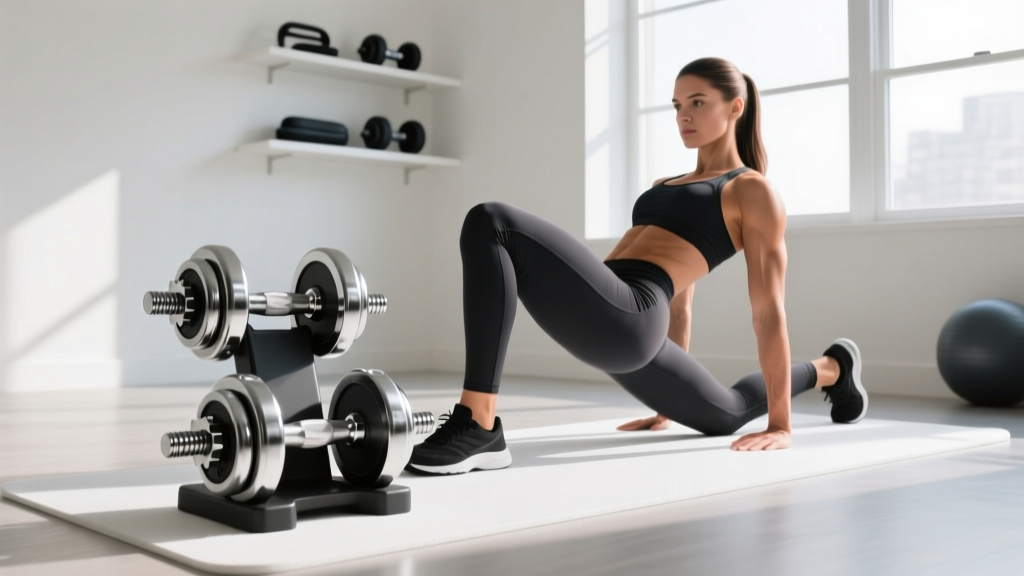
Adjustable Dumbbell Setup: Hamstring Curls at Home with Dumbbells

Bumper vs Iron Plates: Layout Tips & Dumbbell Earrings