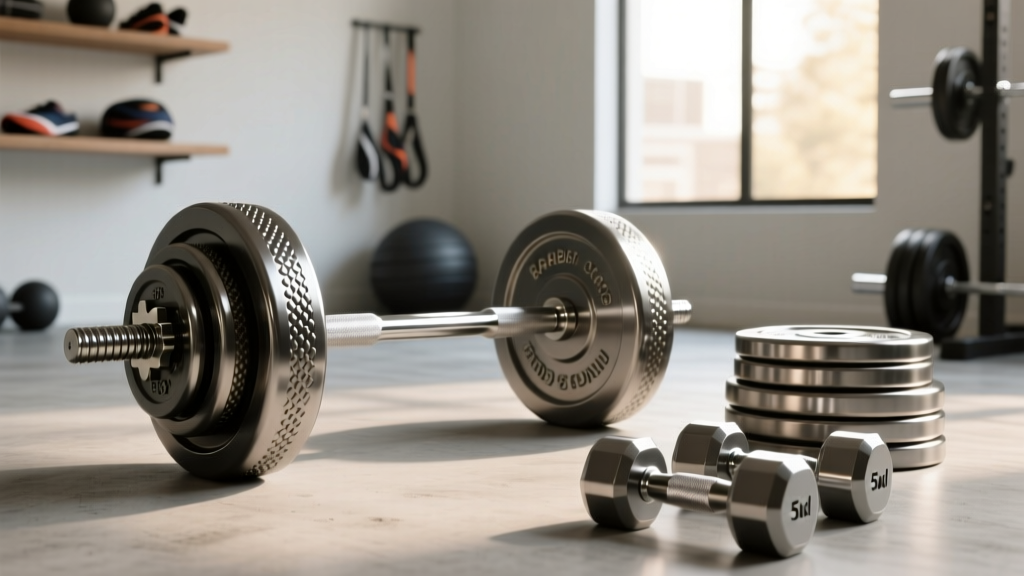
Beyond 5 Pound Dumbbell Exercises: Barbell Weight and Knurling
Transitioning from 5 pound dumbbell exercises to heavy iron? Avoid common buying mistakes with our troubleshooting guide on barbell weight and knurling.

The Transition Trap: Moving From Dumbbells to the Olympic Bar
When athletes finally progress beyond foundational 5 pound dumbbell exercises and step up to the Olympic barbell, they often assume the transition is merely about adding more weight. This is one of the most common mistakes in strength training. While light dumbbells build crucial unilateral stability and neuromuscular control, the barbell introduces an entirely different set of physical variables: axial loading, bar whip, sleeve spin, and knurl aggression.
Treating a 20-kilogram Olympic barbell like a heavy, fixed dumbbell leads to poor equipment purchases, stalled progress, and even injury. Many lifters buy the cheapest barbell they can find online, only to realize the knurling tears their calluses during high-volume work, or the bar lacks the necessary 'whip' for Olympic lifts. This troubleshooting guide dissects the exact specifications you need to understand—specifically barbell weight tolerances and knurling profiles—to ensure your equipment matches your training reality in 2026.
Decoding Barbell Weight: Tolerances, Whip, and Center Knurl
Not all 20kg (44lb) bars are created equal. The International Weightlifting Federation (IWF) Technical Rules mandate strict weight tolerances for competition-grade equipment, but commercial and budget bars often play loose with these numbers.
Weight Tolerances and Yield Strength
A common mistake is ignoring the tensile and yield strength of the barbell shaft, measured in PSI (pounds per square inch). Budget bars often sit around 130,000 PSI, meaning they will permanently bend if dropped with heavy loads. High-quality multi-purpose bars, like the iconic Rogue Ohio Bar, utilize 190,000 PSI steel, while elite weightlifting bars push past 215,000 PSI.
💡 Data Highlight: The True Cost of Weight Tolerance
- Budget Amazon Bars ($80 - $120): Weight tolerance of +/- 500g. Shafts often warp after 6 months of heavy deadlifts.
- Mid-Tier Multi-Purpose ($250 - $350): Weight tolerance of +/- 50g. Excellent for general fitness and CrossFit.
- IWF Certified Competition ($800 - $1,200+): Weight tolerance of +/- 10g. Calibrated for elite sport where every gram matters.
The Center Knurl Controversy
If you are transitioning from dumbbell work to barbell back squats, you might think a center knurl is mandatory for grip. However, a sharp center knurl will severely scrape your collarbones during the clean and jerk. Troubleshooting tip: If your training involves a mix of powerlifting and Olympic lifting, buy a multi-purpose bar with a passive or un-knurled center, or ensure the center knurl is exceptionally mild.
Knurling Profiles: Hill, Mountain, and Volcano
Knurling is the cross-hatched pattern machined into the steel shaft. It is the single most important tactile feature of your barbell. Choosing the wrong profile is a frequent point of failure for lifters upgrading their home gyms.
| Knurl Type | Visual Profile | Aggression Level | Best Application | Example Model (2026) |
|---|---|---|---|---|
| Hill | Rounded peaks, shallow valleys | Low / Passive | High-rep CrossFit, beginners | Rep Fitness PR-1100 |
| Volcano | Diamond pattern with the sharp peak machined flat | Medium / Grippy | Multi-purpose, Olympic lifting | Rogue Ohio Bar ($295-$315) |
| Mountain | Sharp, aggressive, pointed peaks | High / Aggressive | Heavy 1RM Powerlifting | Eleiko IPF Power Bar ($1,100+) |
Why 'Volcano' Knurling Dominates the Multi-Purpose Market
According to engineering breakdowns by Rogue Fitness Barbell Manufacturing, the volcano knurl is created by cutting the standard diamond pattern and then lightly machining off the very tip of the sharp peak. This leaves a microscopic flat surface. The result? You get the deep valleys that provide immense surface area for chalk and skin to grip, but without the sharp peaks that act like cheese graters on your hands during high-rep snatches or cleans.
The Callus Tear Mistake: Lifters moving from light 5 pound dumbbell exercises often lack the thick palmar calluses developed by heavy barbell lifters. If you buy an aggressive 'Mountain' knurl power bar for general fitness, you will tear your hands within the first two weeks. Always default to a Volcano or mild Hill knurl for your first Olympic barbell.
Sleeve Spin: Bushings vs. Bearings
When you perform a dumbbell snatch, the dumbbell rotates freely in your hand. A barbell must also rotate, but the mechanism is internal. The sleeves (where you load the plates) must spin independently of the shaft to prevent the rotational inertia of the plates from tearing your wrists.
Troubleshooting Sleeve Mechanics
- Bronze Bushings: Found in powerlifting and budget bars. They provide a slow, controlled spin. Mistake: Using a bushing bar for Olympic weightlifting. The slow spin will cause wrist pain during the catch phase of a clean.
- Needle Bearings: Found in dedicated weightlifting bars. They allow lightning-fast, frictionless sleeve rotation. Mistake: Paying the premium for needle bearings if you only do slow, heavy powerlifting movements (squat, bench, deadlift), where bushings are actually preferred for stability.
Shaft Diameter: The Hidden Variable
The diameter of the barbell shaft dictates both the grip feel and the 'whip' (elastic deformation) of the bar.
- 28mm (Olympic Weightlifting Standard): Thinner shaft allows for more whip, which aids in the bounce out of the bottom of a clean. Easier for smaller hands to hook grip.
- 28.5mm (Multi-Purpose Standard): The goldilocks zone. Provides enough stiffness for heavy squats while retaining enough whip for occasional Olympic lifts.
- 29mm (Powerlifting Standard): Maximum stiffness. Zero whip. Ideal for bench pressing where bar oscillation can ruin your groove, but terrible for Olympic lifting.
⚠️ Critical Troubleshooting Checklist Before You Buy
Before checking out, verify these three specs against your training goals:
- Are you doing high-rep dynamic movements? Ensure the bar has needle bearings and a 28mm or 28.5mm shaft.
- Do you have sensitive hands or are new to heavy knurling? Avoid 'Mountain' knurls. Look specifically for the word 'Volcano' or 'Passive' in the product description.
- Will you be dropping the bar from overhead? Verify the tensile strength is at least 190,000 PSI to prevent permanent bending.
Final Verdict: Matching the Bar to Your Evolution
Leaving behind the era of 5 pound dumbbell exercises and stepping up to the barbell is a milestone in any lifter's career. However, the barbell is a precision tool, not a blunt instrument. By understanding the nuanced differences between weight tolerances, knurl profiles (Hill, Volcano, Mountain), and sleeve mechanics, you can avoid the costly mistakes that plague most home-gym builders. Invest in a 28.5mm multi-purpose bar with a volcano knurl and bronze bushings or hybrid bearings for the most versatile, trouble-free entry into heavy iron training.
More gear to consider
All reviews
Rubber Hex vs Urethane Dumbbells: Care & Storage Rack Longevity

Beyond Bench Press Using Dumbbells: Barbell Collar Guide

Dumbbell Tenement Definition & Gym Setup: Olympic vs Standard Plates

Top Dumbbell Racks for a 30 Minute Dumbbell Workout Women Love
EZ Curl Bar vs Straight Bar: Dumbbell Shoulder Gym Layouts
