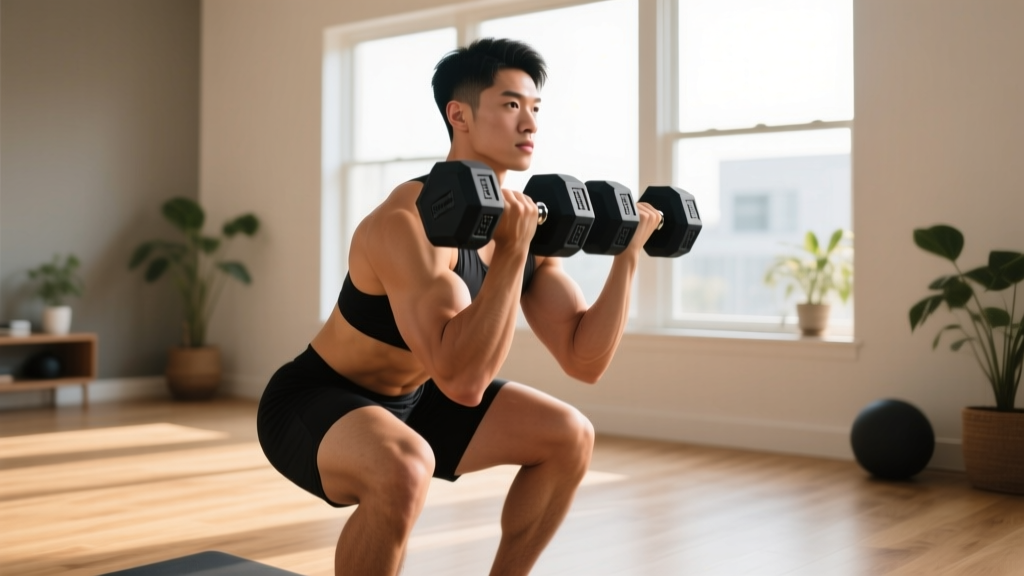
Squats with Dumbbells for Glutes: A Neoprene Home Guide
Master squats with dumbbells for glutes using neoprene-coated weights. This beginner guide covers form, weight selection, and the best home gear.

Building a strong, functional lower body at home does not require a massive power rack or an Olympic barbell setup. For beginners, mastering squats with dumbbells for glutes is one of the most effective ways to stimulate muscle hypertrophy, improve mobility, and build foundational strength. However, the type of dumbbell you use matters immensely in a residential environment. Neoprene-coated dumbbells offer a unique combination of tactile grip, floor protection, and noise reduction that makes them the undisputed champion for home glute workouts.
This comprehensive, step-by-step guide will walk you through the biomechanics of the dumbbell squat, how to select the right neoprene weights, and the exact form required to maximize gluteus maximus activation without compromising your lower back or knees.
Why Neoprene Dumbbells Are the Ultimate Home Gym Upgrade
Neoprene (polychloroprene) is a synthetic rubber that provides a slightly porous, matte finish. Unlike cast iron, which can slip when your hands get sweaty, or hard urethane, which can feel slick and clank loudly against other weights, neoprene offers a secure, quiet grip. When you are performing high-rep sets of sumo squats or goblet squats, grip fatigue is often the limiting factor. The textured surface of neoprene allows you to hold heavier loads securely without the need for lifting chalk—a substance you definitely do not want on your living room floors.
Furthermore, neoprene acts as a shock absorber. When you reach muscular failure and need to safely drop the weights to the floor, the thick coating protects hardwood, laminate, and tile from cracking or denting.
Material Comparison for Home Squats
| Material | Grip Quality (Sweaty) | Floor Safety | Noise Level | Price per Pound |
|---|---|---|---|---|
| Neoprene | Excellent (Tactile) | High (Shock absorbing) | Very Low | $1.40 - $2.00 |
| Hex Rubber | Good (Can be slick) | Medium-High | Low | $1.50 - $2.20 |
| Cast Iron | Poor (Requires chalk) | Low (Can dent floors) | High (Clanking) | $1.00 - $1.50 |
| Urethane | Medium (Smooth) | High | Low | $2.50 - $4.00 |
Choosing the Right Weight for Glute Hypertrophy
The gluteus maximus is the largest and most powerful muscle in the human body. A common mistake beginners make is using 5 lb or 10 lb neoprene dumbbells for squats, which is entirely insufficient to trigger mechanical tension and muscle growth. To build glute tissue, you need to challenge the muscle close to failure.
The 2-Rep Reserve Rule: Choose a weight where the last two repetitions of your 10-12 rep set feel incredibly difficult, but you can still maintain perfect form. If you can easily complete 15 reps, the weight is too light to optimize hypertrophy.Beginner Weight Recommendations:
- Women: Start with a pair of 15 lb to 25 lb neoprene dumbbells. Progress to 30-40 lbs within the first 3-6 months.
- Men: Start with a pair of 25 lb to 35 lb neoprene dumbbells. Progress to 40-50 lbs within the first 3-6 months.
Step-by-Step: Performing Squats with Dumbbells for Glutes
Proper biomechanics are non-negotiable. According to the ExRx Kinesiology Database, the dumbbell squat heavily targets the gluteus maximus and quadriceps, but foot placement dictates the exact ratio of muscle recruitment. Follow these steps meticulously.
Step 1: The Setup and Stance
Stand with your feet roughly 1.2 to 1.5 times shoulder-width apart. Point your toes outward at a 15 to 30-degree angle. This external rotation accommodates your hip anatomy and allows your pelvis to sink between your femurs at the bottom of the movement. Hold a neoprene dumbbell in each hand, arms hanging straight down by your sides (suitcase squat position), or hold one heavy dumbbell vertically against your chest (goblet position).
Step 2: The Descent (Eccentric Phase)
Initiate the movement by simultaneously breaking at the hips and knees. Imagine you are closing a car door with your glutes while bending your knees. Keep your chest proud and your core braced as if preparing for a punch. Lower yourself under control for a 2-to-3-second count. The neoprene grip will ensure the dumbbells don't slip against your thighs during this slow descent.
Step 3: The Hole (Bottom Position)
Descend until your hip crease drops below the top of your knee (parallel or slightly below). The glutes experience maximum stretch-mediated hypertrophy in this lengthened, bottom position. Pause for one second at the bottom to eliminate the stretch reflex and ensure your muscles, not momentum, initiate the ascent.
Step 4: The Ascent (Concentric Phase)
Drive through your mid-foot and heels. Push your knees outward so they track directly over your second and third toes. Squeeze your glutes forcefully as you rise, but avoid hyperextending your lower back at the top. Keep a neutral spine throughout.
3 Neoprene Dumbbell Squat Variations for Maximum Glute Activation
Once you master the standard dumbbell squat, incorporate these variations to target the glutes from different angles. The ACE Fitness Exercise Library emphasizes that varying your movement patterns prevents overuse injuries and ensures comprehensive muscular development.
- Neoprene Goblet Squat: Hold a single heavy dumbbell (25-40 lbs) vertically against your chest. The front-loaded counterbalance allows you to stay more upright, which facilitates greater depth and superior glute activation at the bottom of the squat. Ideal for beginners struggling with ankle mobility.
- Neoprene Sumo Squat: Take a very wide stance (twice shoulder-width) with toes pointed out at 45 degrees. Hold one heavy dumbbell with both hands hanging between your legs. This variation heavily recruits the gluteus maximus and the adductor magnus (inner thighs).
- Bulgarian Split Squat: Elevate your rear foot on a couch or chair. Hold a neoprene dumbbell in each hand. This unilateral movement fixes left-to-right strength imbalances and places an immense, isolated stretch on the glute of the working leg.
Common Form Mistakes and Biomechanical Fixes
Even with the best equipment, poor form will rob you of glute gains and invite injury. Watch out for these specific failure modes:
- Knee Valgus (Caving In): If your knees collapse inward during the ascent, you are shifting tension away from the glutes and onto the knee ligaments. Fix: Place a mini resistance band just above your knees and actively push outward against the band while squatting.
- Butt Wink: This occurs when your pelvis tucks under at the very bottom of the squat, rounding your lumbar spine. Fix: Stop your descent just before the tuck occurs, and work on ankle dorsiflexion mobility and hip flexor stretching outside of your squat sessions.
- Heel Lift: Rising onto your toes shifts the load entirely to the quadriceps and calves. Fix: Elevate your heels by standing on a pair of 2.5 lb or 5 lb neoprene weight plates, or wear weightlifting shoes with a raised heel.
Top Neoprene Dumbbell Sets for Home Gyms
Not all neoprene coatings are created equal. Cheap imports often use thin layers that peel or emit a toxic chemical odor. When investing in gear for squats with dumbbells for glutes, prioritize dense cast-iron cores with thick, odorless neoprene shells.
1. CAP Barbell Neoprene Hex Dumbbell Set
Price Range: $1.75 - $2.10 per pound.
Why it wins: CAP Barbell remains the industry standard for commercial-grade home equipment. Their neoprene coating is exceptionally thick, and the hexagonal shape prevents the weights from rolling away when you set them down between heavy sets of goblet squats. The handles feature a contoured, ergonomic grip that reduces forearm fatigue.
2. Yes4All Neoprene Coated Dumbbells
Price Range: $1.30 - $1.60 per pound.
Why it wins: The best budget-friendly option that does not sacrifice quality. Yes4All uses a solid cast iron core and a vibrant, color-coded neoprene shell. The color-coding is highly practical for home gyms, allowing you to quickly grab the right weight for drop-sets without squinting at the engraved numbers.
3. Amazon Basics Neoprene Dumbbell Hand Weights
Price Range: $1.50 - $1.80 per pound.
Why it wins: Excellent for absolute beginners who need lighter weights (5 lbs to 15 lbs) to practice the goblet squat movement pattern before moving to heavier loads. The non-slip grip is reliable, though the hex shape is slightly less pronounced than CAP Barbell, meaning they can roll slightly on uneven floors.
Pro Maintenance Tip: Neoprene is highly durable, but it is susceptible to degradation from prolonged UV exposure and the acidic nature of human sweat. Always wipe your dumbbells down with a damp cloth and mild soap after your glute workouts to prevent the coating from breaking down or becoming sticky over time.
Final Thoughts on Your Glute Journey
Mastering squats with dumbbells for glutes is a cornerstone of any effective home fitness routine. By pairing proper biomechanical execution with high-quality, floor-safe neoprene dumbbells, you create a sustainable, joint-friendly environment for long-term muscle growth. Start with a conservative weight, prioritize depth and control, and progressively overload your sets as your glutes adapt. Your home gym is now fully equipped to build serious lower-body strength.
More gear to consider
All reviews
Standard vs Olympic Plates: The Dumbbell Handle Weight Trap
Dumbbell Around the World: Adjustable Dumbbell Review & Fixes

Barbell Buying Guide: Knurling & Seated Dumbbell Press Muscles Worked

Upgrading Your Dumbbell Complete Body Workout: Barbell Clamps

Power Rack vs Squat Rack vs Stand: Dumbbell Rowing Exercises Guide
