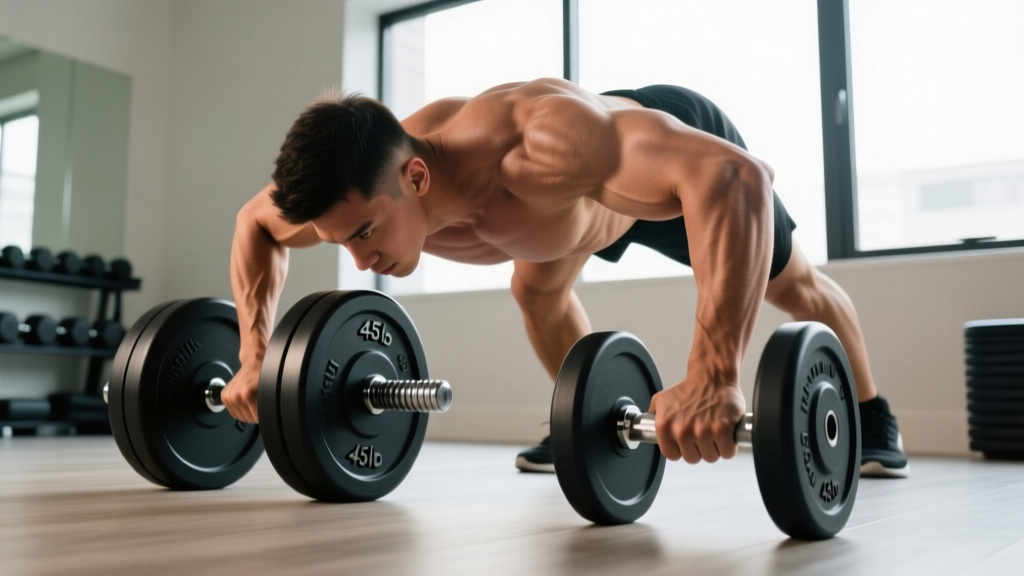
Bent Over Two Dumbbell Row with Palms In: Olympic vs Standard Plate Fixes
Troubleshoot the bent over two dumbbell row with palms in. Learn how Olympic vs standard weight plate sizes impact grip clearance, form, and loading.

The Biomechanical Clash: Why Plate Choice Ruins the Neutral Grip Row
As home gym setups evolve in 2026, loadable dumbbell handles have become a staple for lifters looking to save space and money without sacrificing heavy resistance. However, when you transition from fixed hex dumbbells to plate-loaded handles, a hidden biomechanical conflict emerges—especially during pulling movements. The most notorious culprit? The bent over two dumbbell row with palms in (also known as the neutral-grip dumbbell row).
This exercise is a cornerstone for latissimus dorsi development. By keeping the palms facing each other (neutral grip), you allow the elbows to track tightly along the torso, maximizing lat engagement and minimizing the risk of shoulder impingement. But when you introduce weight plates into the equation, the physical dimensions of your gear can literally block your range of motion. Understanding the critical differences between Olympic and standard weight plates is the first step in troubleshooting your form and equipment setup.
⚠️ Equipment Warning: Never mix 1-inch standard plates on 2-inch Olympic sleeves with adapter clips, or vice versa. The resulting instability during a bent-over row can lead to catastrophic sleeve slippage and lower back injuries.Olympic vs Standard Weight Plates: Sizing Up the Interference
To troubleshoot the bent over two dumbbell row with palms in, we must look at the exact specifications of the plates you are loading. The core issue is plate diameter and sleeve bulk. When your palms face inward, the dumbbell is oriented vertically relative to the floor. The top edge of the weight plate will travel directly toward your ribcage and lats during the concentric (pulling) phase.
| Plate Weight | Standard (1-Inch Hole) Diameter | Olympic (2-Inch Hole) Diameter | Impact on Neutral Grip Row |
|---|---|---|---|
| 5 lbs | 7.0 inches | 7.5 inches | Minimal interference; allows full scapular retraction. |
| 10 lbs | 9.0 inches | 9.0 inches | Moderate clearance; may brush the lats on deep pulls. |
| 25 lbs | 11.5 inches | 13.5 inches | High interference; Olympic plates will strike the ribs early. |
| 45 lbs | 14.0 inches | 17.7 inches | Exercise failure; impossible to complete the range of motion. |
As highlighted by the biomechanics data on ExRx's Dumbbell Bent Over Row guide, full scapular retraction and elbow travel past the torso are mandatory for peak lat contraction. If a 13.5-inch Olympic 25lb plate hits your ribs before your elbow passes your torso, you are losing the most valuable portion of the lift.
Troubleshooting Common Plate-Loading Mistakes
Mistake 1: The 'Rib Strike' and Premature Deceleration
The Error: Loading 25lb or 45lb Olympic cast-iron or bumper plates onto your dumbbells for the bent over two dumbbell row with palms in. As you pull the weight up, the massive diameter of the Olympic plate collides with your latissimus dorsi or lower ribs. Anticipating this collision, your central nervous system triggers a premature deceleration, cutting off the top 20% of the range of motion.
The Fix: You must manipulate plate diameter, not just total weight. Instead of loading one 25lb Olympic plate per side, stack two 10lb Olympic plates and one 5lb Olympic plate (total 25lbs). Because 10lb and 5lb Olympic plates share a 9-inch or smaller diameter, you maintain the necessary clearance to pull the dumbbell high into your hip pocket without hardware interference.
Mistake 2: Standard 1-Inch Spin-Lock Wobble
The Error: Using cheap standard 1-inch spin-lock dumbbell handles. While standard plates are generally thinner and have slightly smaller diameters than their Olympic counterparts, the 1-inch sleeve tolerances are notoriously poor. During the eccentric (lowering) phase of the row, the plates shift and rattle. This micro-instability forces your forearm flexors and grip to work overtime, causing your grip to fail before your back muscles are fully fatigued.
The Fix: If you are committed to standard plates, upgrade your collars. Ditch the factory spin-nuts and use Rogue Loadable Dumbbell Handles or high-quality aftermarket snap-clip collars designed for 1-inch bars to eliminate lateral plate shift.
Mistake 3: Compensatory Elbow Flaring
The Error: To avoid the plates hitting their torso, lifters subconsciously flare their elbows out at a 45-to-60-degree angle. This instantly shifts the mechanical load away from the lats and onto the rhomboids, rear deltoids, and biceps. You are no longer performing a true neutral-grip lat row; you have accidentally turned it into an upper-back row.
The Fix: Record your set from a posterior-lateral angle. If your elbows are flaring, drop the plate size to a 9-inch diameter (10lb plates) and focus on dragging the medial (inner) edge of the dumbbell handle directly along your shirt seam.
Pro-Tip for 2026 Home Gyms: If you frequently program heavy neutral-grip rows, invest in Olympic Urethane Grip Plates. The built-in handholds not only make loading easier, but the urethane coating is significantly thinner than crumb-rubber bumpers, saving crucial millimeters of clearance against your torso.
Equipment Matrix: Choosing the Right Handle and Plate Combo
To execute the bent over two dumbbell row with palms in flawlessly, your equipment must match your biomechanics. Use this decision matrix to audit your current free weights setup.
- For Heavy Rows (80+ lbs per hand): Use 2-inch Olympic Loadable Handles with a minimum 6.5-inch sleeve length. Load exclusively with 10lb and 5lb Olympic iron or urethane plates to maintain a 9-inch maximum diameter. Estimated Cost: $135 for handles + $2.50/lb for machined iron plates.
- For High-Rep Hypertrophy (30-50 lbs per hand): Standard 1-inch handles are acceptable if paired with rubber-grip standard plates. The smaller 1-inch center hole allows for a slightly longer sleeve, meaning you can stack more 5lb plates without running out of room. Estimated Cost: $30 for handles + $1.50/lb for rubber grip plates.
- For Unilateral Deficit Rows: If you are performing the row with one arm while bracing the other on a bench, plate diameter matters less because the working arm is pulled slightly away from the torso's midline. You can safely use 25lb Olympic plates (13.5-inch diameter) here without rib interference.
Step-by-Step Execution with Loadable Dumbbells
Once you have resolved the plate-diameter conflict, follow this strict execution protocol to maximize muscle fiber recruitment:
- The Hinge: Hold your properly loaded dumbbells (palms facing in). Push your hips back until your torso is at a 45-to-60-degree angle to the floor. Maintain a rigid, neutral spine.
- The Dead Hang: Let the dumbbells hang straight down. Allow your scapulae to protract (spread apart) fully at the bottom. This stretch is vital for lat hypertrophy.
- The Pull: Initiate the movement by driving your elbows toward the ceiling, keeping them glued to your ribs. The dumbbells should travel in a slight arc toward your hips, not straight up to your chest.
- The Contraction: Pull until the top edge of your weight plates (not the handle) lightly brushes your lat/ribcage. Hold for a 1-second isometric pause.
- The Eccentric: Lower the weight under strict control over 3 seconds, resisting the urge to let the plates clank together at the bottom.
Final Thoughts on Gear and Form
The bent over two dumbbell row with palms in is an unforgiving exercise when your equipment fights your anatomy. By understanding the stark dimensional differences between Olympic and standard weight plates, you can engineer a loading strategy that guarantees a full, unobstructed range of motion. Stop letting 13.5-inch plates dictate your scapular retraction. Downsize your plate diameter, secure your sleeves, and watch your back development accelerate.
More gear to consider
All reviews
Bumper vs Iron Plate Comparison & Dumbbell Shoulder Rotations
Standing Dumbbell Front Raise: Neoprene Dumbbell Mistakes & Fixes

Beyond the Dumbbells PNG: Troubleshooting Neoprene Dumbbells

Olympic vs Standard Plates for Your Single Dumbbell Tricep Extension

Barbell Collars: Safe Setup for Back Exercises with Dumbbells
