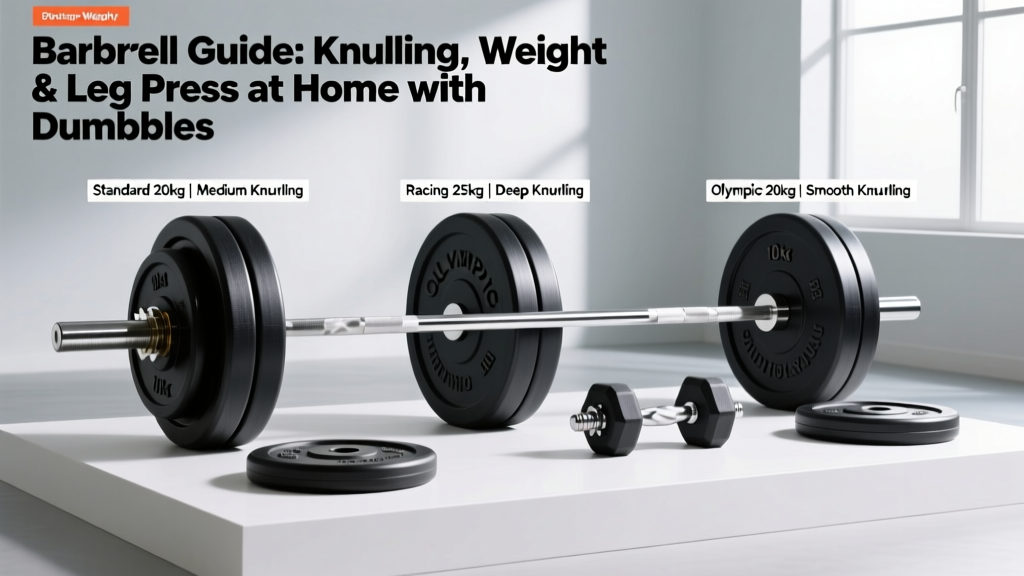
Barbell Guide: Knurling, Weight & Leg Press at Home with Dumbbells
A beginner's step-by-step guide to buying an Olympic barbell. Learn about weight, knurling types, and how it compares to a leg press at home with dumbbells.

Introduction: Upgrading Your Home Gym in 2026
Transitioning from basic resistance training to serious barbell work is a major milestone for any home gym owner. Many beginners start their fitness journey mastering foundational movements, perhaps even attempting a makeshift leg press at home with dumbbells (such as heavy goblet squats or supine dumbbell floor presses) before realizing the limitations of fixed-weight implements. When you are ready to unlock true progressive overload, investing in a high-quality Olympic barbell is non-negotiable.
However, the barbell market is flooded with confusing terminology. What is the difference between a 190k PSI and 215k PSI tensile strength? How does cerakote affect grip? This step-by-step beginner guide will demystify Olympic barbell weight standards and knurling patterns, ensuring you make a smart, long-term investment for your 2026 home gym setup.
Beginner's Rule of Thumb: Never buy a barbell based solely on price. A cheap $99 department store bar will permanently bend under heavy loads and feature corrosive, poorly machined knurling. Aim for a minimum budget of $180 to $250 for a reputable multi-purpose bar.Step 1: Understanding Olympic Barbell Weight & Dimensions
Before analyzing the grip, you must understand the physical dimensions and weight standards of Olympic barbells. Unlike standard 1-inch bars, Olympic bars feature 2-inch (50mm) rotating sleeves designed to hold bumper plates and iron weight plates.
The Big Three Standards
- Men's Olympic Bar: Weighs exactly 20kg (44 lbs). It measures 2.2 meters (7.2 feet) in total length with a 28mm shaft diameter. This is the universal standard for powerlifting, weightlifting, and general strength training.
- Women's Olympic Bar: Weighs exactly 15kg (33 lbs). It measures 2.01 meters (6.6 feet) with a thinner 25mm shaft. The thinner shaft is crucial for lifters with smaller hands to achieve a secure hook grip during Olympic lifts like the snatch and clean & jerk.
- Technique/Training Bars: Usually weighing 10kg (22 lbs) or 15kg, these are often made of aluminum or lighter steel. They are excellent for youth lifters or for drilling complex movement patterns without taxing the central nervous system.
Step 2: Decoding Knurling Patterns (The Grip Factor)
Knurling is the cross-hatched pattern machined into the steel shaft of the barbell. It is the single most important point of contact between you and the weight. In 2026, manufacturers use CNC lathes to cut three primary knurling profiles. Choosing the right one dictates your comfort, grip security, and hand health.
| Knurl Type | Profile Shape | Aggressiveness | Best Use Case |
|---|---|---|---|
| Hill | Rounded, flattened peaks | Mild / Passive | High-rep hypertrophy, beginners, bare-handed pressing |
| Mountain | Sharp, pointy peaks | Aggressive / Sharp | Heavy 1-rep max deadlifts, chalk-heavy powerlifting |
| Volcano | Deep valleys with a rimmed edge | Medium / Optimal | Multi-purpose lifting, squats, Olympic weightlifting |
Expert Insight: The Volcano knurl is widely considered the gold standard for 90% of home gym owners. Because the peaks are slightly cratered rather than pointed, they dig into the calluses of your hand to provide immense friction without tearing the skin. The Rogue Ohio Bar is famous for popularizing this exact knurling profile.
Step 3: Barbell Finishes and Knurl Feel
The raw steel of a barbell will rust within weeks if exposed to humidity. To prevent this, manufacturers apply protective coatings. However, the coating you choose directly impacts how the knurling feels in your hands.
- Bare Stainless Steel: The premium choice. It offers the most tactile, raw knurl feel because there is no coating filling in the grooves. It is highly rust-resistant but typically costs between $280 and $350+.
- Hard Chrome: A classic, durable finish. It provides a slick feel and excellent rust resistance, but it can slightly dull the sharpness of aggressive mountain knurling.
- Cerakote: A ceramic-polymer coating that dominates the 2026 market. Available in dozens of colors, Cerakote is incredibly thin (only 1 mil thick), meaning it preserves the knurling pattern much better than traditional black oxide or zinc, while offering elite corrosion resistance.
Step 4: Biomechanics — Barbell Squats vs. Leg Press at Home with Dumbbells
Many lifters transitioning to a barbell wonder how it compares to their previous routines. If you have been performing a leg press at home with dumbbells—which usually manifests as a heavy Dumbbell Goblet Squat or a supine Dumbbell Floor Leg Press—you are about to experience a massive shift in biomechanical loading.
Warning: Moving from dumbbells to a barbell back squat shifts the primary limiting factor. In a Dumbbell Goblet Squat, your upper back and arms often fatigue before your quadriceps do. With a barbell, the load is placed directly on your axial skeleton, allowing your legs to be pushed to true muscular failure.Why the Barbell Wins for Lower Body Development
According to biomechanical analyses of the Barbell Back Squat, the movement requires immense core stabilization, thoracic extension, and central nervous system (CNS) recruitment. When you perform a leg press at home with dumbbells, the lever arms are shorter, and the stabilization requirements are vastly reduced. While dumbbell variations are excellent for joint health and mobility, they simply cannot replicate the sheer mechanical tension and systemic hormonal response generated by a loaded 20kg Olympic barbell.
Step 5: Tensile Strength and 'Whip' Explained
Tensile strength is measured in Pounds per Square Inch (PSI) and dictates how much weight the bar can hold before it permanently bends or snaps.
- Under 150k PSI: Avoid. These bars will bend if you drop them during a heavy deadlift.
- 165k - 190k PSI: The standard for high-quality multi-purpose bars. They offer a slight 'whip' (flex) which is forgiving on the joints during heavy squats.
- 190k - 215k+ PSI: Elite powerlifting and weightlifting bars. They are incredibly stiff, ensuring that the bar doesn't bounce or oscillate when you are pressing heavy loads overhead or benching.
Step 6: Top 2026 Olympic Barbell Recommendations
Based on current market pricing, knurl quality, and warranty standards, here are the top picks for beginners and intermediate lifters upgrading their home gyms this year.
1. The Gold Standard: Rogue Ohio Bar (Cerakote)
Price: ~$245.00
Knurl: Volcano (Medium)
Tensile Strength: 190,000 PSI
Verdict: The undisputed king of multi-purpose bars. The composite bronze bushings provide a smooth, quiet spin, and the volcano knurl is perfectly balanced for both heavy deadlifts and high-rep bench pressing.
2. The Budget Champion: Rep Fitness EX Bar
Price: ~$189.00
Knurl: Hill (Mild)
Tensile Strength: 190,000 PSI
Verdict: If you have sensitive hands or plan on doing a lot of high-rep hypertrophy work without chalk, the mild hill knurl on the EX bar is phenomenal. It features dual IPF/IWF knurl marks, making it versatile for any stance.
3. The Heavy Duty Option: Titan Fitness Olympic Power Bar
Price: ~$179.99
Knurl: Mountain (Aggressive)
Tensile Strength: 205,000 PSI
Verdict: Built specifically for the big three lifts (Squat, Bench, Deadlift). The aggressive knurl will bite into your hands, ensuring the bar never slips during a heavy pull, but it may require you to file your calluses more frequently.
Frequently Asked Questions (FAQ)
Do I need a center knurl on my barbell?
A center knurl is a small band of knurling in the exact middle of the bar. Powerlifters prefer it because it 'grips' the back of their t-shirt during heavy low-bar squats, preventing the bar from sliding up the neck. Olympic weightlifters and general fitness enthusiasts often prefer no center knurl, as it can scrape the chest and collarbone during front squats and cleans.
Can I use an Olympic barbell for my dumbbell leg press alternatives?
While you cannot replicate a machine leg press with a barbell, you can use your new Olympic barbell to perform Hack Squats, Front Squats, and Romanian Deadlifts. These movements target the exact same quadricep and hamstring musculature as a leg press, but with the added benefit of core stabilization and functional carryover to real-world strength.
How do I maintain my barbell's knurling?
Chalk and dead skin will quickly pack into the grooves of your knurling, turning an aggressive volcano pattern into a smooth, slippery hill. Once a month, use a stiff nylon brush and a light spray of 3-in-1 oil or specialized barbell cleaner to scrub the knurl. Never use a wire brush on a Cerakote or Zinc bar, as it will strip the protective finish and invite rust.
More gear to consider
All reviews
How to Add Weight: Dumbbells vs Power Rack vs Squat Rack vs Stand

Space-Saving Dumbbell Racks & The Dumbbell Row No Bench

Best Dumbbells for Dumbbell Suitcase Carry: Rubber Hex vs Urethane

Standard vs Olympic Plates & Dumbbell Lateral Raise for Women
Storage Layouts for Different Types of Dumbbell Workouts
