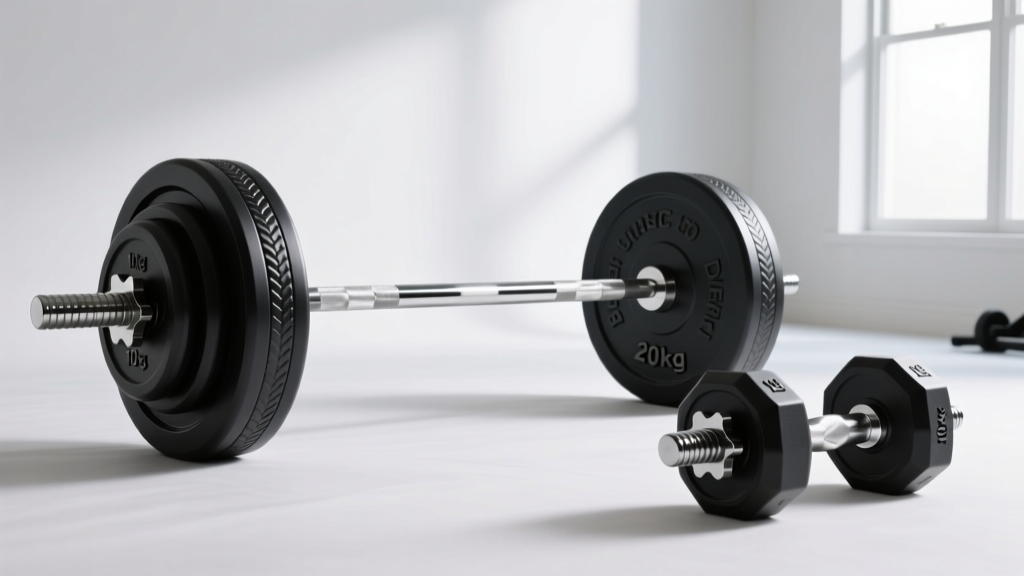
Barbell Guide: Weight, Knurling & Delt Flyes Dumbbell Mistakes
Troubleshoot your free weight setup. Our 2026 guide covers Olympic barbell weight, knurling profiles, and common delt flyes dumbbell mistakes.

Building or upgrading a free weight rack in 2026 requires navigating a minefield of marketing jargon, deceptive manufacturing specs, and biomechanical misunderstandings. Whether you are outfitting a commercial facility or a garage gym, the cost of buying the wrong equipment extends far beyond the initial price tag. It manifests in bent barbell shafts, torn calluses, and stalled hypertrophy due to improper load management. This troubleshooting guide dissects the most critical errors lifters make when selecting Olympic barbells—specifically regarding weight tolerances and knurling profiles—before addressing a pervasive isolation error involving dumbbell selection.
The Tensile Strength Trap: Why Your Barbell is Bending
The first major mistake buyers make is conflating a barbell's static weight capacity with its tensile strength. Many budget brands advertise a '1,000 lb static capacity,' which simply means the bar won't snap if you drop a loaded sleeve on a jack. However, static capacity tells you nothing about permanent deformation.
What you actually need to look at is tensile strength, measured in pounds per square inch (PSI). This metric dictates the point at which the steel will stretch and fail to return to its original straight form. For any serious home gym or commercial setup in 2026, the absolute minimum acceptable tensile strength is 190,000 PSI. Bars hovering around 165,000 PSI (often found in the $120-$150 range on Amazon) will permanently bend after repeated heavy squats or drops from overhead.
⚠️ Troubleshooting Alert: The Yield vs. Tensile ConfusionDo not confuse yield strength with tensile strength. Yield strength is the point where the bar begins to deform permanently, while tensile strength is the point of actual failure (snapping). High-end manufacturers like Eleiko and Rogue test both. If a brand only lists tensile strength and hides the yield data, proceed with caution.
Shaft Diameter and Weight Tolerances
Olympic barbells generally come in 20kg (44 lbs) and 15kg (33 lbs) variants. The mistake here is ignoring the shaft diameter relative to the weight. A standard 20kg men's bar features a 28mm or 28.5mm shaft, while a 15kg women's bar uses a 25mm shaft. If you are buying a 'multi-purpose' bar and see a 29mm shaft, understand that this thicker diameter drastically alters the grip mechanics for dynamic Olympic lifts like the snatch, making it unsuitable for competitive weightlifters despite its durability for powerlifting.
Decoding Knurling: A Troubleshooting Matrix
Knurling is the patterned grip cut into the steel shaft. According to Barbend's comprehensive knurling guide, the depth and shape of these cuts dictate the bar's entire personality. The most common mistake is buying an aggressive 'mountain' knurl for high-repetition conditioning, resulting in shredded hands, or buying a passive 'hill' knurl for heavy deadlifts, resulting in the bar slipping mid-pull.
| Knurl Profile | Geometry & Feel | Best Application | 2026 Benchmark Model |
|---|---|---|---|
| Volcano | Crater-like peaks with a flat top; grippy but not sharp. | All-around multipurpose, CrossFit, hypertrophy. | Rogue Ohio Bar (~$245) |
| Mountain | Sharp, pronounced peaks; aggressive and abrasive. | Heavy powerlifting, low-rep deadlifts, strongman. | Rep Fitness Excalibur (~$349) |
| Hill | Rounded, shallow valleys; smooth and passive. | Budget bars, high-rep endurance, beginners. | CAP Barbell OB-85 (~$110) |
Troubleshooting Knurl Oxidation and Maintenance
Another frequent error is ignoring how the barbell's coating interacts with the knurl. If you buy a bar with a standard black oxide finish to save money, the knurl will rust within months in a humid garage gym because black oxide offers minimal corrosion resistance. To troubleshoot this, opt for hard chrome, Cerakote, or stainless steel shafts. Stainless steel (like the Rogue Stainless Steel Ohio Bar) provides the raw feel of bare steel without the oxidation nightmare, though it commands a premium of roughly $350+ in the current market.
Isolation Troubleshooting: The Delt Flyes Dumbbell Dilemma
While barbell selection dictates your compound lifting success, isolation movements require an entirely different equipment strategy. When troubleshooting posterior shoulder development, the most frequent error we see in home gyms involves the delt flyes dumbbell selection. The rear deltoid is a relatively small, easily overpowered muscle group. Yet, lifters routinely grab 35 lb or 40 lb hex dumbbells, attempting to muscle the weight up through sheer momentum.
'When the load exceeds the rear deltoid's force-producing capacity, the central nervous system immediately recruits the rhomboids, middle trapezius, and erector spinae to move the weight. You aren't training the rear delt; you are training your traps with a compromised lever arm.'
— Biomechanical analysis of shoulder isolation, referenced via ExRx.net's kinesiology directory.
The Micro-Loading Solution: Fixed Hex vs. Adjustable
The ideal delt flyes dumbbell setup requires strict load management, typically falling between 10 lbs and 20 lbs for intermediate lifters, with a need for 2.5 lb micro-increments as you progress. This is where equipment mismatches occur.
- The Fixed Hex Mistake: Buying a rack of rubber-coated dumbbells that only jump in 5 lb or 10 lb increments. When 15 lbs becomes too easy but 20 lbs compromises your form, your progress stalls.
- The Adjustable Solution: High-end adjustable dumbbells like the Nuobell 80lb set (approx. $429 in 2026) or PowerBlock Elite allow for 2.5 lb micro-loading. This granular weight progression is non-negotiable for small isolation muscles like the rear delts and lateral deltoids.
- The Urethane Alternative: If you prefer fixed bells, skip the cheap rubber hex bells that smell and degrade. Invest in virgin urethane dumbbells (like York or Rogue Urethane). They are denser, more compact, and won't interfere with your range of motion at the bottom of a chest-supported rear delt flye.
2026 Diagnostic Checklist for Your Free Weight Rack
Before finalizing your free weight purchases, run your setup through this troubleshooting checklist to ensure your gear aligns with your biomechanical and programming needs:
- Verify the PSI: Confirm the barbell tensile strength is ≥190,000 PSI to prevent permanent shaft bending.
- Match Knurl to Volume: If your programming includes high-rep touch-and-go work, reject mountain knurling in favor of a volcano profile to preserve your skin.
- Check the Center Knurl: If you do not back squat or front squat, a center knurl will only irritate your chest during bench pressing. Look for 'no center knurl' variants if you are strictly a powerlifter/bench specialist.
- Audit Dumbbell Increments: Ensure your dumbbell inventory supports 2.5 lb jumps for isolation work. If your delt flyes dumbbell weight jumps from 15 to 25 lbs, you are leaving hypertrophy on the table.
- Inspect Sleeve Mechanics: For Olympic lifting, ensure the barbell sleeves utilize needle bearings rather than bronze bushings to allow for rapid, frictionless rotation during the catch phase of a clean.
By addressing these specific metallurgical and biomechanical mismatches, you transition from simply 'buying weights' to engineering a training environment that actively supports your physiological adaptations.
More gear to consider
All reviews
Rubber Hex vs Urethane: Best Deltoid Raise Dumbbell Value

EZ Curl Bar vs Straight Bar: Longevity & Golden Dumbbells Care

Power Rack vs Squat Stand: Best for Incline Dumbbell Curls?

Rubber vs Urethane: Upper Body Workout for Women with Dumbbells

EZ Bar vs Straight Bar Care for Chest and Triceps Dumbbell Workouts
